
Mothers and Daughters, Fathers and Sons: Romanian Cinema and the Inheritance of Trauma
A clear thematic thread ran through the films presented in this year’s Romanian Days section at the Transilvania International Film Festival. Spanning fiction, documentary and hybrid forms, the programme of mostly debut films transported us into the country’s contemporary realities and into a past scarred by Ceaușescu’s dictatorship and Decree 770, which in 1967 criminalised abortion and severely restricted access to contraception, turning women’s bodies into instruments of state policy. What unfolded were films haunted by its consequences: overcrowded orphanages, abandoned children, deeply fractured families, but also adoptions, deaths and disappearances that continue to reverberate through Romania’s collective memory. They were films about grief, reconnection and the search for answers; about a young generation grappling with the country’s past, as well as with the values and beliefs held by their parents – people shaped by a different regime and raised in a reality very different from the one we know today.
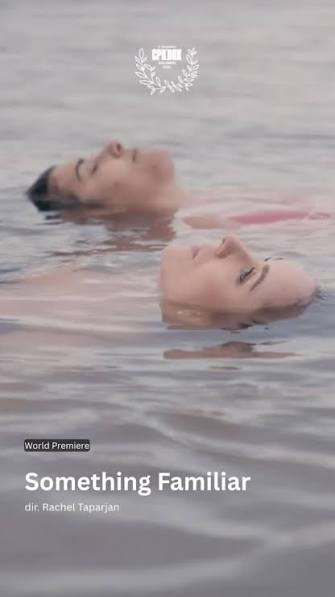
No film embodies this thematic thread more directly than Rachel Taparjan’s documentary Something Familiar, about the filmmaker’s own adoption from Romania, which gradually turns into an investigation of identity, family history and inherited trauma. Desperate to understand why she had been given up for adoption, Taparjan soon discovers that her mother is no longer alive, but finds her brother and sister along the way, whose presence uncovers a dark family history of abuse, sexual exploitation and human trafficking. Taparjan’s narrative is at times formally uneven, branching between observational moments documenting the reunion with her siblings and somewhat performative reenactments of her imagined reunion with her deceased mother, portrayed by different actresses. This social experiment never fully coheres with the rest of the film. Yet as soon as Taparjan turns away from this self-reflective psychoanalysis and towards her newly found family, the documentary gains emotional clarity, revealing a deeply touching rawness and honesty. It is precisely this vulnerability – her willingness to confront her own dark past – that makes Something Familiar such a powerful and heartbreaking film, which also quietly challenges the nature-versus-nurture debate and suggests that trauma may very well be inherited, embedded within us long before we become conscious of where we come from.
But if Something Familiar explores the subject of intergenerational trauma through a deeply intimate, personal story of a woman who herself was a part of the Romanian adoption system, Y by directors Maria Popistașu and Alex Baciu completely switches the perspective. This is not a film about those affected by Decree 770, but about those who profited from a system that turned overcrowded orphanages into a business. However, rather than exposing the institutional violence directly (although the archival footage from the orphanages in which babies bang their heads against the walls as they’re being deprived of even the most basic care and human touch, will make our stomach turn), the film chooses a sterile family drama about privilege, inheritance and family memory. The relationships between the siblings and their parents are emotionally distant; each family member appears isolated and consumed by their own vanity. They hide behind their wealth, their material possessions and their family name, yet the ethical question of how their grandmother gained their social status lingers over them, like a stench of rotten meat. The family’s wealth ultimately rests on exploitation: their grandmother made her fortune by selling babies to wealthy adoptive parents abroad. The film thus quietly raises questions of generational responsibility and moral accountability, yet never fully interrogates them.
Mihai Mincan’s Milk Teeth (Dinți de lapte) is another film about trauma, grief and lost childhood, built around the sudden disappearance of a ten-year-old girl’s sister during the final months of Ceaușescu’s regime. It initially presents itself as a mystery, only to abandon the classic whodunit structure and turn its attention to the child left behind instead. The world around her crumbles both on a personal and political level, making the disappearance as symbolic as it is literal: not only does her sister vanish, but so does the world she has always known, together with the regime, her childhood and her status as a Young Pioneer. However, Mincan keeps the approaching revolution just outside the frame, quietly present, but never explicitly shown or spoken about. The result is a haunting meditation on loss and uncertainty, beautifully photographed and emotionally resonant, even if it loses some of its focus in the second half, where its turn towards magical realism and dreamlike sequences adds more confusion than meaning.
However, there were also films that left Romania’s communist past behind, shifting their focus to a generation no longer haunted by Ceaușescu’s legacy, but by the loneliness and emotional disconnect of the modern capitalist society, as well as the growing divide between generations shaped by different political realities. Such is Andrei Epure’s Don’t Let Me Die (Nu mă lăsa să mor), a genre-bending existential mystery drama about the profound disconnection in contemporary urban life, where genuine intimacy seems impossible. Neighbours living under the same roof remain strangers, indifferent to one another, until one of them dies and a young woman finds herself navigating the absurd bureaucracy surrounding her funeral. The film, masterfully blurring the lines between dreams and reality, never fully explains whether what we witness is grief, guilt or something bordering on the supernatural, and it is precisely this ambiguity that makes the film so compelling. Ultimately, it is a story about broken human connections, whether between family members, neighbours or even complete strangers brought together by circumstances, elevated by a rich cinematic language that repeatedly lingers on empty streets, apartment hallways, cemeteries and beaches.
Set almost entirely inside a car during a journey from Bucharest to Vienna, Cristi Bota’s Back and Forth (Dus-întors) explores generational misunderstandings and conflicting ideas of masculinity through the relationship between a father and his adult son. Its minimalist setting and reliance on extended conversations inside a car inevitably recall the restrained realism of contemporary Iranian cinema. Yet what initially appears simple in structure, gradually reveals the unresolved tension beneath the surface. On one side is an emotionally reserved father whose patriarchal worldview increasingly feels out of step with contemporary society, and on the other his son, full of suppressed anger and inability to express it in any way other than shouting and emotional outbursts. It is ultimately a film about men trapped within their own toxic patriarchal expectations, unable to speak openly about their emotions, financial struggles or personal insecurities. And rather than confronting these emotions, they simply reproduce the same patterns of silence, pride and emotional repression, perpetuating a cycle that quietly passes from one generation to the next.
Most of these films argue that trauma is inherited. It is embedded in family relationships, in language, in buildings, in collective memory, and in both our shared and personal histories. If the Romanian Days programme revealed anything this year, it was that the country’s young filmmakers are less interested in reconstructing the past than in examining the invisible, deeply personal ways it continues to shape the present.
By Veronika Zakonjšek
Edited by Birgit Beumers
Copyright FIPRESCI 2026