
Small Rooms, Emerging Voices: Inside the Short Film Competition at the 7th Amman IFF
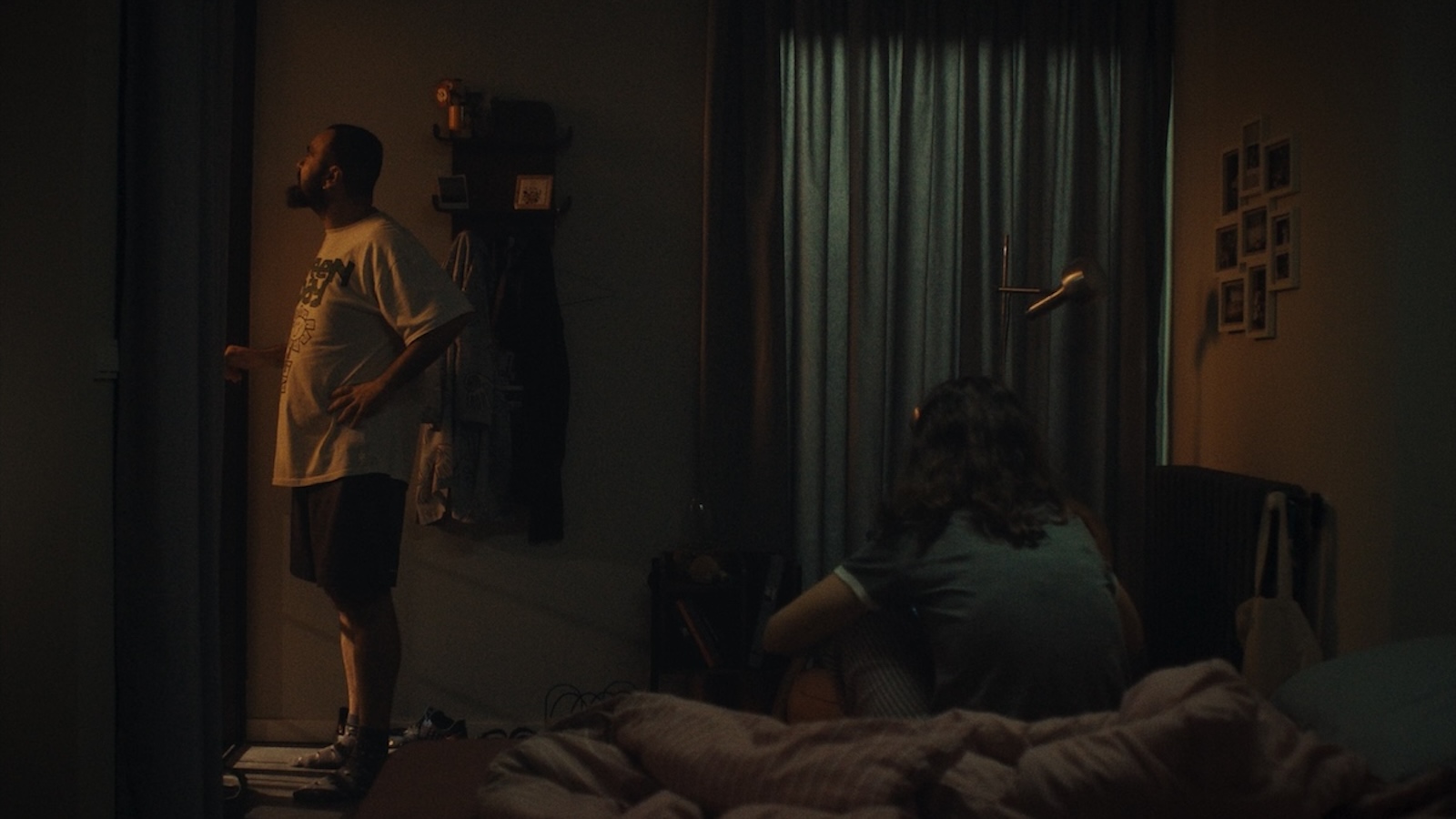
At the 7th Amman International Film Festival, Brazilian critic Letícia Alassë considers three short films that turn away from panoramic representations of war and displacement to explore domestic spaces, intimate conflicts, and the everyday realities of survival.
War and displacement are often depicted in cinema through panoramic devastation: ruined skylines, smoke plumes, and harrowing border crossings. Yet some of the most compelling works at the 7th Amman International Film Festival operated in reverse, turning away from headline features to focus on domestic interiors, awkward silences, intimate conflicts, and the irrational comedy of survival.
This is precisely why short films matter in a festival devoted to first and second features. The format provides the initial space in which a cinematic voice can emerge, a place to experiment with mise-en-scène, rhythm, and visual language. Among the twenty competition entries, three films stood out for their visual precision, original premises, and distinct cinematic sensibility.
In What If They Bomb Here Tonight?, Lebanese filmmaker Samir Syriani—who directs, writes, and stars—mines an unlikely vein in the cinema of regional conflict: sheer, neurotic humor. The premise is disarmingly simple. A father lies in bed and is seized by a sudden, creeping anxiety: what if the neighborhood is struck tonight? With his two young daughters asleep in the next room, he and his wife embark on an agonizing, middle-of-the-night inventory of their own home. They scrutinize the ceiling’s load-bearing limits, debate the shatter radius of window glass, and devise increasingly absurd domestic countermeasures.
Syriani understands that dread rarely looks heroic in private; it looks manic, repetitive, and strangely practical. The humor lands precisely because the danger outside the door is lethal and real. By treating the possibility of death not as an abstract geopolitical debate, but as a practical dilemma involving flying shards, falling plaster, and the vulnerability of a family apartment, Syriani collapses the distance between the viewer and the lived reality of contemporary Beirut. The film’s originality lies partly in this shift of scale: war is not represented through spectacle, but through the anxious measurement of an ordinary room.
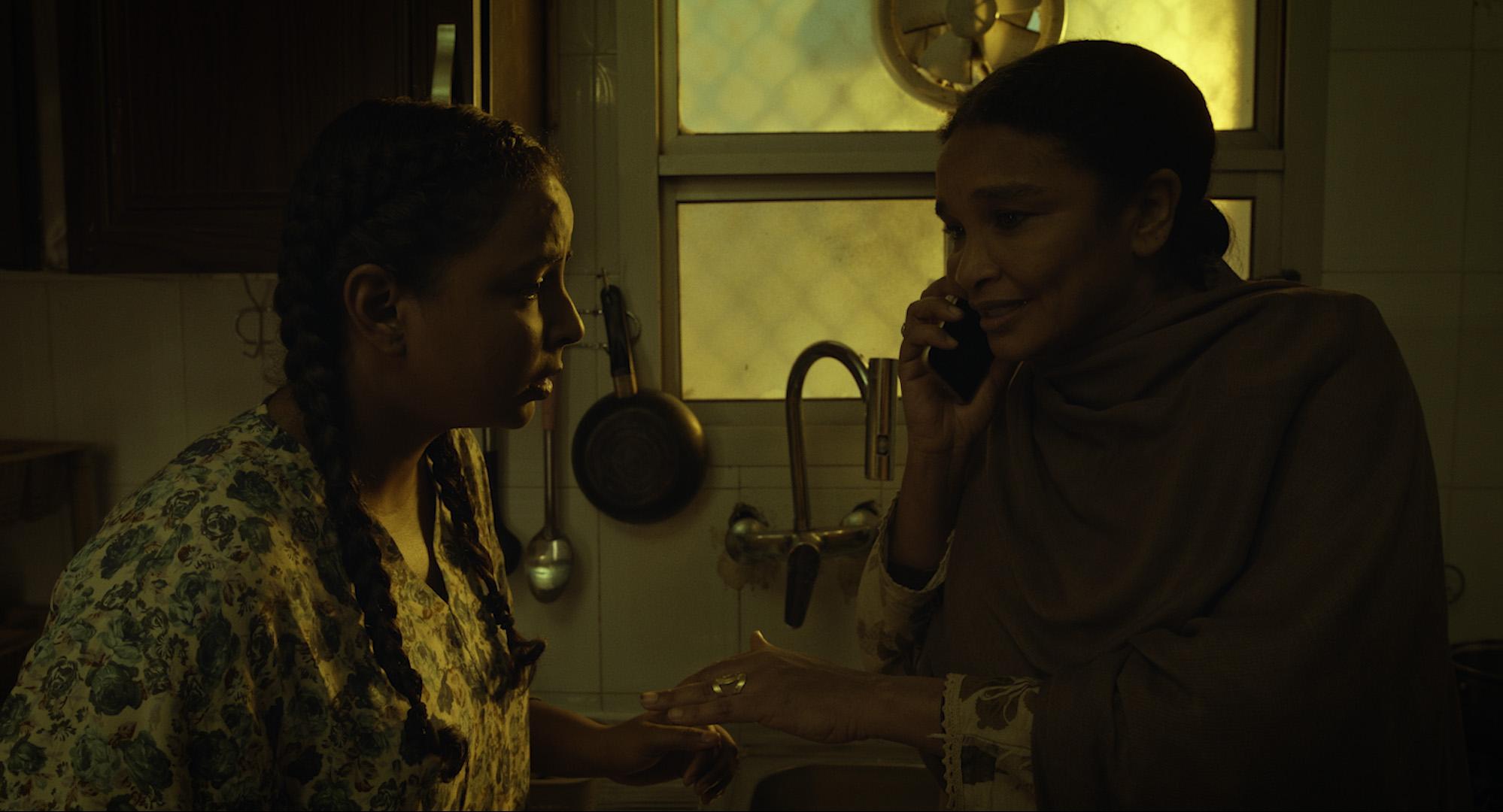
A similar sense of proximity emerges in No Land in Sight, the debut of Sudanese director Eiman Alkhalifa. Here, violence remains strictly off-camera. Inside an apartment surrounded by quiet family mementos, a mother and daughter wait for news of a son and brother who is somewhere outside. Is he in the middle of the war? Is he in danger? Why hasn’t he called?
Through Tara Alkhas’s evocative, shadow-drenched cinematography, the apartment becomes an echo chamber. Alkhalifa strips away explanatory dialogue and replaces it with sensory suspense: the dull thud of artillery in the far distance, the sudden terror of a ringing telephone, the oppressive weight of waiting. The film’s mise-en-scène turns the domestic interior into a psychological landscape, where absence becomes almost tangible. In a media landscape where Sudan’s catastrophic war is too often flattened into statistics and generic headlines, No Land in Sight generates a forceful form of witness without resorting to images of destruction. The sound of an unseen explosion and the look on a mother’s face are enough to make the violence present.
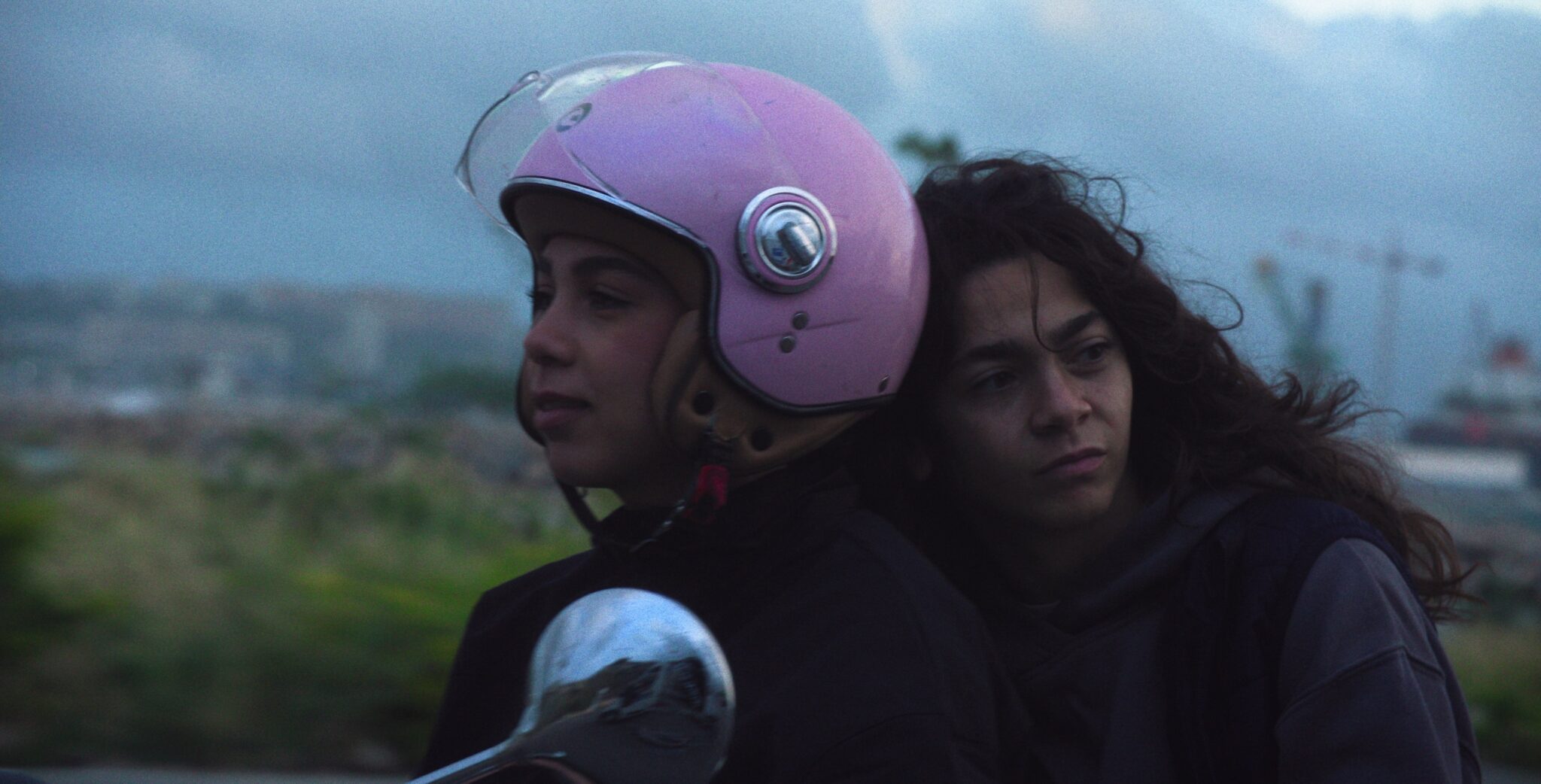
The third film that stayed with me was Oumnia Hanader’s BIMO, winner of the festival’s Black Iris Award. Its focus shifts from falling bombs to the enduring aftershocks of French colonialism and the Algerian diaspora. Set in Marseille, the film follows Sihem, a young waitress carving out a fragile, hard-won independence. That autonomy is upended by the sudden arrival of her younger brother, who has crossed the Mediterranean carrying the very patriarchal demands she thought she had left behind.
Urged by their mother to protect him at all costs, Sihem finds herself ensnared by old familial hierarchies transplanted onto European soil. Hanader refuses to reduce her characters to vehicles for a moralizing argument. Instead, she locates the tensions of migration in everyday gestures, an oppressive atmosphere, cramped café counters, bodies occupying shared spaces, and the stark expanse of an arid beach. The film’s strength lies in its refusal to treat migration simply as a geographical journey. Instead, Hanader offers a sharp portrait of racism and class contempt within the community itself, revealing how social hierarchies can survive even after the border has been crossed.
What connects these three films is not simply their subject matter, nor even their engagement with war, displacement, or migration. It is the confidence with which they transform those subjects into cinematic form. Syriani finds absurdity in the architecture of fear; Alkhalifa turns absence and sound into suspense; Hanader uses intimate family dynamics to expose class divisions and the persistence of inherited social hierarchies.
Of the twenty short films presented in Amman, these three lingered long after the house lights came up. They serve as a vivid reminder of what makes the format so essential: before the feature demands its compromises, the short remains the first risk, the first experiment, and the moment a filmmaker’s voice becomes unmistakably their own.
Letícia Alassë
© FIPRESCI 2026