
Strange Encounters: Theo Rhys’s Stuffed
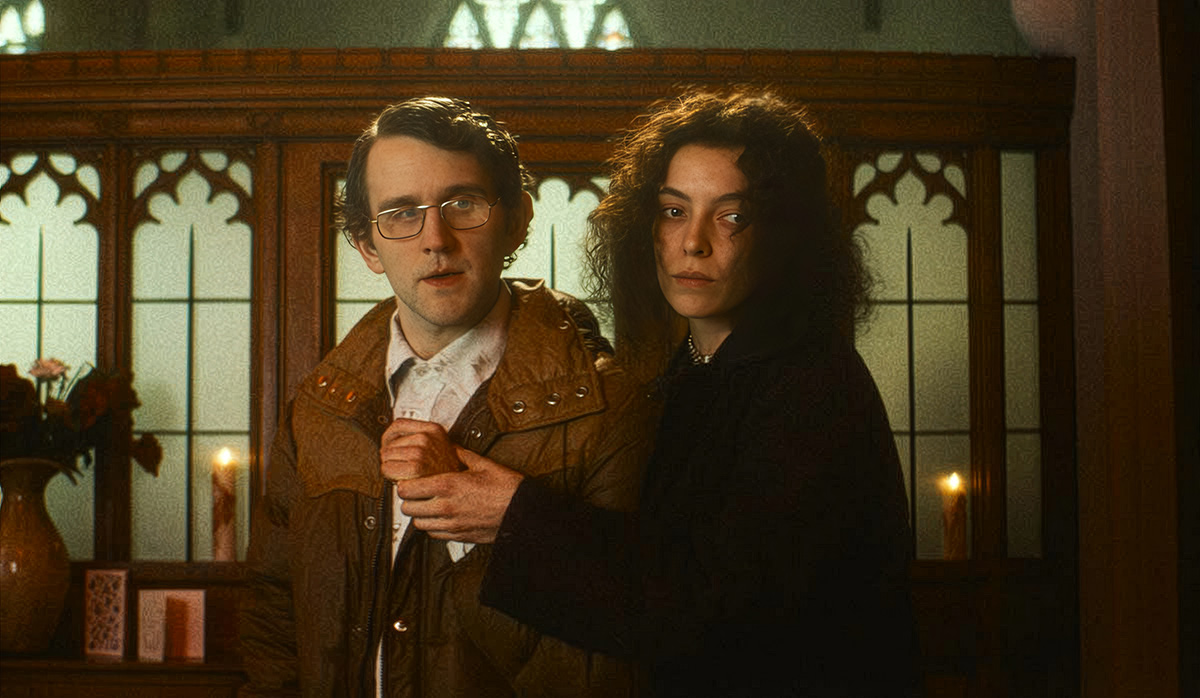
From TIFF ’26, critic Savina Petkova looks at what it’s like to be in the “best possible world” of a major international film festival, and singles out a favorite film from the Discovery section to focus on.
It’s easy to mythologize any film festival experience, no matter its shape or size—a gathering of shared interests and passion for cinema, optimism (to various degrees) about new frontiers and the medium’s future, and of course, the films themselves. A steady diet of four and more titles per day, and constant socializing—aided by the occasional glass of wine and appetizers grabbed off the nearest tray mid-conversation—make it seem like we, film critics, live in the best possible world, even if only for a few days. Therefore, eulogizing one’s first international—or in my case, transatlantic—festival trip comes naturally, for all of the reasons outlined above, yet the excitement encapsulated by the movies in the Toronto International Film Festival’s Discovery section speaks for itself. The FIPRESCI Jury was generously tasked with picking a winning title out of the world-premiere debut features in a strand which is known for highlighting emerging global filmmakers.
As a critic who’s also a hopeless romantic, the film that stood out for me when the line-up was first announced was none other than Theo Rhys’s Stuffed (United Kingdom, 2026)—in every way a wacky, heart-on-its-sleeve gothic musical expanded from a 2021 short of the same name. Jodie Comer and Harry Melling lead a charmingly naive yet treacherous danse macabre, as reclusive taxidermist Araminta (Comer) and lonesome factory worker Bernie (Melling) find in each other a reason to live/die. A gloriously out-there musical, Stuffed keeps its socio-political commentary under wraps for most of it, but the way the film engages with the thorny issues of necro-politics is inspiring and philosophically sound.
For both Araminta and Bernie, legacy is a complex notion of utmost importance, even though we meet them as people who seemingly don’t have much going on. No friends, no warmth, no family to turn back to—the protagonists are orphans (or orphans-to-be) and outcasts, labelled too weird to touch. For Araminta, ostracization means misogynistic hate and a crusade against her “witchy” lifestyle, while Bernie is invisible to his coworkers, who don’t even register his first musical number as he bursts out in song and dance in the middle of the production line. Because both of them know what it feels like to be forgotten before you’ve even announced yourself to the world, the ties that bind them become increasingly romantic, as they are based on devotion. In other words, Bernie wants to be stuffed.
Rhys’s script is literal about this strange desire, articulating the demand in a line of dialogue. But behind the potential irony a more skeptical viewer may read into it, there is a rare kind of purity. To say “I want to be stuffed,” is as absurdly courageous as saying “I want to be loved,” or “I love you”—even if the latter is considered common currency in the way a lot of us speak to each other, the act of uttering those words is always a risky one. What if the recipient doesn’t say it back? What if my desire is silly, unfounded, irresponsible? Self-doubt creeps in and even though we’ve conditioned ourselves as a society to keep asking for love, the initial fear of being misunderstood never really goes away. Of course, Bernie’s line has more morbid implications in the logic of the film world—that he has to die, then be skinned, and turned into human taxidermy by the self-taught Araminta—but at its core, the sentiment remains the same. So much so that the film’s three-act structure can be traced down to the fluctuations of desire: its formulation, its articulation, and the subsequent execution, with musical interludes guiding the viewer deeper into the characters’ motivations and dark inner worlds.
In that regard, Stuffed owes a lot to Baz Luhrmann’s Moulin Rouge and its core refrain about the greatest thing one will ever learn—a mesmerizingly pure instance of love as the reciprocal fulfilment of a need everyone else would find objectionable.
Savina Petkova
© FIPRESCI 2026