
Intimacy in Isolation: Zogsool
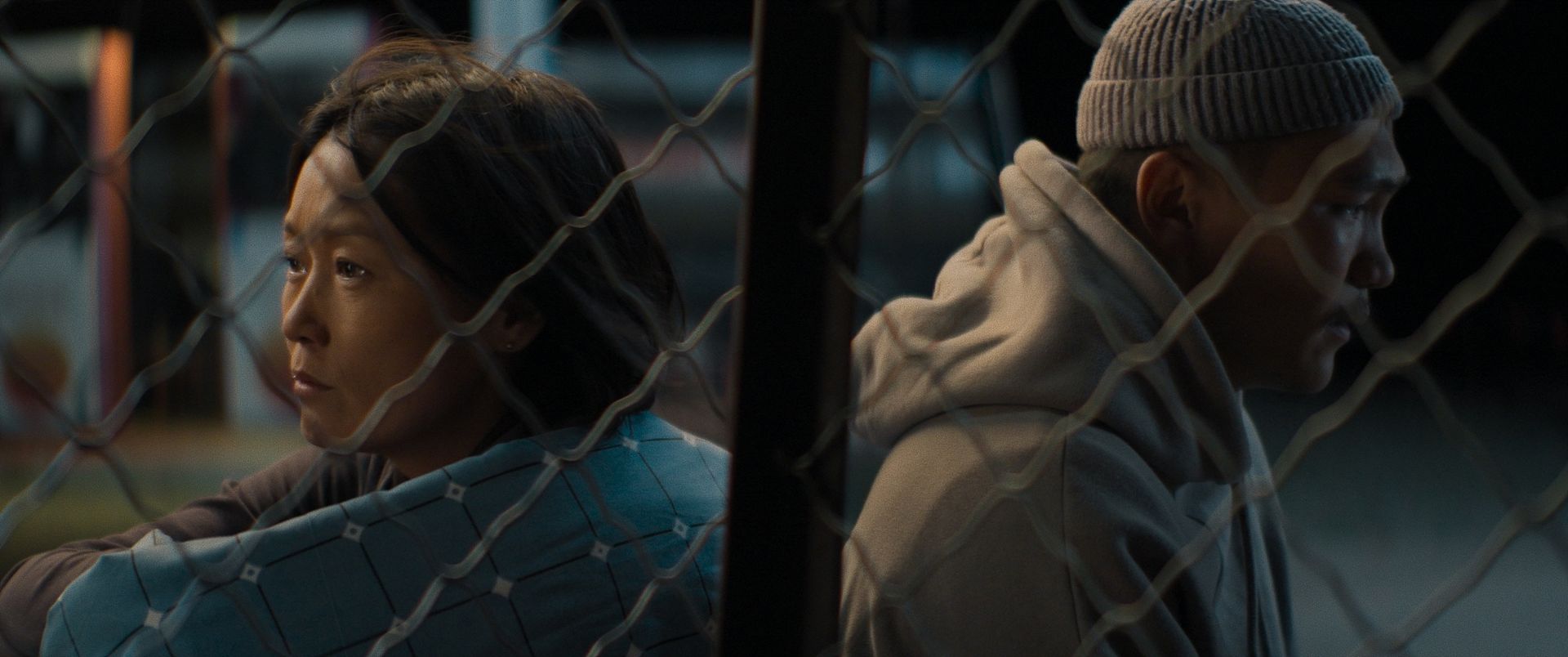
A remote gas station on the Mongolian steppe, an unexpected visitor, and the fear of a pandemic: in Zogsool, director Byamba Sakhya observes the way fundamental questions of intimacy, freedom, and social power dynamics emerge from a setting that appears utterly isolated. The film won the FIPRESCI award of the 31st Busan International Film Festival.
The news carries the first reports of people infected with the coronavirus. There are fears that a pandemic might break out. The somewhat unlikely couple who run a remote gas station in the Mongolian countryside do not seem particularly concerned. Few strangers ever find their way there. All the local sheep farmers know one another. Then the authorities learn that a fuel tanker is heading towards the village, and panic ensues: the driver must be placed in quarantine immediately.
This is how Byamba Sakhya’s tragicomedy Zogsool, also known by its English title The Station, begins. It is remarkable how, in an instant, the film transports viewers back to a time that, in different ways but seemingly all over the world, brought unconventional behaviors and patterns of thought to the surface, with lasting effects on society and politics. The film evokes the ordeals and ruptures that many relationships endured during the pandemic. Sakhya approaches these experiences with subtle irony.
There is not much dialogue in Zogsool. Instead, it is what the film leaves unsaid that speaks most eloquently: an absent gaze, a faint smile, an inaudible telephone conversation, the cover of a diploma whose contents remain unseen. There is the wife of the gas station owner, who wants to give her daughter the opportunity to pursue a life as an athlete in the city. For this, she needs the money her husband has promised her. Yet she does not trust him and rigorously collects the villagers’ debts for petrol. Then a young truck driver, placed in quarantine, suddenly appears and draws her out of her loveless routine. He is disarmingly warm-hearted and comes without expectations.
Two people meet who live in the moment. The viewer learns very little about their past, and there is scarcely anything to suggest what their future might hold. The way Zogsool dispenses entirely with sentimentality is arguably one of its greatest strengths. Yet, with remarkable economy, the film touches on a wide range of profound themes. It explores corruption, the abuse of power, manipulation, capitalism, equal opportunities and, not least, female emancipation. Although the story is firmly rooted in a Central Asian reality, it speaks of feelings with which anyone can identify.
The film maintains an appealing lightness throughout, enhanced by genuinely funny moments: the exchanges between the two police officers tasked with keeping an eye on the truck driver, the sports teacher musing over his ambitions, and the truck driver’s spontaneous song-and-dance performance.
Sakhya composes his images with great care, adhering to the principle of “one scene, one statement.” He brings the same precision to his cinematography, characterized by a calm, measured camera style. In doing so, he does justice to the landscape and finds the only form truly suited to his story.
Teresa Vena
© FIPRESCI 2026