
Mads Mengel’s Debut Feature The Guest Nods to Dogma 95
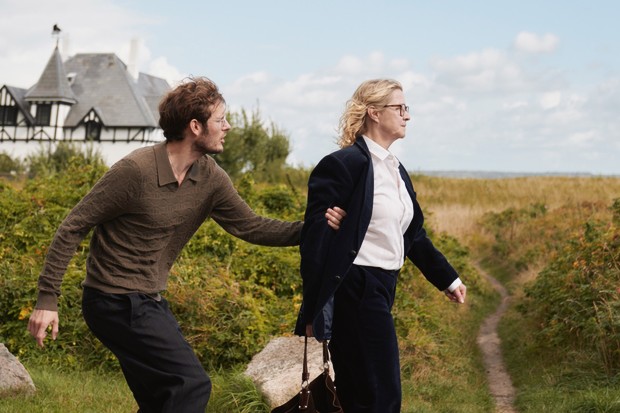
Led by an outstanding performance from Trine Dyrholm, The Guest revisits the turbulent dynamics of family relationships through the cinematic legacy of Dogma 95. Swiss film critic Beat Glur examines the Danish debut feature.
In the spring of 1995, at the Odeon Theatre in Paris, Danish directors Lars von Trier and Thomas Vinterberg celebrated the 100th anniversary of cinema by signing a manifesto before the world press: Dogma 95.
Three years later, the movement’s first two films premiered in the official selection at Cannes: von Trier’s The Idiots (Idioterne) and Vinterberg’s The Celebration (Festen), which won the Jury Prize and became Denmark’s entry for Best Foreign Language Film at the Academy Awards.
Now, in 2026, a new Danish film titled Gæsten (The Guest) is making waves on the festival circuit. With a title that echoes Festen and a plot centred on a family gathering spiralling out of control, the connection to Vinterberg’s classic is unmistakable.
However, Mads Mengel’s debut feature is not strictly a Dogma film. Mengel follows several rules from Dogma’s “Vow of Chastity”: he shoots in colour, on location, frequently uses a handheld camera, and keeps the focus squarely on the story and the actors. Yet he breaks from the strict manifesto by using set lighting and props, including a sparse musical score, and crediting the cast and director.
While Festen revolved around a patriarch’s birthday, Gæsten centres on a naming ceremony for a young couple’s infant son at a posh hotel on the Baltic Sea. Parents Karl and Emilie greet their guests, and everything appears to be going smoothly until Karl’s estranged mother, Vibeke, unexpectedly arrives to claim her role as grandmother.
Karl hasn’t spoken to Vibeke in years and deliberately left her off the guest list because she lives with bipolar disorder. Unbeknownst to him, his sister invited her anyway. Caught off guard, Karl reacts with anger, quickly followed by guilt, though he still blames his mother for the chaos. Despite the volatile premise, the film explores mental instability and its ripple effects on loved ones with remarkable sensitivity and kindness.
As the weekend unfolds, tensions mount and long-buried family resentments boil over in front of bewildered guests. The story is painful and uncomfortable at times, yet unexpectedly funny, never mocking or exploiting its characters.
It is a major coup that first-time feature director Mengel convinced Trine Dyrholm, one of Denmark’s most celebrated actresses, to take on the role of Vibeke. Her performance is nothing short of extraordinary: deeply intelligent and impossible to look away from.
Trained in theatre and also an accomplished singer-songwriter, Dyrholm previously starred in Vinterberg’s The Greatest Heroes (De største helte, 1996) and played the hotel maid in The Celebration, bringing the Dogma connection full circle. This November, the 75th International Film Festival Mannheim-Heidelberg honoured her career with a retrospective.
Much of The Guest‘s suspense comes from the constant dread that a complete disaster is imminent, even when the characters pull back from the brink. Amid the shouting and tears, there are genuine moments of tenderness and mutual understanding.
Thanks to a finely crafted screenplay by Mengel and co-writer Christian Bengtson, the film maintains a steady emotional equilibrium, seamlessly balancing tragedy and comedy.
The Guest debuted at this year’s Karlovy Vary International Film Festival, where it won the Special Jury Prize, and has since toured the international circuit, including its North American premiere at the Hamptons International Film Festival.
Beat Glur
© FIPRESCI 2026