
Cinematic Excavations: First Lights Debuts at Ji.hlava 2026

Within the First Lights section at the Ji.hlava festival, Dutch critic Hugo Emmerzael considers a collection of titles that constitute a kind of “cinematic excavation,” despite their different subjects and degrees of success.
Journey, the international title of Eli Maene‘s debut documentary Mobembo, which won the FIPRESCI prize at the 30th Ji.hlava International Documentary Film Festival, aptly describes the entire First Lights section. Across thirteen films, debuting directors from around the globe ventured beyond their comfort zones, their own countries or the confines of the cinematic apparatus itself. While some films offered little more than tourist vistas of their chosen terrain, others came close to a transcendent leap into the unknown.
Maene’s rummaging through the rubble of the Congolese capital, Kinshasa, points to what most filmmakers in Ji.hlava’s First Lights competition were doing: a kind of cinematic excavation. At least, it’s one way to connect quite disparate titles, such as I Hope You Fall in Love (Espero te enamores), in which the Argentinian director Ariel Feldman digs through the debris of his own failed relationships, and Kristina Savutsina‘s Kramatorsk Wall (Kramatorsker Wand), a meta-reconstruction of an apartment building in Kramatorsk where a radioactive capsule lay sealed inside a wall. Both films promise to take apart failed romantic partnerships or the nuclear family at large, yet they end up offering little more than their directors’ myopic worldviews.
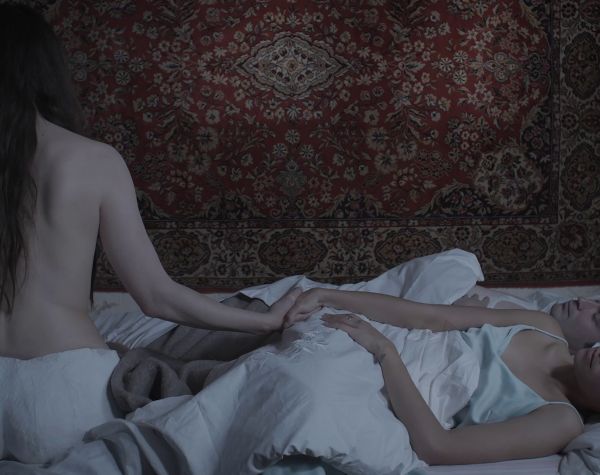
A similar stuckness plagued other films, especially those with seemingly the best intentions. In Saudades Eternas, the French-Brazilian director Emma Boccanfuso hardly leaves the confines of one family home, delivering a suffocating portrait of an ordinary household in Rio de Janeiro’s Chapéu Mangueira neighborhood, which is hemmed in by gang and police violence. Just as limited in scope is Meeting Götz by Birgit Bergmann and Gregor Centner, a surface-level portrait of Götz Kubitschek, a figurehead of the German New Right. The problem with their joint debut lies in its title: the directors manage to meet Götz far too early. What follows is a frictionless documentary, clearly intended as a left-wing takedown of the far right, that offers little more than a conventional portrait in which the ideologue can present himself on his own terms.
Meeting Götz‘s counterpart might as well be Books Are Our Weapons (A könyv a mi fegyverünk), a staunchly left-wing hybrid of documentary and fiction in which the Hungarian director Máté Konkol portrays a collective of progressive intellectuals who have set up an open-source academic commune. Heavy with citations from anti-capitalist theory and punctuated by dramatized interventions from the director, the gorgeously composed film also sits easily next to After the Rehearsal. In this travelogue through Burundi, the German director Philipp Fröhlich explores the post-colonial hubris of foreign NGOs and embassies, all through a cheeky narrative that riffs on Samuel Beckett’s Waiting for Godot. It is a fact-heavy fiction about a theater troupe waiting for a director who never arrives, which turns into an aimless journey across the country and its many economic and societal ills.
Such richness in text and subtext was hard to find in Up Again (Znovu vstaň), a somewhat by-the-book sports documentary by the Czech director Eliška Cílková Andršová. Following the young figure skater Barbora Vránková from the age of 15 to 18, the film sets itself up as a grand treatise on the toll of excellence. However, much like its protagonist, it fails to rise to the occasion, losing all its momentum in the final stretch of a breakthrough that never materializes. The same frustration mires The Lucias (Les Lucia), an ambitious film by Clizia Centorrino about the many girls from her native Sicilian village who are chosen to portray the martyr Saint Lucy in the highly anticipated annual summer procession. As a film scholar specialising in amateur footage shot on film stock, Centorrino sits on a treasure trove of archival material, but she lacks a thesis that would allow her to weave it into a film that does justice to the cultural specificity of this recurring event.
Luckily, other journeys the First Lights directors set out on proved more fruitful. Although Voices from Neptune (Voces de Neptuno) by Leinad Pájaro De la Hoz veers too far into minimalist abstraction at times, its fusion of ambient soundscapes, nocturnal imagery and jarring testimonies results in a harrowing portrait of family scars in war-torn Colombia. Mothers speak about the “enforced disappearances” of their children, brutal accounts that haptically and sonically tear open the mass graves into which too many young people have been dumped across the country.
Ramón Llaven‘s Dance of the Souls (El baile de las ánimas) is likewise haunted by the faces of Mexico’s disappeared, whom the director thoughtfully summons back in an empathic film that dances around the Día de los Muertos in the highlands of Oaxaca. The Day of the Dead is a way to call back departed spirits, to honor loved ones who have left this mortal coil, and to confront the living with their own mortality. Llaven films a gallery of characters who organize the celebration, and at times the film cuts painfully deep when the voice-over tells us that the person we see on screen was murdered not so long ago.
The South Korean experimental filmmaker Jihyeon Oh may have taken the most adventurous journey of all. With Erotic Blossoms in a Dream (Eumhwa), she ventures through the history of experimental cinema as transgressive art, delivering an Amos Vogel-inspired supercut of erotic and pornographic imagery from the underground cinema of yesteryear. However, this almost sublime montage of footage in negative, drawn from 79 explicit films by artists such as Yoko Ono, Stan Brakhage, and Kenneth Anger, barely connects to the lackluster first half, in which Oh evokes the history of Korean courtesans and colonialism. The building blocks are undoubtedly there, from the history of the Korean railways and the harvest of sweet peaches to the rise of the salons where these elusive erotic figures gathered, but the chaotic arrangement of the material leaves something to be desired. An apt irony for a film that circles so thoughtfully around the tension between desire and repulsion.
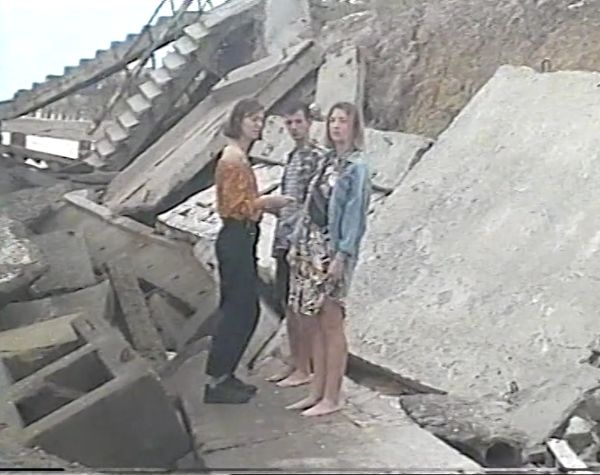
Besides Journey, the one other film that managed to give all its distinctive ideas real artistic poignancy was Water Wears Away (Vyprahlá ústa kamene). In many ways, this peculiar film by the Prague-based Ukrainian director Kateryna Ruzhyna is a skeleton key to the entire festival: it plays with displacement, wears its Czech FAMU pedigree openly, and folds the geopolitical crisis since Russia’s full-scale invasion of Ukraine into a painfully personal travelogue. Revisiting the home videos of her childhood in Zaporizhzhia, Ruzhyna points at places from a past life, and the images capture the slippage of time with a washed-over quality, as if the water of the title had already worn them down. Ji.hlava screened many urgent films about the Russo-Ukrainian war across its sections. Amongst them, Ruzhyna’s was the clear standout.
Hugo Emmerzael
© FIPRESCI 2026