
In the Heart of Kinshasa: Journey (Mobembo)
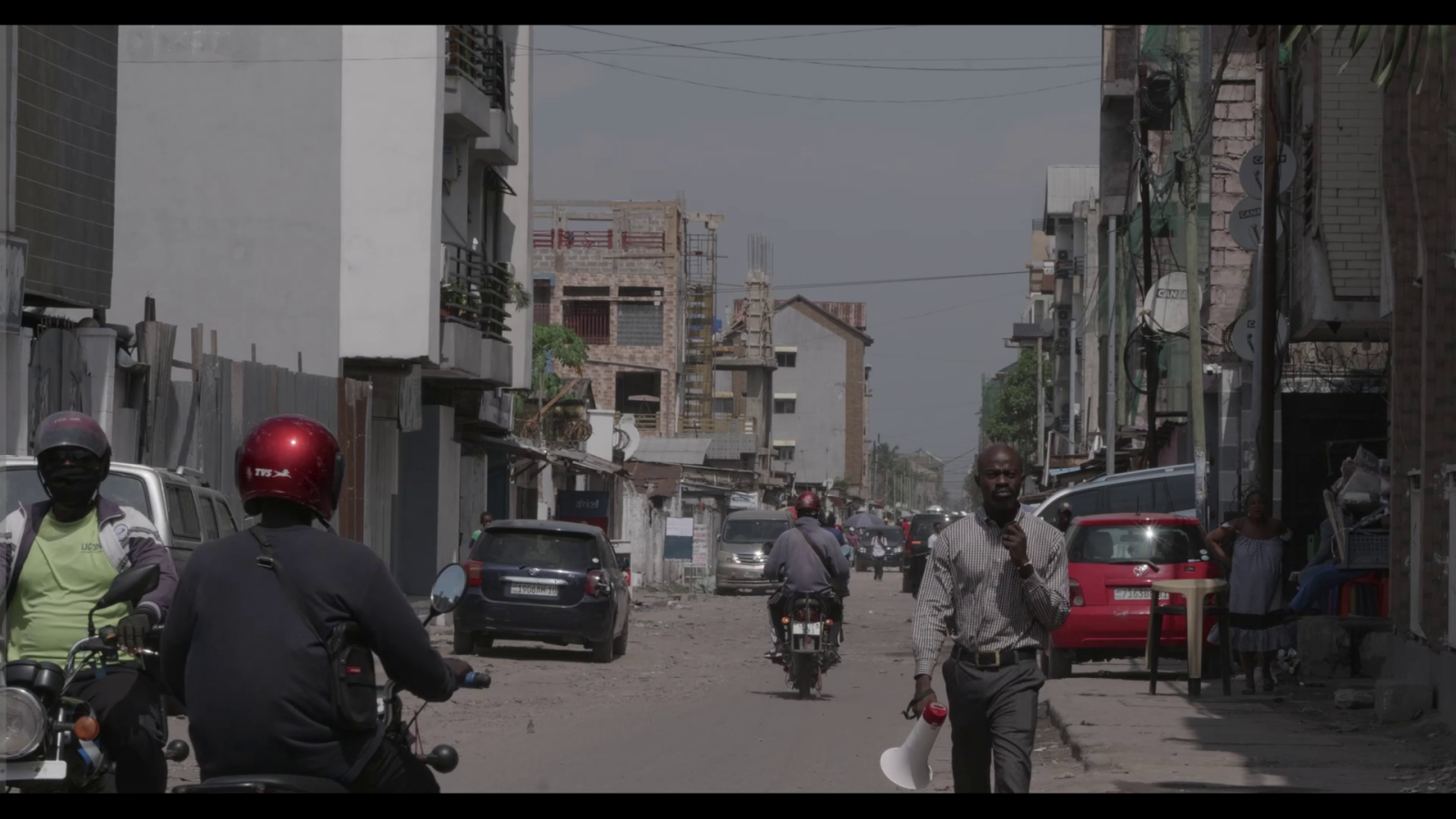
Jury member Tereza Brdecková examines the FIPRESCI prizewinner at Ji.hlava, Eli Maene’s Journey (Mobembo), and finds a clearly-articulated vision that stood out in the “First Lights” competition of debut features at the festival.
The dirty river rages over the rocks, and thousands of empty plastic bottles lie scattered along the steep banks. Some people collect them and haul them to recycling centers, where containers bear signs in Chinese. Others sell water in more plastic bottles. Here, plastic has replaced trees, grass, and flowers in the landscape. And here, in Kinshasa, not far from the market where flies swarm and fish and vegetables are sold, a remarkable artistic community resides in the slums.
One girl cuts plastic bottles into strips and uses them to make jewelry and gigantic colorful sculptures. Another tattoos her friends according to their wishes. A young painter is set to open an exhibition, but he runs out of paint and needs to earn money for new supplies. So he sells a few paintbrushes, puts on a cheap suit and tie, buys a Bible, and heads into the city as a street preacher. He proclaims the word of God at the market, where his audience consists mainly of women, and on buses and in the streets. Sometimes he explains directly to people that he needs money for paint; other times, he just asks for it. He proclaims that Jesus loves everyone. Yet we have serious doubts about the strength of his faith, and even the women who give him money don’t seem to be under any illusions. One of them says she likes to give to all preachers whenever she can, because God will appreciate it anyway.
We walk through the suburbs of Kinshasa. We attend the funeral of a popular and influential woman who worked as a bar dancer in a large dance hall. From here, women are recruited to work in clubs in Dubai and other Arab cities. Finally, we attend a performance at an artists’ colony, where people dance in skirts made from strips of plastic bottles. They have learned to use waste as a natural part of their environment—there’s nothing else around anyway. It is both despair and hope.
Mobembo, which translates as “the journey,” is a docufiction. Eli Maene offers a fascinating and insightful look at the Congo, Kinshasa, and the local artistic community—a perspective that no outsider can imagine, especially today, when people from wealthy countries associate the Congo exclusively with the Ebola epidemic and inter-tribal massacres and conflicts. Here we discover an impoverished yet vibrant and thriving metropolis, with buses full of people holding cell phones, girls wearing meticulous makeup, and a wealth of creativity. Depression, poverty, and misery are not hidden. But the energy of the city and its people overshadows them.
Eli Maene (born 1994) drew attention to himself in 2021 with the short film Biso Pe Toza, also about the artistic community in his hometown of Goma, Congo.
He captured everyday life in this war-torn region in his subsequent short documentary, Lobi Ekosimba (2024). Both films have been screened at international film festivals. So he is not a fresh newcomer. He is an extraordinary talent who is clearly forging his own path: The glimpse into the squalor of Kinshasa is shocking to Western viewers, and Maene is certainly aware of this, as well as of the impression created by the community’s artistic work and the story of the volunteer pastor himself. The film was made without European co-producers; it is purely African and thus free from any potential unwanted demands from television or distributors.
“First Lights,” the competition spotlighting debut films at IDDF Jihlava, is sometimes difficult to follow. The themes tend to be urgent, often provocative, and their form distinctly auteur-driven, but they are often not very accessible. At auteur festivals, we expect precisely such an approach, but it loses its value when even an expert is lost amid the images, words, and sounds and has nothing to hold onto.
But Eli Maene, a 32-year-old Congolese filmmaker, does not have this problem. The power of his artistic expression is natural and clearly articulated.
Tereza Brdecková
© FIPRESCI 2026