
Gentle Monsters. On the image of men in the competition of the 71st SEMINCI
In her report from the 71st SEMINCI in Valladolid, Bettina Hirsch explores how contemporary cinema portrays men through three films in the festival competition: Queen at Sea, Gentle Monster, and Rose. Taking up a concern raised by the festival’s youth jury about the representation of male characters, she examines how these films approach masculinity, vulnerability, violence, and the structures of power that shape men’s lives.
In Valladolid, three juries sat before the same 22 films and yet did not see the same thing. The main jury, the youth jury and we, the critics of FIPRESCI, chose from a programme that could hardly have been more varied, and afterwards we argued not only within our own ranks but across the borders between the groups. What stayed with me most was the voice of the two young men on the youth jury. They were alarmed. Too many men, they said, appeared in these films as perpetrators, as wounded souls, or as bearers of cold power.
It was not a uniform picture. It was more a field of tension, in which men either embodied systems or sought support and unsettled us in the process. And almost always the films told their stories through those who stood beside them: women and relatives who had to respond to what men did or failed to do.
Cinema loves its types. The violent patriarch, the emotionally cold careerist, the bumbling father, the toxic ex. They did not arise from malice but from experience, for they preserve what long went unseen: the relation of power, violence and silence. The youth jury posed an uncomfortable question in return. What happens when a warning hardens into a pattern? If men are the incompetent in advertising, the rescued in comedy and the danger in drama, where do boys find an image in which vulnerability, care and friendship have a place? That is their thesis, and it deserves to be taken seriously, even if it cannot be proven.
The youth jury’s prize went, of all films, to Queen at Sea by US filmmaker Lance Hammer, the film that carries this very quarrel within it. Juliette Binoche plays Amanda, who walks in on her stepfather Martin (Tom Courtenay) in the first scene, in the marital bed, having sex with her mother (Anna Calder-Marshall), who suffers from dementia. From there everything circles a question that will not resolve: where does care end, and where does violation begin? Martin nurses, he loves, he justifies himself with his own research, which suggests that closeness can comfort people with dementia. And he crosses a line that a sick woman can no longer draw herself. The film neither absolves him nor makes him a monster. In the end Martin seems to understand, too late, and the dementia remains as it was.
Gentle Monster by Austrian filmmaker Marie Kreutzer stands beside it like a shadow. Lucy (Léa Seydoux), a pianist, lives with her husband Philip (Laurence Rupp) and son in a stability that only looks like stability until the police begin investigating Philip. Suddenly she must listen anew to what she thought she had known for years, like a piece whose melody proves to be a deception. Martin acts openly, Philip in secret, yet the same thing unites them: they are regarded as caring, and that is precisely what protects them. Care is the cloak of the deed. One is tempted to call them gentle monsters, men whose tenderness may be genuine and whose violence is violence all the same. And in both films those truly affected stay silent, while we see through the eyes of the women who must go on living with it.
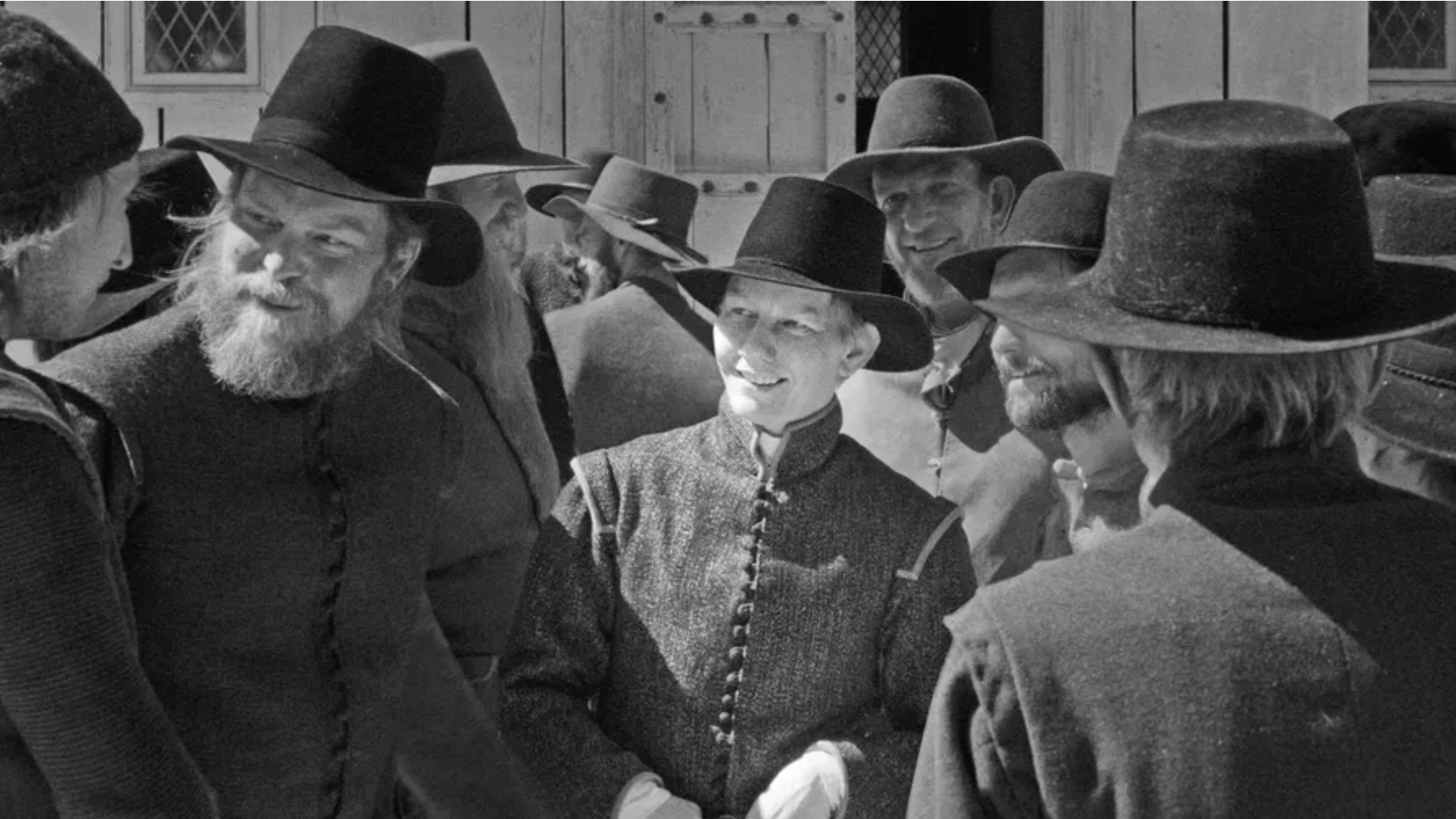
The village men in Austrian filmmaker Markus Schleinzer’s Rose are another matter. After the Thirty Years’ War, a woman (Sandra Hüller) arrives as a soldier in a remote Protestant village, takes over a farm as a man and marries the young Suzanna (Caro Braun). Rose disguises herself because only men are granted a life of their own. At first the community takes her in, but her belonging lasts only as long as the mask holds. When she is exposed, the village shows no mercy, for it condemns no person, only a breach of order. These men have no inner life that the film shows us. They are yardstick, owner, judge. Their camouflage is authority; their violence is public and sanctioned. No one has to want it personally for it to work. One may read this as a weakness, as pale characterisation. One may also understand it as intent: the threat here is not a person but a structure.
Therein lies the difference I take away from these days. The perpetrators of the private sphere are near, which is why we see their hesitation, their tenderness, their excuses, and ask how someone so close could do so much harm, and why no one saw it. The men of the systems are distant; what protects them is status, not love. Yet both are shielded by something that is not themselves: a role that permits them more than they deserve.
In the end we agreed with the youth jury on something simple that none of us would have said alone. The question is perhaps less whether these films are too negative than whether they show enough.
Good films allow men their contradictions. They let them become guilty and, at the same time, be tender, vulnerable, and capable of learning. They don’t confuse understanding with absolution, and they never stop asking about the human being, even when they are showing a pattern.
Bettina Hirsch
Edited by Amber Wilkinson
© FIPRESCI 2026