
Objet A: Climate Crisis, Kleptomania, and the Desire for Control

In Objet A, German-based filmmaker Ann Oren explores sexual desire against the backdrop of the impending apocalypse through an imagery of highly evocative and surreal tableaux. Like her debut feature before, her sophomore film celebrated its world premiere in the main competition at the 79th Locarno Film Festival.
Hands are everywhere in German-based filmmaker Ann Oren’s sophomore film Objet A, which premiered in the main competition of the 79th Locarno Film Festival: in the minute-long shot of hands being washed outside the operating theater, in the close-ups of hands stroking fur collars, hands tracing a collarbone in the bedroom, right through to the hands snatching a shaving brush in a swift, kleptomaniacal gesture. And then, right at the start, there is this hand that has grown a sixth finger against the backdrop of a surgical drape. The finger is severed with surgical precision.
The surgeons are Ingeborg (Aenne Schwarz) and Adam (Louis Hofmann), a power couple recently celebrated for manipulating fungi to become a human skin generator. The pair will soon discover that fungi are also good for quite different things. Ingeborg and Adam are in their early thirties, highly successful, and they seemingly have everything under control: They have made a life for themselves in a world that celebrates tactile experiences, removed from ordinary people who only get to feel their surroundings via the plexiglass screen of their mobile phones.
Gaia (Simone Bucio) enters their lives by the hand with the sixth finger, which may be seen as symbolizing a sixth sense. Like the White Rabbit in Alice in Wonderland, she lures Ingeborg into a world full of moss, snails, and mushrooms, where she has buried the severed finger. At this spot, a sort of paradise tree now sprouts, its ripe apples falling to the ground.
In her debut film Piaffe, which premiered in the main competition at the Locarno Film Festival in 2022, Berlin-based Israeli director Ann Oren already brandished a surreal aesthetic of highly saturated cinematography unfolding like a series of beguiling paintings. Piaffe was a story of a young woman (Simone Bucio) dreaming of becoming a horse. She has to stand in for her sister, who is recording soundtracks for advertising films in an analog studio. The current assignment is a soundtrack for a commercial for a sedative, featuring a nervously prancing dressage horse. Through her work on the sound, the young women comes to identify more and more with the horse, and a horse’s tail grows from her tailbone, which she furthermore wears with pride. Piaffe is a visually striking and highly unconventional coming-of-age story about a young woman’s sexual awakening, incorporating imagery ranging from BDSM to vividly enlarged microscopic shots of ferns. With allusions to the photographer Eadweard Muybridge, who laid the foundations for the medium of film with a series of galloping horses, Piaffe expanded into a commentary on cinema’s simultaneously dreamlike and sharp-sighted gaze upon reality.
Objet A, too, operates on multiple levels. The title is a reference to Jacques Lacan’s psychoanalytic theory of the unattainable object of desire as the consequence of an irreparable lack. Furthermore, Luis Buñuel’s film That Obscure Object of Desire (Cet obscur objet du désir, 1977) can be read as a subtext. The surrealist filmmaker exposes bourgeois thinking and behavior, as well as the patriarchal desire to dominate the woman being desired.
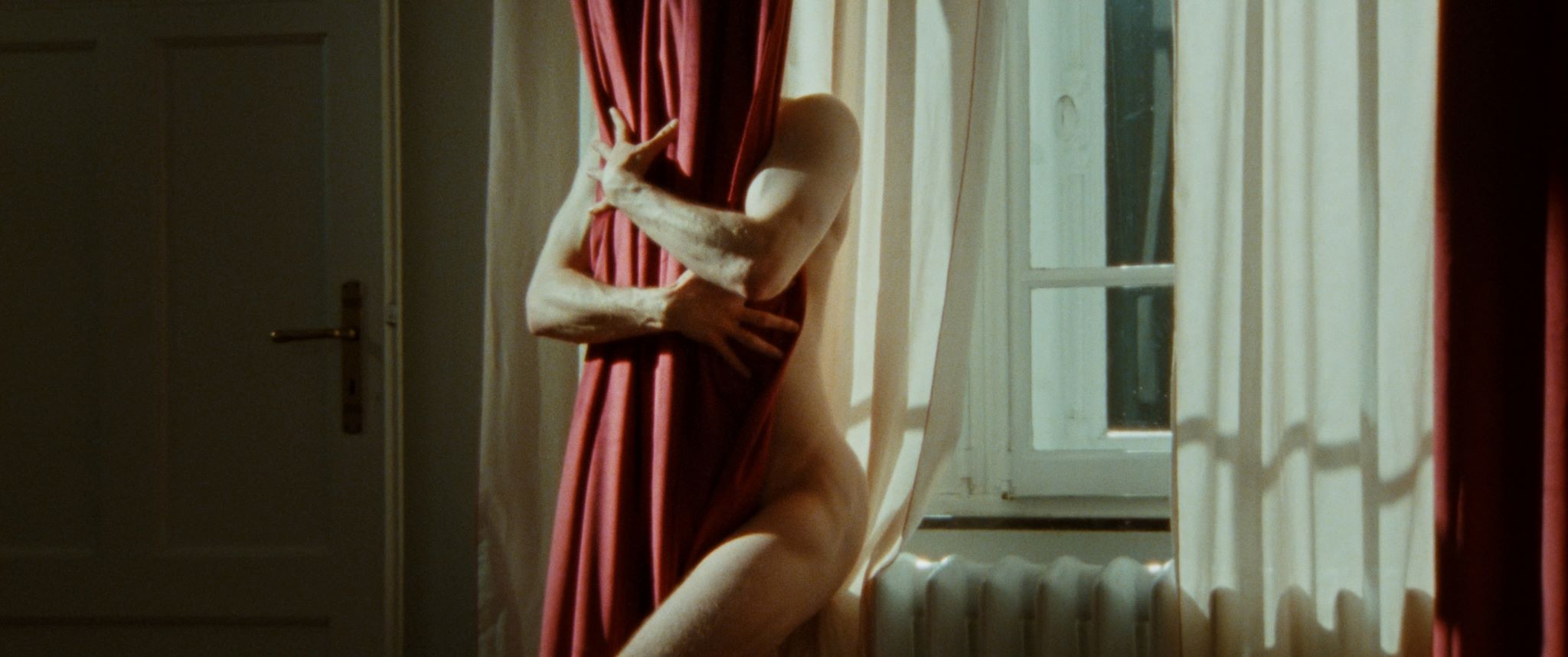
In Objet A, stereotypical gender roles are subverted, though the alienating effect is diminished by allusions to the world of BDSM: Ingeborg exercises control, both in the operating theater and through her kleptomania. She has an accident, injures herself, and, in a shop called “Objet a,” acquires a highly aestheticized prosthesis made from exquisite natural materials, which becomes her fetish. It is Adam who objectifies himself: “Play with me like a doll,” he pleads at one point. He inflicts an injury on himself and puts on a corset that makes him look like a section of tree.
Climate change, allergies, infectious diseases: the buzzwords of the impending collapse towards which this world of domination and subjugation is hurtling ring out like a mantra from the news feed. The film thus seeks to place sexual desire and the urge of domination within the broader context of our relationship with the environment, which lies at the heart of contemporary ecofeminist critique. Gaia steps in as if by magic, leading the couple on a psilocybin-induced hallucinogenic journey of loss of control, revelation, and conflation.
One may feel as though one has heard this plot or something similar before. One may also have seen the hallucinogenic trip or something similar before. And the name “Gaia,” which refers to the goddess of the Earth, is rather plain and obvious. The film thus appears as a rather familiar fairy tale dressed in a contemporary, kinky guise, and much of its appeal derives from this aesthetic.
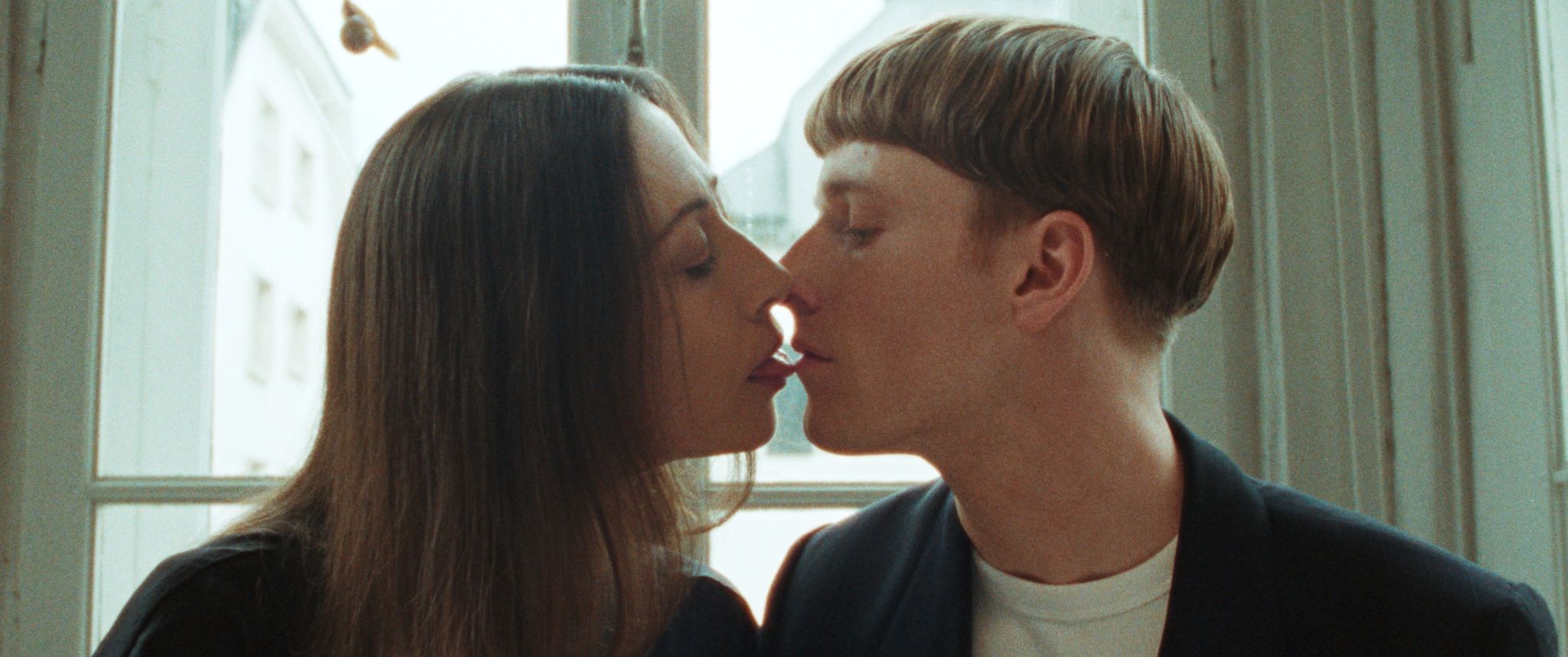
And yet: filmmaker Ann Oren is also a visual artist. In her cinematographic style she creates powerful, well-composed images in a select color palette that appear like a series of outstanding tableaux, acoustically enhanced by a soundscape that feels almost tangible.
This is visual storytelling with a highly aesthetic, original, and evocative imagery in which humans, animals, and plants merge. Towards the end Ingeborg and Adam kiss for the first time. In a shot seemingly lasting several minutes, their tongues circle, and it looks like two snails tentatively embracing each other: a shot leaving a lasting visceral impression.
Anne-Sophie Scholl
© FIPRESCI 2026