
Yearning for a Future Nostalgia: Far from the Trees
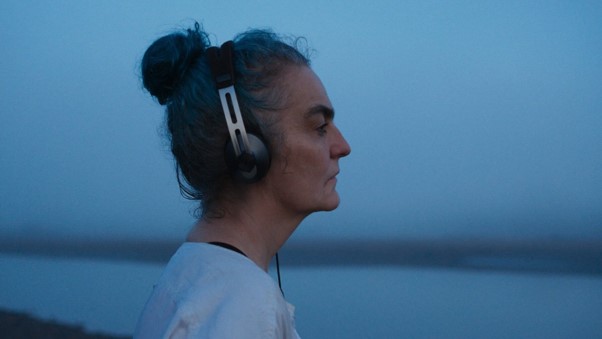
Personal memory is inseparable from collective history as the wounds of the past resurface to haunt the present in Catalan filmmaker Meritxell Colell Aparicio’s third feature, writes Virat Nehru.
“It’s like my dad used to say, ‘What’s remembered, lives.’ I maybe spent too much of my life just remembering,” says Fern in Chloé Zhao’s Academy Award-winning drama Nomadland (2020), admitting that her chosen lifestyle has been a way to honour the memory of her deceased husband, complicating her journey of processing grief and moving on.
The extreme lengths we can go to in search of healing and honouring our loved ones is the central motif of Meritxell Colell Aparicio’s contemplative drama Far from the Trees (Lejos de los árboles), which won the FIPRESCI prize in the Concorso Internazionale section at the 79th Locarno Film Festival. A deliberately playful and malleable approach to form that interpolates images—including digital, Super 16, and archival footage—with a minimalist, naturalist soundscape, creates an evocative sensory experience for the viewer, in which events from the past, present, and an imagined future seemingly blend.
Sound artist Adela (played by real-life composer Angélica Castelló), the granddaughter of Catalan Republican exiles, decides to undertake an ambitious project to create a sound map of endangered indigenous languages while travelling through Peru, from the Amazon rainforest to the Andes. She is assisted in her quest by her Quechuan guide cum translator Lucho (a stellar turn by José Luis López Cama), a relationship that evolves from professional colleagues to a closer familial bond.
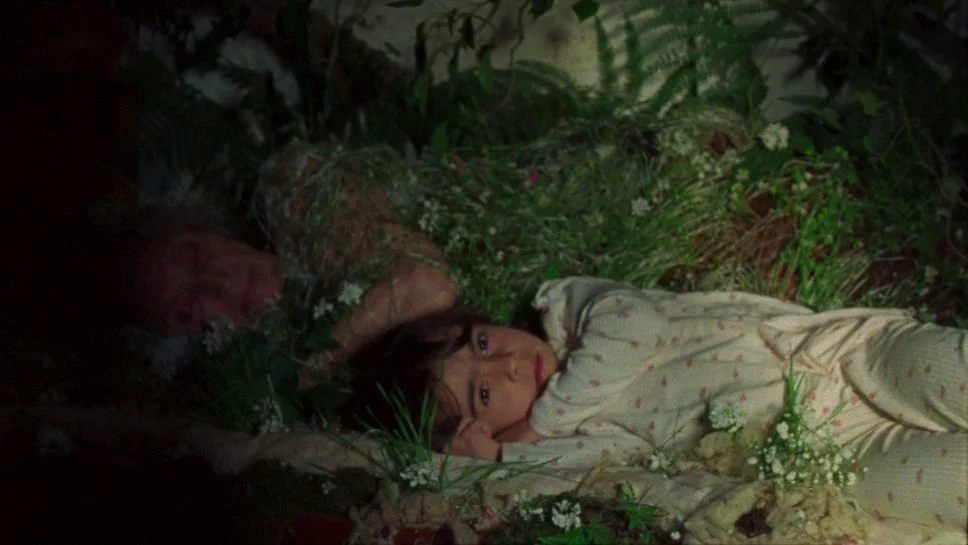
Aparicio uses the silhouette of Adela’s external quest to probe how the trauma of erasure and displacement can persist across generations. Cassette tape recordings of her grandfather Emili’s voice inform the contours of a parallel inner journey for Adela, forcing her to confront the horrors of violence and the need to properly grieve a home and community lost to the pages of history. Emili calls it living in a perpetual “future nostalgia,” describing the state of collective emotional limbo for Spanish exiles, a nostalgic yearning for a future that may never be realized in their lifetime. As the film progresses, we realise that Adela’s project to combat linguistic erasure is her way of honouring her grandparents’ memory.
Emili’s presence is the catalyst for Aparicio and her co-editor Ana Pfaff to enmesh digital film with Super 16 (for moments where the film goes into flashbacks of personal memory) and archives (reflecting on displacement resulting from the Spanish Civil War and actual figures living in exile, such as the Calders and Artís-Mercadet families). This free-flowing approach allows the film to borrow stylistic elements from various traditions, including autofiction, docufiction, essayistic fiction, and contemporary experiments in Latin American cinema that fuse personal memory with collective history through archival footage (see, for example, Kleber Mendonça Filho’s The Secret Agent). Despite these borrowed ingredients, the final concoction is a film that has a distinct flavor and an aftertaste that haunts your subconscious long after the credits have rolled.
Breaking formalist expectations is just one way the film blurs the boundary between reality and fiction, the seen and the unseen. Angélica Castelló, the real-life sound artist, shares several striking similarities with her fictional counterpart, Adela. Much like her character in the film, Castelló’s grandfather lived in exile in Mexico after the Spanish Civil War. Adela is a migrant sound artist who goes to Vienna to study music composition. This arc closely mirrors Castelló’s career trajectory, making it hard not to infer that Castelló is a direct inspiration for the film’s protagonist. That’s not all. The character of Adela in the film is based on the real-life persona of Adela del Campo, a Catalan activist exiled in France who escaped the Franco regime. There’s another interesting layer on top of these connections: the film also serves as a love letter to Aparicio’s Catalan heritage and her grandparents. Once you pull on one thread, you realise just how interconnected the choices in the film really are—personal memory becomes collective history and vice versa. The ability to occupy these multiple spaces successfully is one of the main reasons this film resonates so strongly.
This is a film about searching for connection despite cultural and geographical distances. In the absence of a shared spoken language, music becomes a medium that fosters connection in unlikely circumstances. As they make their way across Peru, sharing songs from each other’s playlists becomes a kind of ‘call and response’ for Adela and Lucho, a shared language that brings them closer without needing words. When Adela puts on the song “Ton’s que mi reina” by the Mexican rock band Botellita De Jerez, Lucho responds by requesting to play “La sirena Varada” by Héroes del Silencio. Music is also an important signifier of how artists from across cultural boundaries can converse with one another. Adela plays a minimalist composition by Federico Mompou as an ode to her Catalan heritage, then immediately follows it with a piece by French composer Luc Ferrari. This juxtaposition accomplishes two ideas. Firstly, Adela’s choice of playing Ferrari right after Mompou presents them in conversation with one another, speaking to the transnational space the film occupies—a composer living in exile speaking through his art to another in a different part of the world. Secondly, it also situates Adela as a third-generation migrant who occupies multiple hybrid identities—Catalonian, Mexican, Spanish, and European—without neatly belonging to any single one.
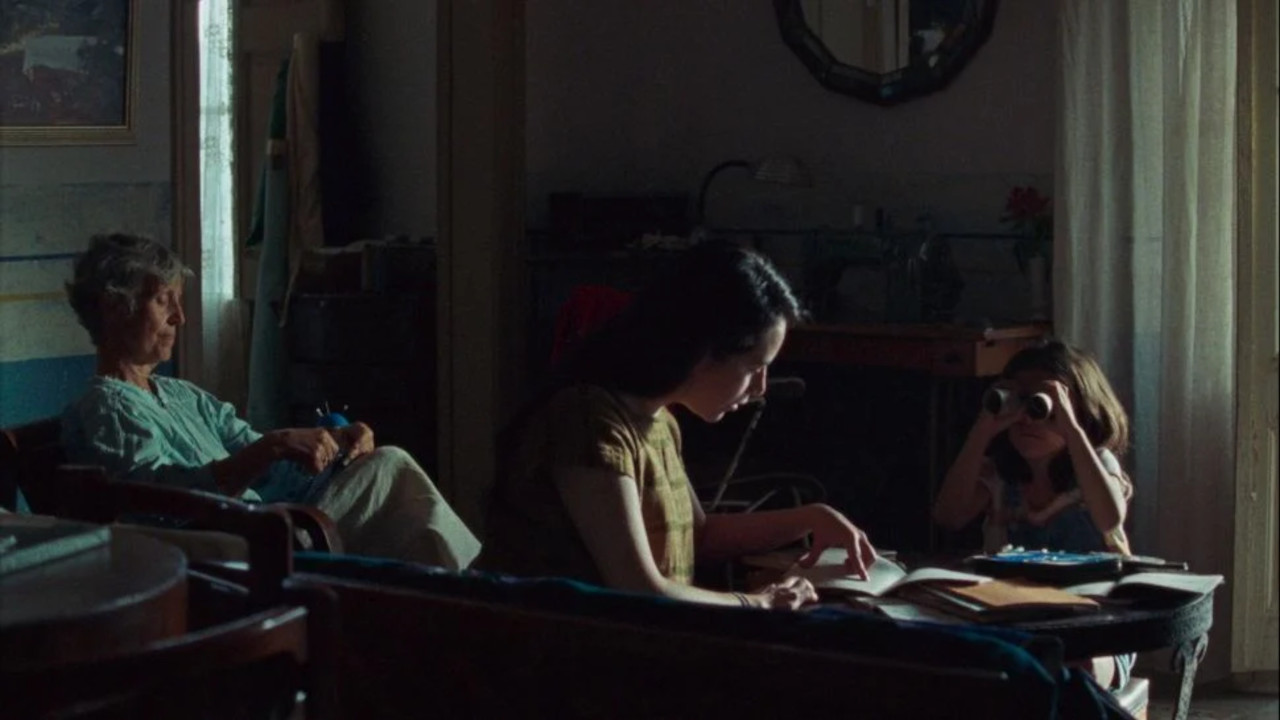
Aparicio, however, is careful not to paint Adela as an altruistic saint. One of the most interesting aspects of the film is how the labels of the “coloniser” and the “oppressed” can change hands. Identities and labels, much like languages, are porous and can shift with time. Adela sees herself undertaking a noble mission to document languages at risk of extinction as a way of honouring her ancestors. At the same time, she keeps her long-term indigenous housekeeper Paula (Teresita Sánchez) trapped in an unkind arrangement so she can continue caring for her ninety-eight-year-old grandmother Toni. One cannot say Adela is a cruel person. Still, there is a sliver of cruelty in her deliberate obliviousness to Paula’s situation, especially when she pleads to be freed from the obligation. This is an interesting moral complication that adds to the film’s layered nature: Adela and her family—once the oppressed—now unwittingly find themselves in the position of the oppressors.
Lejos de los árboles resists easy answers at every turn. It’s a film that forces us to sit with contradictions—love and abandonment, kindness and cruelty, connection and dissociation can simultaneously coexist. It’s natural to seek closure that announces itself with a neat resolution, but we seldom find it. We are scared—of ourselves, of the wounds we carry, of the wounds we may pass on—and that’s okay.
Virat Nehru
© FIPRESCI 2026