
Professionals and Newcomers: "Nordic-Baltic Student Films" at Fredrikstad
Critic Maximilian Schäffer considers a group of young filmmakers at Fredrikstad, and finds them displaying their vastly different approaches in competition for the FIPRESCI prize.
The FIPRESCI jury at Fredrikstad Animation Festival 2026 found itself grappling with the challenge of having to include not only two blocks of professionally produced “Nordic-Baltic Shorts” but also a section of student short films. Twelve submissions were up for consideration, each bearing witness to vastly different production quality and levels of experience on the part of their creators. It felt like everything from third semester to thesis work was represented. Especially when compared to pro films like The End by Niki Lindroth von Bahr and 9 Million Colors by Bára Anna—major works that demonstrated experience, star power, and high production value—one had to wonder whether a single competition could really be entirely fair to “the up-and-coming” filmmakers. It goes without saying that money and age are not necessarily seals of quality, but they usually do at least gatekeep a certain standard.
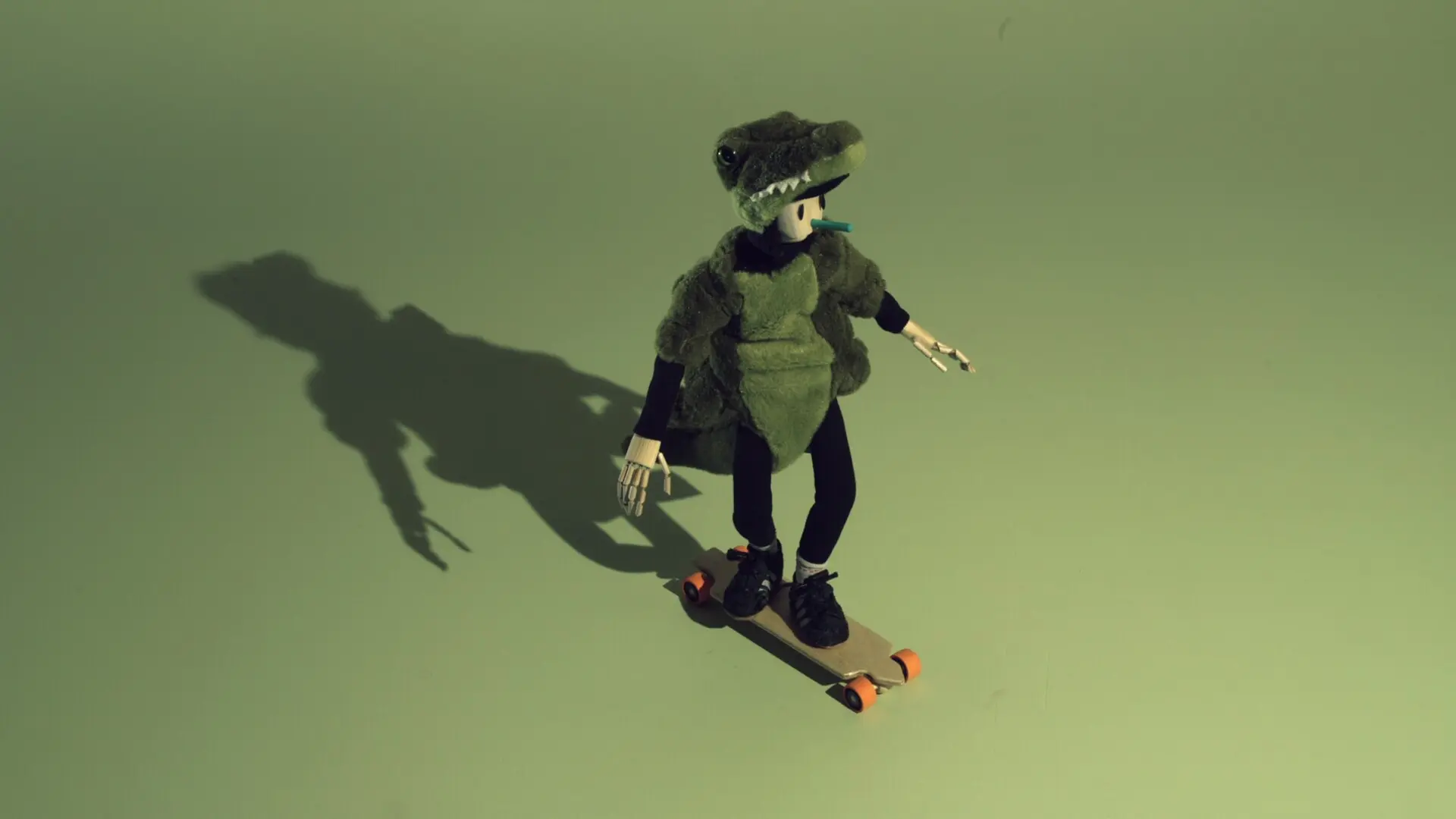
Works such as Still Life by Lara Jaydha and especially Jump Zoo by Lukas Wind testified to impressive visual originality, yet seemed more like conceptual finger exercises—albeit at a high level. Here one can certainly apply the criteria of the “genre” that animation as a medium deliberately refuses to claim. The fundamental focus on visual design is indeed more elementary and radical than in live-action film. Often—and this can easily be observed in student work—this focus consumes the narrative, swallowing it outright, in favor of tricks and color.
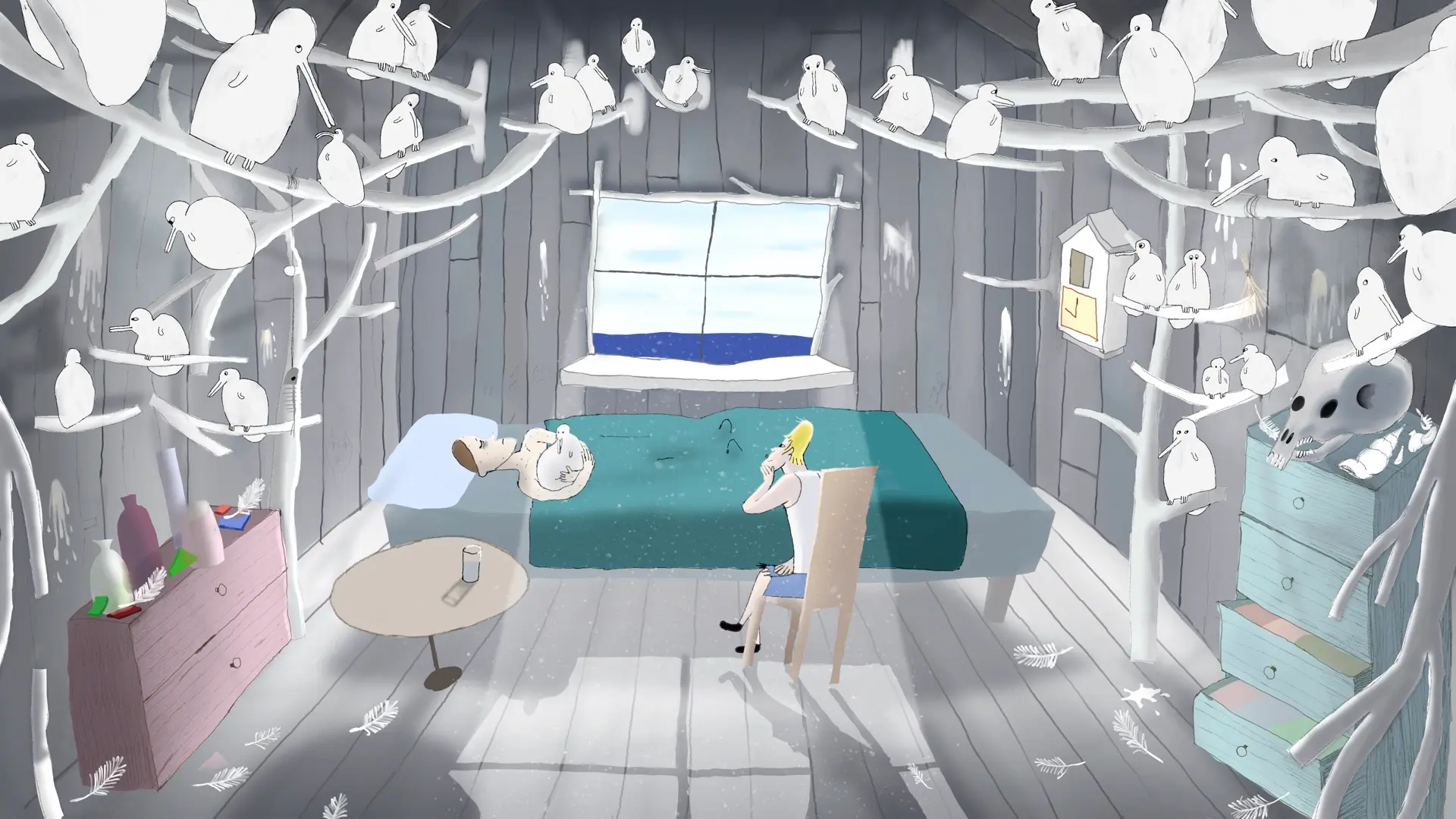
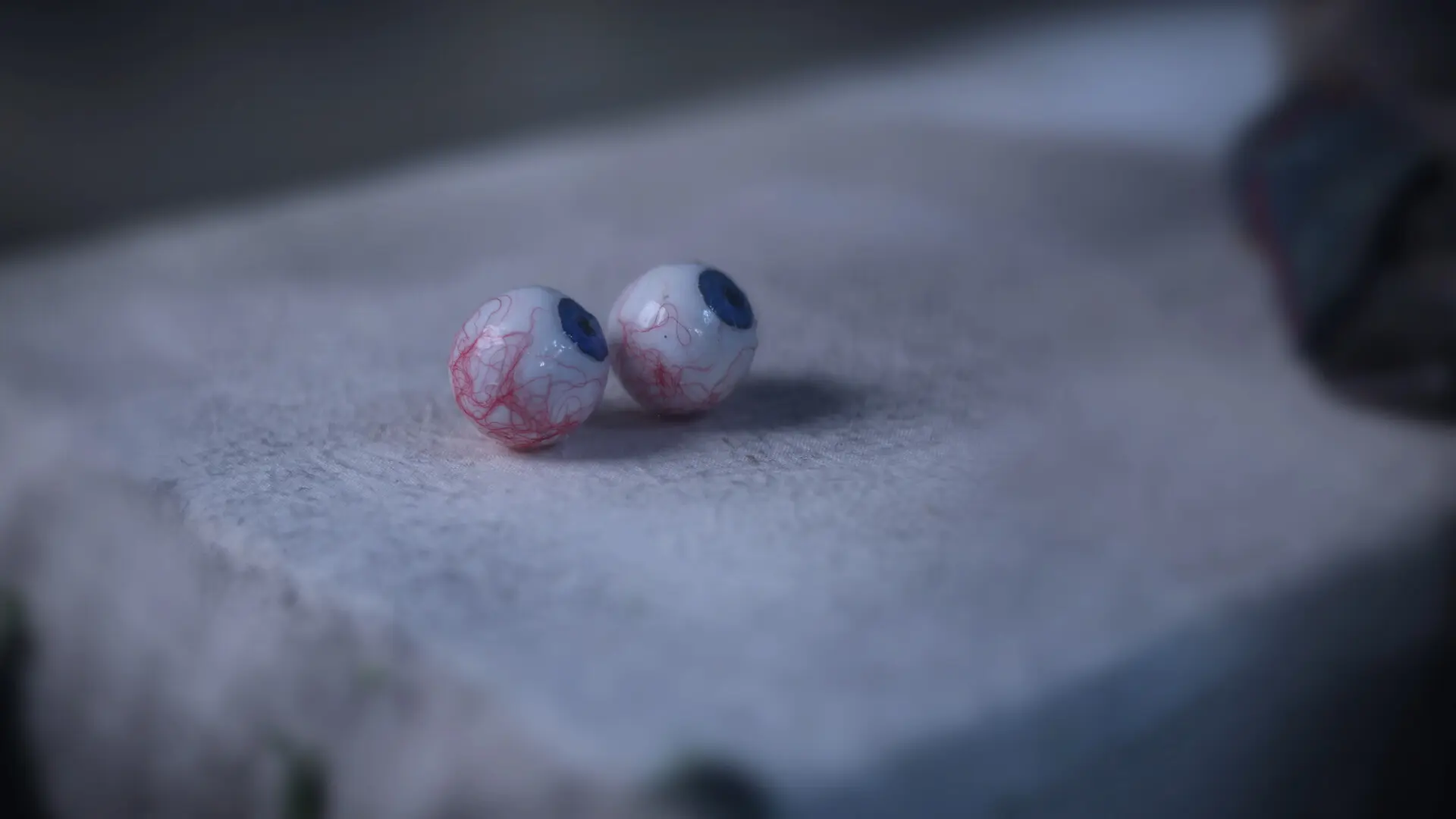
Even more interesting than the visual approaches of some proof-of-concepts were the raw insights into the artistic inner world of young directors and animators. It seems as though the Covid period and the accompanying experiences of domestic confinement have left formative impressions. Surreal, Kafkaesque scenarios dominated the student films. Eye Swap by Jenni Koljonen tells a small fairy tale stylistically somewhere between traditional Eastern European puppet animation and Tim Burton gothic, mixed with animated colored pencil drawings. Eyes are ripped out and put back in, so blurring dominates the screen. The Crack by Viktoria Shmidt uses the double meaning of the word for a meditation on drug experience and emotional destitution in black and white. The Sea Spirit by Edwin Ivemark Kihlström tells an abundantly twisted tale of an all-consuming, karmic sea spirit. ˌaɪs ˈkriːm, aɪ skriːm by Nataliia Domini scraped most radically at the edge of madness. The young Ukrainian director dissolves logic and linearity in black, white, red, and blue. Punk rock and organ music spice up the soundtrack. With a bit more bite in the timing of dialogue and psychedelic slapstick, the film would have stood out in the competition.

With student films one might expect more political approaches, yet only two of the twelve submissions directly engaged with social issues. This Feminine Side by Alice Siniscalchi gave voice to queer voices from Lisbon who complained, suffered, and made combative statements. Things That I Was Gathering by Ekaterina Zhuzhleva broached the subject of political repression in the Russian Federation on a small scale, yet very distinctly. Though formally quite conventional, the film won over at least the heart of the main jury with its plausible narrative and, likely, aspects of the “correctness and importance” of the topic, and won the festival’s Student Award.
During its deliberation phase, the FIPRESCI jury often found itself somewhat perplexed about which criteria to apply, particularly for a “critics’ prize.” Critics are usually authors, thus standing outside the industry, usually knowing little about the difficulties of a particular animation technique. Here, distinguishing and weighing quality from originality proved difficult, since the students were predominantly presenting their newly acquired craftsmanship. The critics wondered as well about where professors put their focus in shaping their students. This resulted in a genuinely interesting insight with new questions regarding the teaching and production conditions of the animation industry.
Maximilian Schäffer
© FIPRESCI 2026