
The Art of the Well-Balanced Short: Uka-uka
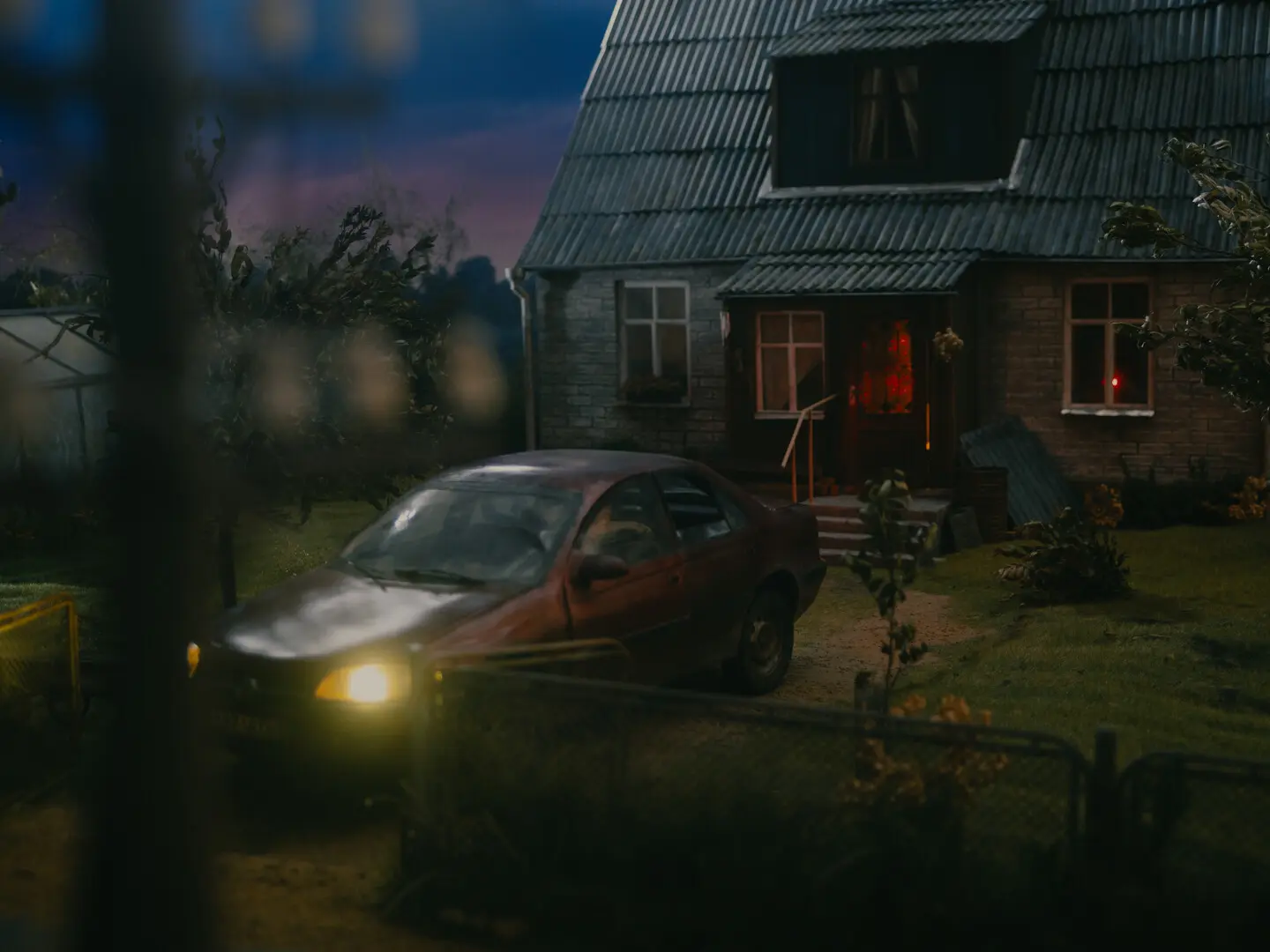
From Fredrikstad’s short animation festival, the Norwegian critic Jan Storø writes about the winner of the FIPRESCI prize, Uka-uka, and finds it a well-balanced effort that builds well even within its brief running time.
The town of Fredrikstad in southern Norway hosts an animation festival where most of the films are short films. The festival has existed for 32 years and is now an established part of Norwegian cultural life. For the first time, the festival has made an agreement with FIPRESCI to include a jury consisting of film critics.
The FIPRESCI jury of the 2026 version of the Fredrikstad animation festival watched a total of 29 films from the Nordic and Baltic countries, with 12 being student films.
Our discussions were on several topics, but it turned out that originality in visual style and the art of storytelling were at the forefront. The films on our shortlist for the prize during our talks were strong either on one of these two aspects—or both. We noticed that some other films clearly were stronger on their visual presentation than on bringing a narrative to the audience. That said, not all short films need a full structured story with a beginning, events in a successive order, and an ending. The short format sometimes invites the filmmaker to explore form more than story. The challenge of such films is to communicate the filmmaker´s idea or intention to the audience. Is the film made to show interesting, striking, grim, or beautiful images? Choices in color—or black and white—can also be used in interesting ways to communicate the film’s intention. Is the visual experience the main idea? Or, is the intention behind it to create an atmosphere that in some way tells something specific to the viewer—for example on pollution, or how we use smart phones in our modern societies? A lot can be said without a narrative, and without any guiding structure, including with voiceover.
When we eventually had to choose, our choice fell on the Estonian film, Uka-uka, by director Henri Veermäe.
The name of the film can be translated to Hide and Seek. And that is a precise short description of the external action of the film. A boy hides, and his family is searching for him.
When we had decided on the prize, we wrote the following statement:
The film is a powerful black comedy that seamlessly blends a wide range of techniques, from 3D animation to puppetry, bringing its characters to life across diverse settings through compelling cinematography. Its dark humor is delivered with impeccable timing, embracing the absurd to striking effect.
In the film, we meet a boy visiting his grandparents in their house. They live their own life, at its own (slow) speed. The boy is bored, and he seems to be in the way for them. He tries to play an online game but is interrupted by a telephone call on the same internet connection. When he seeks company outdoors with his grandmother, she is not so interested in his “hide and seek” suggestion, even though she pretends to be. The situation creates the background for what ensues. It involves a ride in a car, a funeral—and a surprise for the characters, and for the audience. Here Veermäe breaks one of the unwritten rules of cinema. But we forgive him, because it is done very nicely.
Uka-uka is a film both with a striking visuality, and a fully developed—even if short—story. It is dominantly a stop-motion film. It has an element of suspense that draws us into what happens in the different sequences. One of the film´s strengths is that it manages to build and develop despite its relatively short running time. Veermäe introduces us to a family situation, then uses this to bring in unrest. Something is just not as it should be. The boy is trapped in boredom, and is not seen by his grandparents.
Another quality in this film is how it delicately works with emotions. The boy shows us a range of emotions, from being bored, via feeling lost, to excitement, to curiosity, to….well, let’s not spoil the last ones. Also, the somewhat more distant grandparents´ emotions are interesting to follow.
The last thing to mention here, is the use of humor. We really loved this element in the film. Many short films are very serious, and Uka-uka reminded us of the usefulness of a good laugh.
When listed like this, the film may seem too full of events, visual elements, and emotions. But it is not. All of them are well balanced. Therefore Uka-uka is a good film, that deserves the FIPRESCI prize.
Jan Storø
© FIPRESCI 2026