
The Gentle Ghosts: Knowing Oneself Deeply
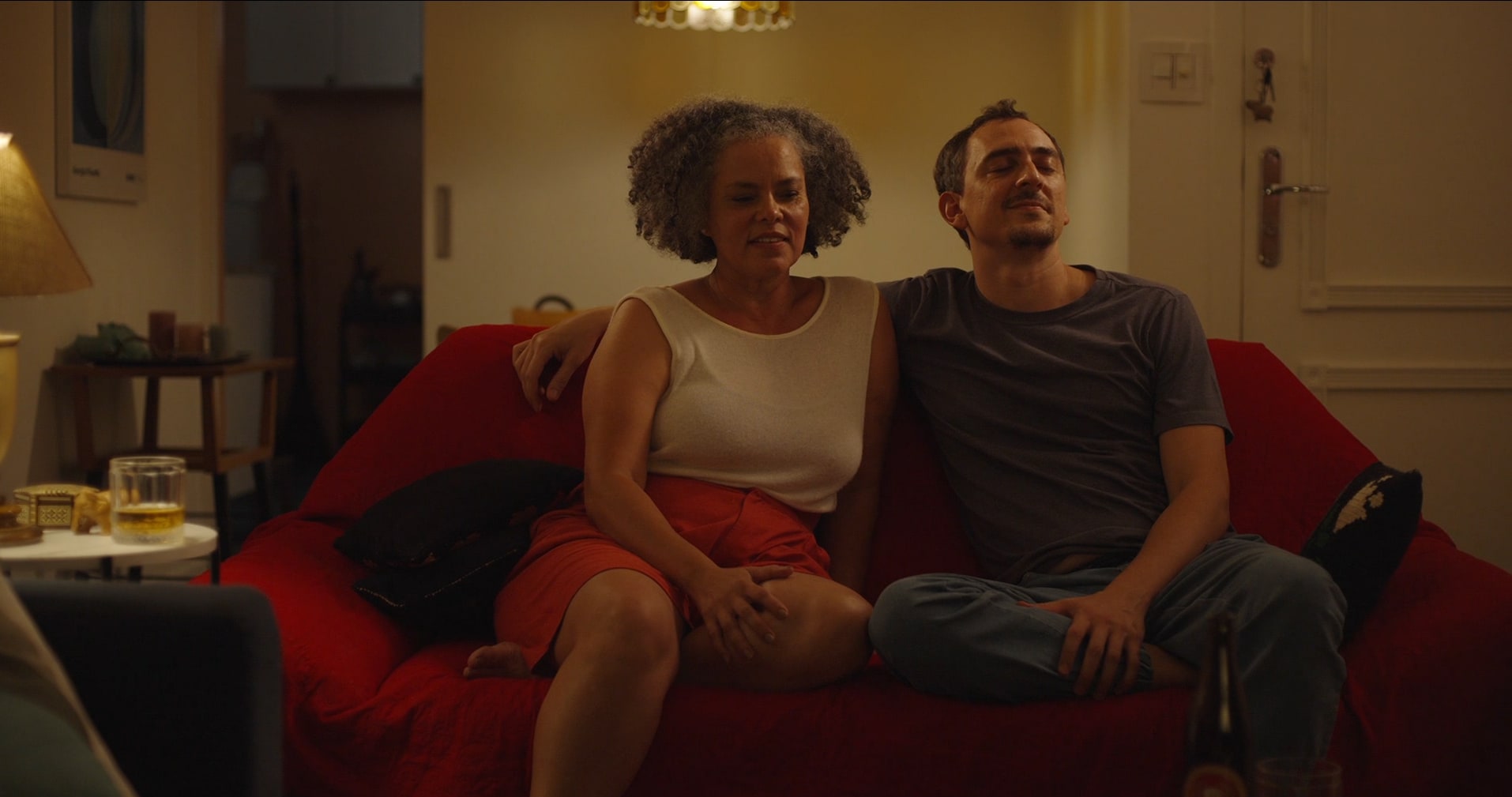
Polish film critic Maja Korbecka reflects on Caetano Gotardo’s FIPRESCI-awarded The Gentle Ghosts, a delicate and deeply local Brazilian film in which conversation, vulnerability and self-knowledge become ways of learning how to live with oneself and others.
The Gentle Ghosts (Os Fantasmas Gentis, 2026, dir. Caetano Gotardo) belongs to a type of cinema that has become increasingly rare, both in theatrical distribution and on the film festival circuit. It is a film that is delicate, powerful in its fragility, and bittersweetly naked in its honesty. In its two-hour running time, brilliantly written dialogue, and top-notch acting kept me deeply engaged in a story that, at first glance, seems fairly simple.
The main character, Inês, is a bank clerk in her 50s living in São Paulo. One evening, at a karaoke bar, she meets Hélio, an ornithologist who is deeply impressed by her singing. The two start talking and gradually get closer over the course of the evening. Yet regardless of how this short synopsis might sound, The Gentle Ghosts is not a generic romantic film, but a story much more complicated than its premise suggests: a story of friendship, love for another person, and self-love.
It would be very easy for The Gentle Ghosts to go down the road of therapeutic or didactic filmmaking, presenting on screen what one might be taught in psychotherapy sessions or university courses on feminist theory. Quite the contrary, Gotardo’s film is devoid of the stiff language of do’s and don’ts, or of the constant rectification required in order to “get healthy,” whatever that might mean. At the same time, The Gentle Ghosts is indeed about maintaining boundaries, being in tune with oneself, and feeling one’s emotions, regardless of how pleasant or unpleasant they might be.
In Gotardo’s script, each person—even someone who occupies the screen for only a few minutes—is memorable and has their own story to tell, rather than serving merely as a functional element in Inês’s story. This is a very rare skill among contemporary filmmakers, one that I suspect Gotardo may have acquired through hours spent watching theatre plays. This does not mean, however, that The Gentle Ghosts is more theatrical than cinematic. The stillness with which the camera records indoor conversations is juxtaposed with close-ups of bodies and small gestures that reveal the characters’ personalities and feelings more clearly—and often earlier—than words do. Yet it is the words that provide the film’s greatest suspense—or rather, it is the difficulty of expressing oneself through words, and of staying with another person in a conversation about emotions and desires.
It is truly fascinating to observe how the characters gradually grasp the crux of a matter and decide to make themselves vulnerable instead of cutting the other person off in an attempt to protect their own ego through lying. The Gentle Ghosts poses a considerable challenge to its actors, one that Andrea Marquee as Inês and Vinicius Meloni as Hélio meet head-on. There is something truly charismatic about Inês—not only her dazzling curly hair touched with grey, but also the calmness with which she expresses herself. Her spirit is light even as she deals with complex feelings of longing. This lightness comes from knowing oneself deeply and knowing what one wants from life.
Another great strength of Gotardo’s film is the way it engages with the Brazilian environment and how deeply local it feels. Having Hélio as an ornithologist brings another layer to the story: an attention to Brazil’s natural environment and its birds, and to the many things one can learn from nature and animals. It positions the characters firmly as living beings within a much larger Brazilian environment, even though most of the film actually takes place indoors.
The Gentle Ghosts is a queer film that escapes the framework of this label. In the end, being queer just means being human—complex but open, vulnerable and strong at the same time, embracing the paradoxes and contradictions of which reality is made. There is no discussion of the age difference between Inês and Hélio; it is not a problem for either of them. This does not mean that The Gentle Ghosts presents a utopia, nor that it avoids addressing what society expects of women and men. Inês is a mother, and she mentions that her choice to live alone and give up custody of her son was criticised by the people around her. Yet these social expectations never become an ideological framework imposed on the characters. They remain part of the complex circumstances in which people try to live their lives.
Watching The Gentle Ghosts is like enjoying a good conversation. I wonder where this joy comes from. Perhaps it is the feeling of being in perfect tune with oneself, one’s environment, and another person. We might be tempted to compare The Gentle Ghosts to some of Richard Linklater’s best works, most recently Blue Moon. But in addition to entertaining audiences with brilliant dialogue, The Gentle Ghosts has something more. The word “conversation” comes from the Latin conversari, meaning “to live with,” “keep company with,” or “turn about with”: the prefix con- meaning “with” or “together,” and versare (from vertere), meaning “to turn.” Indeed, conversation can be considered a dance. During the jury deliberations, my fellow jury member Héctor Llanos Martínez pointed out that the characters in The Gentle Ghosts are “dancing with words.” However, rather than dancing (turning), for me it is closer to the other meaning of conversari: to live with. It is a film in which the audience can dwell, forgetting the passing of time. One of the film’s lines captures this feeling just right: “It could be five minutes but it also could be five hours.”
Maja Korbecka
Edited by José Teodoro
© FIPRESCI 2026