
Three Periods in a Boy's Life: About Bloody Men
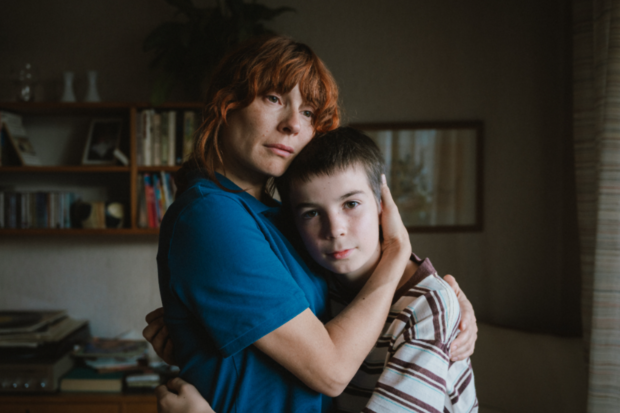
From Warsaw, critic Vladimir Lj. Angelov found that the very first film he watched still resonated after viewing a batch of other titles, and shares his thoughts about this intriguing Swedish movie.
The first film I watched at the Warsaw International Film Festival (9-18 October 2026) was the Swedish Bloody Men (Jävla Karlar, dir. Jens Sjögren). When you watch 15 films (or more) in 6 days, usually by the time the last one comes you’ve forgotten the first one. However, this film will resonate with me longer. Director Jens Sjorgen’s previous film, I am Zlatan, gave me positive expectations. However, before the start of the screening, Sjorgen, who was announcing the film, said that he liked the new film. I’m not one of those who trust authors when they appraise their own works. Qualitative evaluations should be given by viewers, and critics, of course. For every parent, their child is the most beautiful, and for every dog owner… There are beauty contests for humans and dogs and festivals for films.
But I was wrong with this prejudice. Set in the ’80s, Bloody Men is a reconstruction of this time. It’s based on Andrev Walden‘s beloved Swedish novel about the upbringing of a boy and a single mother. Three periods of Andrev’s life are shown, and three child actors: at first, from 6-7 years old, then around 11-12, and finally at 14 years old. The film does not have a classic plot but a casual narrative form. Andrev finds out that his father who beats him is not his real father and he starts living in his own world. He begins to imagine that his father is an American Indian, and in the first section an Indian character often follows him. His mother, Mona, leaves his stepfather and they move to the city. In the city Mona regularly changes men (Andrev says in the book that he had ten “fathers” for ten years) and each of them continue to mistreat Andrev, but that is not the main narrative; Andrev has a life besides the family violence to which he is constantly exposed. He makes a friend, falls in love for the first time, discovers women, and finally loses his virginity. All of that is presented with skill, style, unobtrusiveness, surprisingly good acting by all the children in the film, and crazy music (Joakim Åhlund) composed of two chords that change redundantly, recorded in various instrumental variations—quite effective.
In one scene, a drug addict, the mother’s boyfriend, beats her and her sister in an apartment, and it is shot incredibly suggestively—better than an action film. A claustrophobic scene in a small space, shot in a semi-subjective style. But the director does not allow the violence against the child to kidnap the film and exploit the audience’s empathy for the child. He consistently implements his own bittersweet concept. The child lives his child’s life, and the mother constantly makes wrong, bad choices. She is immature and naïve when it comes to men. It is obvious that she prefers a certain type of man, to her detriment, but she is still protective of her children, even though sometimes she finds out the hard way when enough is enough. It’s not about stupidity; it’s about optimism and philanthropy. She trusts the men, but she doesn’t learn. The threshold for tolerating violence against her and her children is huge, but there is still a threshold, and she breaks unhealthy relationships. And even though his male role models are not the best, Andrev will grow up to be a good guy who knows how to respect and love women.
Vladimir Lj. Angelov
Edited by Robert Horton
© FIPRESCI 2026