
Finding the Roots: Family History in Memories of a Forest
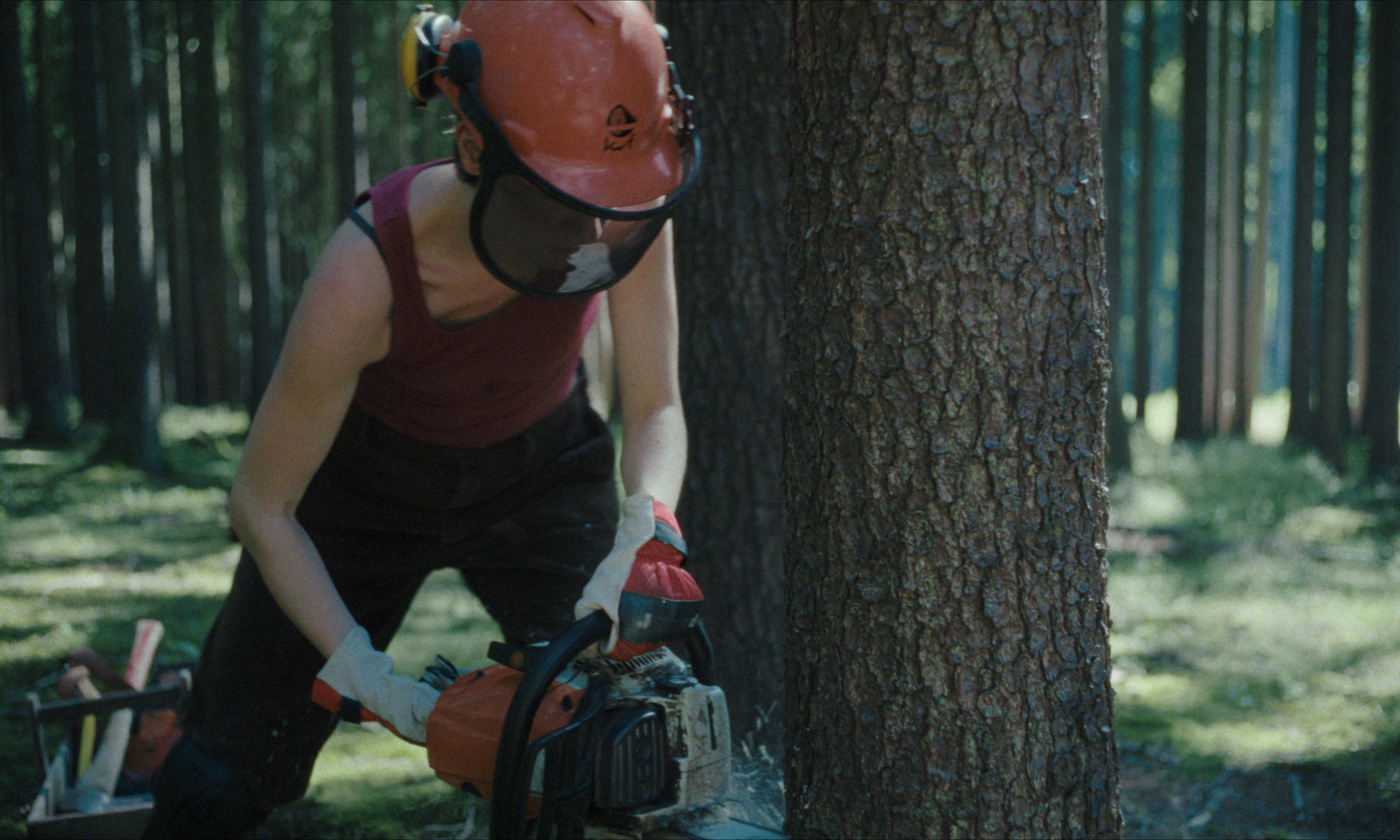
From the 2026 FilmFest in Munich, German critic Bettina Schuler considers Katharina Rabls’s feature debut, Memories of a Forest, a German film that portrays a family facing the shadows of its past.
“What am I supposed to do with a forest?” Frieda (Julia Windischbauer) asks her mother when she learns she has inherited a piece of woodland in her Lower Austrian hometown from her grandmother. Just back from the funeral, she wants only one thing: to leave the village as quickly as possible and get back to her desk in Vienna, where her PhD thesis is waiting. But her grandmother’s will dictates other plans. Out in rural Lower Austria, nothing is quite as she imagined. Her father is ill, her mother is worn down, and her parents’ bank account is empty. So Frieda stays and confronts the forest—and, with it, her family’s past.
How deeply are we shaped by our mothers? Who might they have been without us? And who were they before we were born? As children, it is hard to picture that our mothers once had lives of their own. Yet all of us are marked by the experiences our parents lived through long before our arrival, often far more than we realize.
Frieda, the protagonist of Katharina Rabl’s debut feature Memories of a Forest (Erinnerungen eines Waldes), is no exception. She is shaped by her mother’s past, even as she refuses to engage with it. Returning to her hometown for her grandmother’s funeral, she is determined to let as little of that past touch her as possible.
With a brisk stride and a resolute gaze, she faces her parents and old acquaintances as if she were merely passing through. She insists on being treated as a guest. She keeps relatives and locals at a distance, choosing to sleep in her grandmother’s house rather than with her parents and keeping herself busy clearing plates during the funeral meal instead of sitting down with the mourners. Even when her mother’s bank cards fail at the supermarket checkout, making the family’s financial troubles brutally clear, Frieda watches like an uninvolved stranger: cool, detached. Only when her father speaks frankly about the state of their finances does the line she has drawn between her old life and her new one in Vienna begin to crack. She realizes she cannot simply cut herself off from her roots, and slowly starts to face them.
What she sees and what she does are not primarily conveyed through dialogue, but through images and the actors’ gestures and expressions. Frieda’s gaze, which had carried a firm, almost defiant closedness, clearly signaling her desire to distance herself from her rural background, becomes more open. She starts to look people in the eye again and meets them on equal terms.
At the same time, her view of the forest shifts. What she had previously seen only as a financial asset, a way of buying herself free from her responsibility toward her family, turns into a place of longing, a symbol of a self‑determined life—something it had always been for her grandmother. The forest becomes a repository for the unfulfilled dreams, hopes, and disappointments of the women in her family, never spoken of, but always present. It is a silence many viewers will recognize from their own families, and one that is rarely broken.
This longing for a kind of freedom that does not exclude a bond with one’s roots is picked up by director Katharina Rabl in her images: in wide shots that follow the treetops, in the rustling of the leaves, in the landscape passing by the train window.
At the same time, she makes it clear that life in the countryside has little in common with the idyllic images we see on Instagram. It is hard work, exposed to the whims of nature, and it involves exploiting that very nature to survive. We see trees being felled, stacked, and processed at the sawmill, the physical labor that underpins the family’s existence. In these moments, Rabl’s background in documentary filmmaking becomes visible; her gaze is objective, analytical, and precise. Far from being a drawback, this is one of the film’s strengths.
In the end, both trees and secrets fall. The family draws closer together, even as each member continues his or her own path. Rabl shows the conflicts instead of smoothing them over or explaining them away. That has become rare in German‑language cinema—and it makes her film even more worth seeing.
Bettina Schuler
© FIPRESCI 2026