
The Incomer Wins the FIPRESCI Award at Sitges 2026
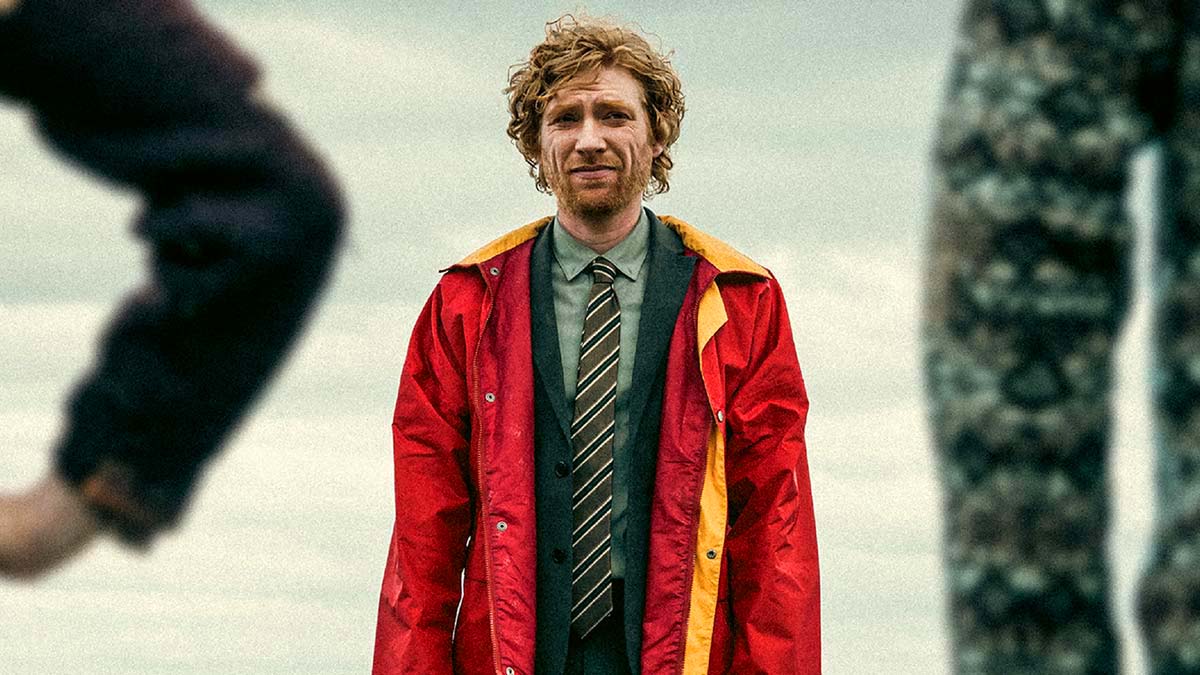
Spanish film critic Raquel Abad Coll explores The Incomer, a folk fable of belonging on a remote Scottish island, blending absurd comedy, myth and tenderness.
The Incomer (United Kingdom, 2026), the feature debut by Scottish director Louis Paxton, was the winner of the FIPRESCI Award at the the Sitges – International Fantastic Film Festival of Catalonia. For the first time in its history, the festival, held from 8 to 18 October 2026, hosted a jury of the International Federation of Film Critics (FIPRESCI). The award, given to a film from the Official Fantàstic Competition, recognises a work that combines absurd comedy, folk horror and fantasy in a reflection on identity, displacement and fear of the other.
Set on a remote, windswept island off the Scottish coast, The Incomer follows Isla and Sandy, two siblings who have lived in near-total isolation for most of their lives. Raised on stories, rituals and invented myths, they have built a world of their own, with games, costumes and bird calls that work almost as a private language. That fragile universe is disrupted by the arrival of Daniel, a socially awkward council official, sent from the mainland to deal with their situation. What begins as a clash between two incompatible ways of seeing the world, gradually becomes an encounter that forces all three characters to question what it means to belong somewhere.
Paxton, previously nominated for a BAFTA for his short films, moves into feature filmmaking with a clear authorial voice. His screenplay avoids the most predictable patterns of the outsider narrative: there are no villains, only people protecting the stories that hold their lives together. The film touches on immigration, colonisation and cultural loss without becoming didactic, relying instead on humour, fable and empathy. At its core lies a question that resonates beyond its island setting: whether it is possible to face change without surrendering the stories that shape who we are.
Much of the film’s strength rests on its central trio. Irish actor Domhnall Gleeson plays Daniel with a mixture of comic awkwardness and quiet melancholy that gradually reveals the character’s own sense of not belonging. Scottish actors Gayle Rankin, as Isla, and Grant O’Rourke, as Sandy, build a sibling relationship that feels lived-in: they argue, play and perform their rituals with a childlike intensity that never slides into caricature. Together, the three performers sustain the film’s delicate balance between comedy and sadness.
Cinematographer Pat Golan captures the harshness of the island landscape with precision, emphasising both the characters’ isolation and the freedom they have found in it. Paxton’s mise-en-scène draws on a recognisable tradition, with echoes of Scottish director Bill Forsyth’s Local Hero (1983), Alfred Hitchcock’s The Birds (1963) and the deadpan strangeness of Greek filmmaker Yorgos Lanthimos. Even so, the result does not feel derivative, and the film maintains a tone of its own, playful and eerie at once.
The middle section lingers on Daniel’s ordeal for longer than necessary before the emotional turn arrives, and the third act moves towards more conventional territory than the restrained first hour. Some critics have also pointed to a whimsical quality that may divide audiences. These limitations, however, do not undermine the coherence of the whole.
After winning the NEXT Innovator Award at the 2026 Sundance Film Festival, The Incomer stood out in a Sitges competition largely dominated by darker visions. In its official statement, the FIPRESCI jury, composed of film critics Eirik Bull, Emanuele Di Nicola and Raquel Abad Coll, highlighted “the excellence of its central trio,” a mise-en-scène that conveys “the cold and solitude of the landscape,” and the film’s ability to show “that fantastic cinema can use myth to speak about the real world with warmth and critical intelligence.” According to the jury, The Incomer offered something increasingly rare in contemporary genre cinema: hope.
Raquel Abad Coll
Edited by Yael Shuv
© FIPRESCI 2026