
Histories of Concrete
Matthias Dell considers how documentaries in DOK Leipzig’s International Competition speak to one another. What connects their images of highways, housing estates, and wildfires?
The 69th edition of DOK Leipzig, Germany’s oldest and most prestigious festival dedicated to documentary film (and, for quite some time now, animation as well), was also a first in its own right. Ola Staszel presented her inaugural edition as festival director, having previously headed the Neiße Film Festival, held in the tri-border region where Germany, Poland and the Czech Republic meet.
The debut edition was a success. The selection in the International Competition stood out for its consistently high quality and remarkable diversity of documentary forms. One of the particular effects of film festivals, especially when watching films in quick succession, is that the films enter a dialogue with one another. Connections and contexts gradually emerge, enriching and deepening our understanding of each individual work.
One recurring theme across several films was the appropriation of land in the name of industrialisation and modernity: the gentrification of the world, conflicts between urban and rural spaces, and the subjugation of the earth in the name of capitalist progress – or, more accurately, the promise of profit. In Xiangzidian Village: The Stage (Xiangzidian: Wutai), filmmaker Hu Sanshou documents, over the course of more than a decade, how the construction of an expressway disrupts the social fabric and everyday life of a village in China. This is about much more than simply presenting before-and-after images. Hu Sanshou himself comes from the village whose history he is now documenting. He tells the stories of its inhabitants, exploring questions of death and the future, while also revealing how the anonymous authorities behind the expressway project secure public consent – for instance, by setting quotas and targets that must be met in order to maintain social stability. Towards the end of the film, as the motorway cuts across the landscape, Hu Sanshou shows the villagers footage from the past, inviting them to remember the lives they once led. Close-ups of people watching the screen gradually dissolve into a journey through a dark tunnel.
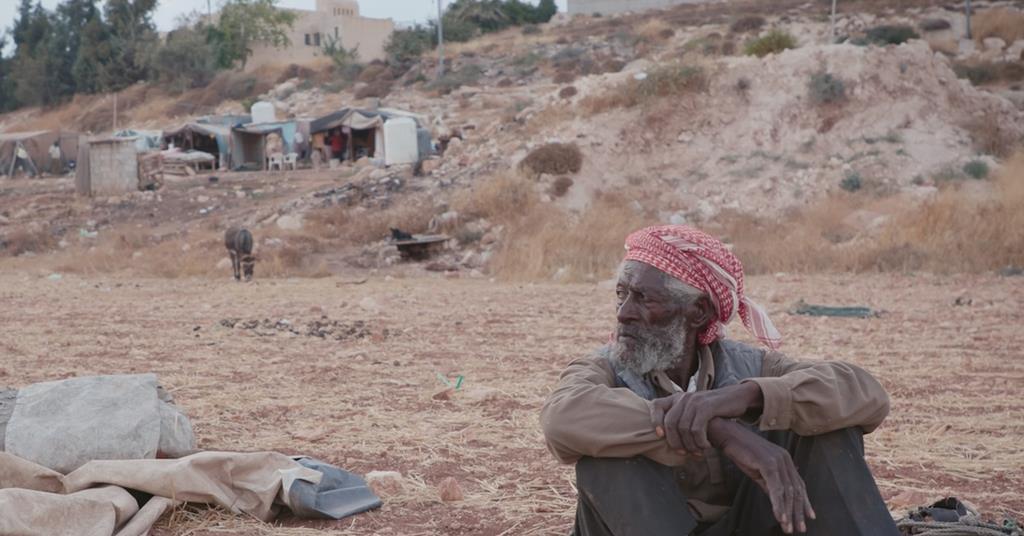
Asmahan Bkerat‘s Concrete Land (Tiyaha) approaches a similar subject on a smaller scale and through the more traditional observational documentary form. The film follows the lives of an African-Palestinian family whose rural way of life is also threatened by the gentrification of the land. In the final scene, the grandfather stands in front of a soulless new building that has replaced the land which sustained him for so many years.
Lukas Marxt’s >1.5°C Pyropolitics and the New World examines another form of destruction. Filmed during the 2025 wildfires in Los Angeles, the film unfolds through static takes. In this respect, Marxt’s approach is reminiscent of Hu Sanshou’s, although the former adopts a more conceptual perspective, systematically exploring the aesthetics of destruction. The threat posed by fire is also a matter of class: those who can afford private firefighting services stand a much better chance of protecting their property from the flames. Yet the intensity with which the film observes the fires makes one thing particularly clear: these are not merely seasonal occurrences, but a fundamental manifestation of the climate crisis. In the film, the fires are never entirely extinguished. Even when, towards the end, no houses remain standing and the images are no longer bathed in the red glow of the flames, something continues to smoulder at the edges of the frame. This brings to mind the smaller fires that appear here and there in Xiangzidian Village: The Stage.
Giuseppe Schillaci’s Auber 89 provides a historical perspective on the transformation of land and the promises of progress. Schillaci discovered a collection of VHS tapes on which residents of a Parisian suburb had filmed themselves, capturing everyday exchanges and a sense of community through the lens of what were then still-new media. From this material, Auber 89 pieces together the history of those suburbs, tracing developments that predate those depicted in Xiangzidian Village: The Stage and Concrete Land by some 70 years or more. In the aftermath of World War II, the once-rural areas on the outskirts of the French capital were opened up to large-scale housing developments. What began as an ambitious and socially committed project—intended to provide homes for newly arrived migrant workers while also fostering a sense of community—has since fallen into disrepair, not only physically but also as a consequence of political neglect.
One of the central lessons to emerge from this cross-section of the International Competition is that the earth demands responsible stewardship and thoughtful political care if we are to continue living on it.
Matthias Dell
Edited by Savina Petkova
©FIPRESCI 2026