
Festival of the Fantastical and the Bizarre
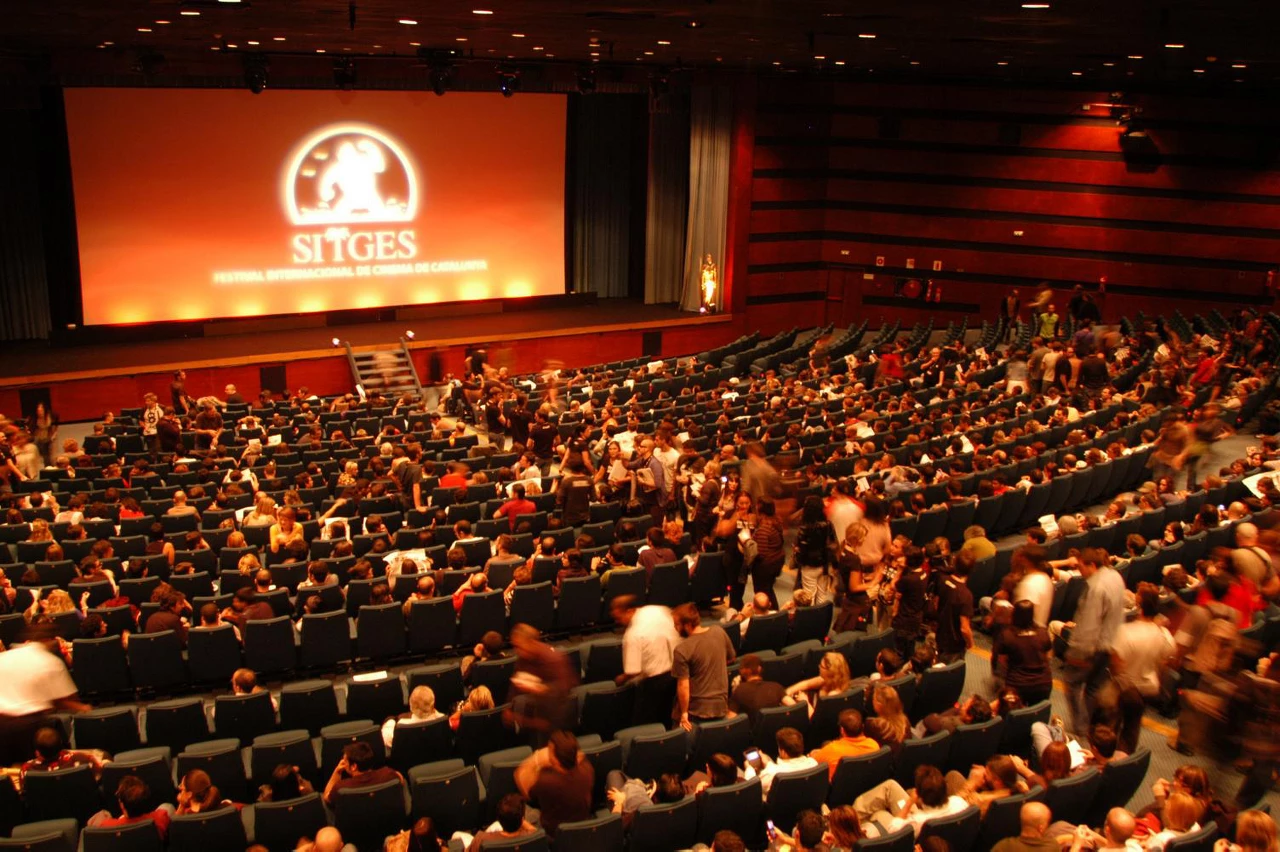
In a wildly imaginative piece of gonzo film criticism, Norwegian critic Eirik Bull follows an imaginary gorilla through the fantastical world of Sitges, confronting mental health challenges, festival madness and the strange adventures that lead him back to his love of cinema.
Festival of the Fantastical and the Bizarre
In which this digital alchemist and haunted scholar of the moving picture is summoned to Catalonia to sit in judgement as a member of the first FIPRESCI jury to have ever convened at the Sitges Fantastic Film Festival–and to set down his impressions of what he witnessed
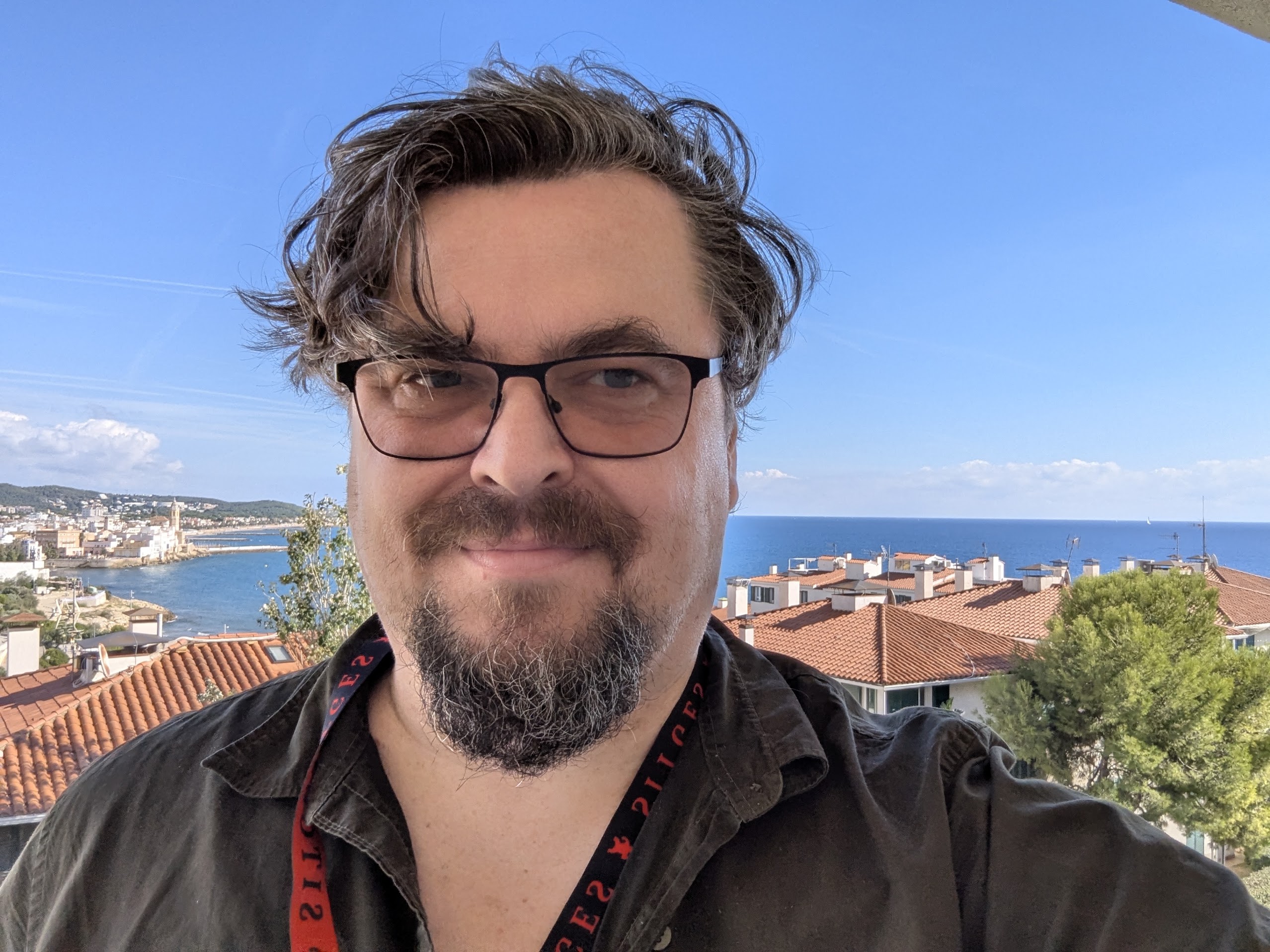
I would like, if I may, to take you on a strange journey.
It was in the year of our Lord 2026. Which Lord, you ask? Your mileage may vary, and looking upon our present world, I can see that it does. Constantly. Geriatric despots, warlords, and assorted megalomaniacs have spent millennia fighting over whose divine right is most divine and whose manifest destiny is most manifest. This has made people grumpy in every imaginable way and compassion a far rarer virtue than it should be in any sane world. In other words: tempus fugit, and still nothing new under the sun.
Where was I? Ah, yes. It was in the year of our Lord 2026, and the gorilla was calling me.
As someone well-versed in the fine art of genre filmmaking, if admittedly more in theory than in practice, I had felt the shadow of that gorilla cross my path for decades. I did not know his name then, nor could I divine his purpose. I knew only that he had some obscure connection to the realms of the fantastical, the nerdy, and the bizarre. And as I made my way along the twisted paths, blind alleys, and concealed pitfalls of the Norwegian and, later, international film industries, the gorilla was always there.
Watching from the shadows. Waiting for an opportune moment to strike, perhaps.
Then, just over a decade ago, I found myself drifting into film journalism and, despite my old and solemn oaths to the contrary, film criticism. The gorilla, perhaps sensing my betrayal of the wonder and ambition that had first drawn me to cinema and storytelling, receded into the mist to haunt some other film nerd foolhardy enough to try his hand at genre filmmaking.
A decade has passed, and I’m still a film critic. My old self would groan at that. Not only that, but I’ve become a member of the central editorial team at the International Federation of Film Critics. Oh, how he would groan! Somehow, I’ve even become a voter for the Golden Globe Awards.
“Scandal!” my old self would have cried.
So too did a few of my would-be peers in Norwegian film criticism gibber and shriek back in 2022, when I was first invited to join that overly gilded and oh-so-American voting body. Little did I know what old conflicts and grievances had already been festering in the shadows of Hollywood.
Betrayer, they called me.
And from beyond the vast Atlantic, I can even now hear James’s admonishing whisper: “When you mention that you are a voter, always specify which Golden Globes you’re currently voting in.”
Yes, yes, James, but you don’t know how clunky that becomes in online biographies. It’s the… checking notes… 84th Golden Globe Awards, which will mark my fifth year as a voter. Let certain critics mutter furiously in their corners. I intend to keep casting those votes. What began as an honor remains one, but somewhere along the way it also became an escape route.
After years spent wandering through Norwegian film culture, deciphering its regulations like runes and observing its rituals, I had learned its dangers: gatekeepers along the borders and specters within the walls, whispering old commandments to anyone tempted to look beyond them. I confess that this little kingdom commands scant loyalty from me.
Cinema had never recognized such borders. Films crossed them as though they were lines scratched in dust, passing from country to country, language to language, world to world. Why should I pledge myself to walls they could not even see? The Globes offered passage into something larger: not another kingdom fortified against the world, but a republic of moving shadows, built anew wherever strangers gathered in the dark to dream.
Time and circumstance change us, usually while our backs are turned. We have no control. We merely update our ever-lengthening LinkedIn biographies with milestones and grandiose adjectives, then pretend it was the plan all along. But look closely and you might still glimpse those old dreams in our eyes.
The Call of Morpheus
As someone deeply in love with visual storytelling, I found myself back on the creative side of the film industry last year. Some years earlier, circumstances had reminded me that the old calling was not quite dead. After wandering through the strange and uncertain country of screenwriting, guided along the way by certain people whose names might make the average film student pale and swoon in recognition, I found my preferred alchemy at the other end of the process, in the magic of colour grading. And so I began building my laboratory.
A year later, with my training well underway and my confidence growing with control panels, colour scopes, curves, and other strange instruments of visual transmutation, I heard it.
I might have been deep at work, or perhaps I was napping, with only the glow of the monitors and the ever-lengthening shadows for company.
The creak of a door. The padding of bare feet outside. A flash of lightning in the distance.
A dream, surely.
I turned. The grading-suite door stood ajar, revealing the shadows beyond.
My calls into the darkness went unanswered. No spectre waited there, no apparition of impostor syndrome came to declare my quest for childhood wonder a folly. Those hauntings had always been, and would always be, of my own making.
Then the door burst from its hinges, banishing darkness and stupor alike, and in came the gorilla, pointing one enormous finger at my colour scopes, grunting and laughing as he flung popcorn in every direction. An unholy blizzard of salt, butter, and burnt kernels.
I scrambled for cover, bracing myself for whatever infernal projectile might come next. Instead, the gorilla rose to his full and frankly alarming height and introduced himself with surprising dignity.
His name was Kong. First name: King.
Likes: maidens in distress.
Dislikes: biplanes with machine guns.
Current occupation: logo and mascot of the largest fantasy, science fiction, horror, and cult film festival in the world.
With the formalities concluded, Kong struck a pose and launched into a full gorilla-themed rendition of “Sweet Transvestite” from The Rocky Horror Picture Show, in tribute to the late, great Tim Curry.
Where had all these extras come from? I would never know. Dream or no dream, its peculiar logic had certainly taken hold. I would have loved to play Riff Raff in this choreography, but I must have stood there, dumbstruck, like a Brad.
Then, with one enormous hand, Kong beckoned me onward. Not up to the lab to see what’s on the slab, perhaps, but to the Sitges International Fantastic Film Festival of Catalonia.
Shivering with Anticipation
I was always a dreamer. Not in the romantic cliché sense, you understand. There was very little wistful sighing beneath moonlit balconies. My neurodivergent brain saw to that long before anyone knew what to call it. It had places to be.
While the more dutiful children sat at their desks and paid attention to the teacher, my body remained among them, but my mind was often elsewhere. A curious occurrence in nature, a vehicle passing along the road, the clouds drifting beyond the classroom window. Any of these might open a door, and through it I would wander. The adults reassured themselves, in meetings and worried phone calls, that it was merely a phase the boy would grow out of. The boy, in what would become something of a pattern, declined to cooperate.
Even now, I dream. The journeys never stopped.
And on these journeys, I have seen things you people wouldn’t believe.
The dreams have carried me across the dunes of Arrakis and the ice fields of Hoth, down the teeming avenues of Coruscant and along the shadowed roads of Edo Japan. I have shared second breakfasts with Hobbits, delved for gems with Dwarves and forged magical rings with Elves. I have stood against Martian tripods, been hunted by Yautja, hacked into Skynet, fought Xenomorphs in cramped retro-futuristic corridors, fled from a giant rolling ball of Critters, and cowered before bestial Klowns wielding popcorn guns. I’ve met replicants beneath the rain of distant cyberpunk cities, encountered an alien, an athlete, and a golem, each answering to the name Rocky, driven horse-drawn carriages through shadowy Transylvania and danced the “Time Warp” in its Transsexual variations.
I wake with a violent start. Was I dreaming again?
Judging by the mechanical whine and the cramped interior, I am aboard an airplane, and my throat tightens.
Not from any fear of flying. The rationality of that particular phobia has been discussed by others long past the point of boredom. The true horror is proximity and the uncomfortable masks it demands. People packed into this long metal cylinder, breathing the same recycled air, their elbows worrying at my sides.
I will find no rest here.
My childhood madness, now quantified and medicated, claws through the chemical haze. Within my skull, the bizarre committee reconvenes, babbling about nothing yet finding so very much to say, each voice fighting for its share of the estate. Everything demands commentary. No sound, no sight, no sensation may pass unnoticed, even here, some 30,000 feet above the sleeping countryside of southern Europe.
Strange, then, how the mere mention of film can bring the entire committee to order. The babble becomes a chorus. Every voice now turns towards the same flickering screen.
Such is my particular madness. It can silence the world with absolute focus, but only when it chooses. Everything else is exhaustion.
And there, in the seat to my right, he is.
Like some massive and excessively hairy Tyler Durden only I can see, Kong sits beside me, entirely unconcerned by the physical impossibility of fitting into economy class. He grunts something about the bright lights and strange celebrations awaiting us beyond the mountain range far below.
At the Airport of Madness
The flight from Oslo to Barcelona took about three and a half hours. A short trek for some. An eternity for me. But even eternity has an end, and as I stepped off the aircraft, I had no idea that the stress of the day had only just begun.
The airport at which I arrived was very different from the one I had left behind. Oslo Airport is best described as a polished marriage of Nordic minimalism and gestures towards Old Norse culture, built with Norwegian wealth and our poorly concealed certainty that we do airports better than everyone else.
Barcelona Airport was a different creature entirely. It seemed to have been assembled in some tower laboratory and shocked into chaotic life by lightning, accident, and questionable planning. The signs, when they appeared, seemed intended for people who already knew where they were going. The airport sent me and several equally confused Norwegians to one side of its sprawling body, while dispatching our checked luggage to the other.
Before long, the stress was becoming overwhelming. Like one of the adventurers from the stories of my childhood, I fought my way through the maddening labyrinth in search of an exit. Kong was no help. Why would he be? He appeared to be enjoying himself, as though this were an adventure and I was in danger of forgetting how those worked.
This particular adventure, however, I could not wait to forget.
Eventually, after leading an older couple to the correct baggage claim and locating what appeared to be an exit, I felt like a smuggler guiding a pair of geriatric droids out of an enemy battle station, accompanied by a hairy companion visible only to me.
Then I found my transport and escaped toward Sitges.
Hostile Environments
My anticipation and enthusiasm for Sitges were greater than for any film festival I had previously attended. Yet I also dreaded the experience and the ten days it would demand of me. My mind neither tolerates nor negotiates crowds particularly well, and before leaving, I had admitted to some nervousness. No, fear. I feared becoming mentally overwhelmed, even in a place devoted to the kinds of films that had occupied my imagination since childhood.
The opening night provided an immediate test.
After checking in, I knew there would be a gala. As this was a film festival, the gala naturally included a film, as if we did not already have enough of those awaiting us. Fortunately, Found Alive proved a gripping start. It followed the search for a group of missing girls imprisoned by kidnappers in the basements of otherwise ordinary suburban homes. The film was tense, disturbing, and reassuringly gory.
Then came the party, and with it two of my oldest social terrors: mingling and small talk. Camera drones hovered above the guests, turning the celebration into an airborne surveillance operation. Kong followed them with his eyes. His history with flying machines was not encouraging.
I imagined some hidden security detachment waiting inside the nearest cupboard, ready to burst forth and arrest anyone failing to perform the role of the slick film-industry socializer with sufficient conviction.
A mask was employed.
Language presented another complication. Not because of my English, you understand. My English is perfectly fine. Yet when I ordered a Coca-Cola from one of the kiosks, I was handed a beer instead.
I accepted the beer. I had, it seemed, arrived on a very special night.
My fear of the festival was not unfounded. This gathering at Sitges, a congregation of devotees to the fantastical, the macabre, and the magnificently insane, was unlike anything I had encountered in my many years of attending festivals. Every festival erects its altar to a different god. Cannes worships glitz and glamour; Karlovy Vary, the craft; Göteborg, the Nordic industry and its connections. At Sitges, the congregation itself is sacred.
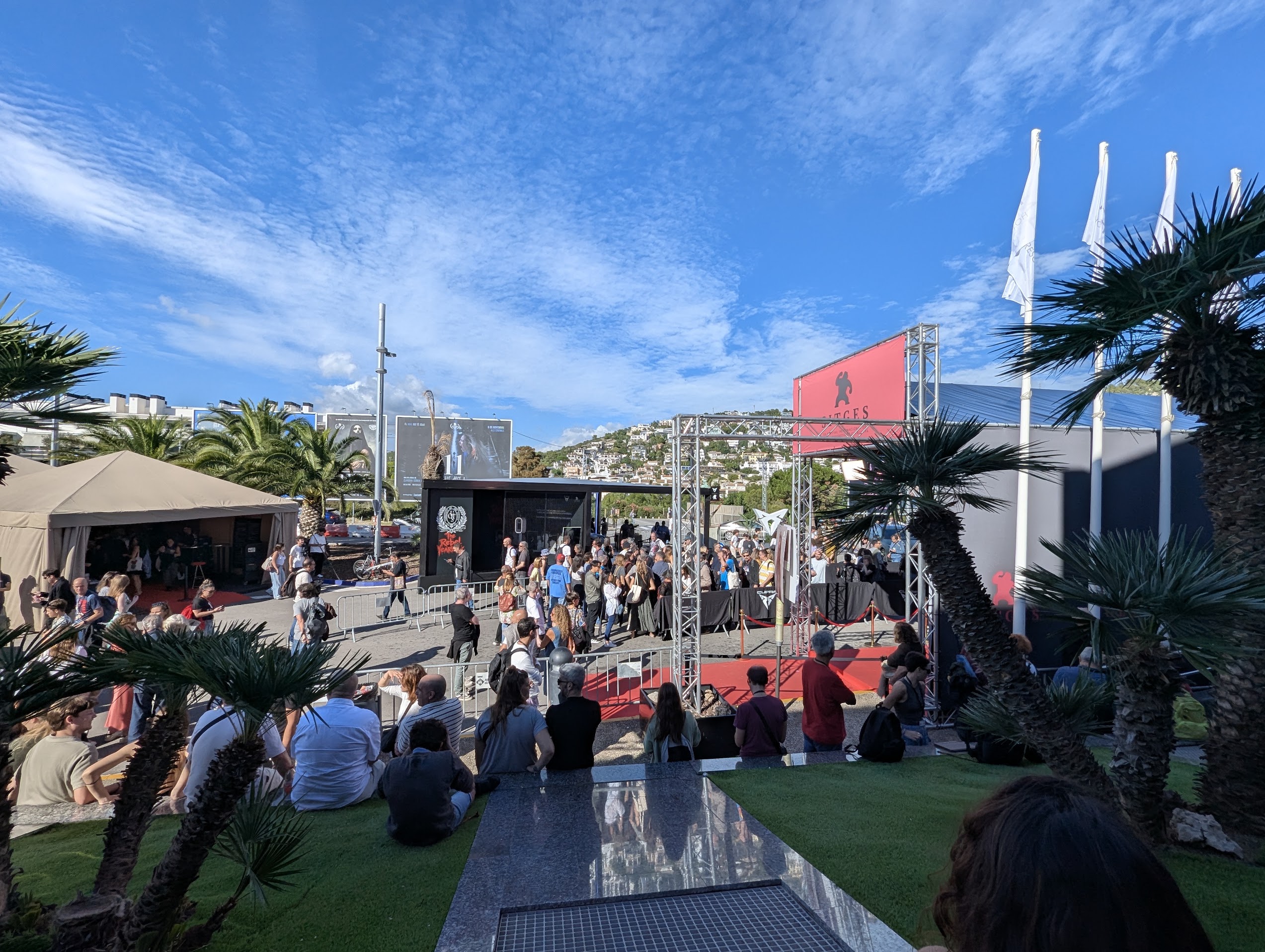
I had imagined a congregation drawn equally from the three great provinces of fantasy, science fiction, and horror. Once there, however, it became apparent that horror had seized the throne. My own lifelong allegiances had always belonged more to fantasy and science fiction. These were still my people in the broad genealogical sense, although many appeared to come from a darker and considerably bloodier branch of the family.
And the relatives came in droves. Young and old; some old souls housed in young bodies, others young souls stubbornly inhabiting older ones. Most sported branded T-shirts, worn-out jeans, dyed hair, and every stage of zombie makeup from freshly bitten to several days deceased. The gorilla was everywhere: on signs, bags, posters, and car doors. Beside me, Kong was delighted.
I began to wonder whether I had arrived in Sitges at all.
Was this Skull Island?
The Judgement of Kong
The festival might have operated according to dream logic, but the jury program came with a schedule. 16 first or second features had to be watched, considered, discussed, and eventually reduced to a single winner. 16 sounded manageable when printed in a neat column. Then there were gala films, premieres, and optional screenings, of course.
At first, I approached the task with professional discipline. I arrived in the cinema hall, found the seats reserved for the jury, and prepared to examine each film on its own terms. Kong took the work no less seriously, although his criteria appeared rather different. He carried no notebook and respected no critical theory. He was, after all, a creature I had stitched together from memory, metaphor, and whatever remained of my wonder at the movies. He laughed, growled, hid his eyes, fell asleep, and occasionally glared at me whenever my analysis became more interesting to me than the film.
By the end of the program, the films had begun to bleed into one another. Some were eliminated quickly and forgotten with almost indecent haste. Others survived only as a single image, long after the title itself had slipped from memory. About 15 minutes before each screening, I would sigh, consult the schedule, and determine which auditorium expected me next. Then came the more immediate question: how much room would our reserved seats give me to stretch my increasingly painful knees?
Before plot, form, or theme, there was legroom.
Certain preoccupations kept returning: vampires, troubled young people, same-sex love, isolated houses, ancient folklore, and an alarming quantity of water. Drones carried us over mountains, islands, forests, monasteries, and lonely buildings with such regularity that the films appeared to share one enormous aerial establishing shot. After the drone landed, however, everything slowed to a crawl. People crossed rooms with great deliberation, stared through windows, contemplated the sea and waited several seconds before answering perfectly reasonable questions. Some of these films appeared to have been edited on laudanum.
The audience moved at a very different pace. Every severed limb, cracked skull, and freshly opened artery brought cheers, applause, or some ecstatic cry from the darkness. Watching films at Sitges could feel like sitting among a gibbering congregation engaged in rites whose sacred meaning had somehow escaped me. I gathered my critical thoughts and analysis at the edge of the ceremony and tried not to attract the attention of whatever god they were summoning. Kong, far more comfortable among the worshippers, occasionally joined in.
11 sent ten children and two teachers into a mountain cabin during a snowstorm, where an eleventh child appeared and behaved in a mildly threatening fashion for reasons nobody thought to explain. Kong shifted restlessly beside me and gestured towards an imaginary poster for The Shining, as though the solution to the film’s problems had been available since 1980.
As the end titles began, three jurors from another program sprang from their seats and forced their way along our row, nearly trampling my Italian colleague and knocking me backwards into my chair. Wherever they were going, they were already late. Kong watched them disappear towards the exit, then looked down at me in the wreckage.
The film had ended. The true horror had begun.
Folklore preferred the wilderness. Nightborn followed a newly married couple into the Finnish woods, where they became parents to something I recognized at once from Norwegian legend: a changeling, screaming and gobbling blood as a metaphor for troubled motherhood. The film was atmospheric and beautifully acted, although each new quantity of viscera left less room for suggestion and eroded the unease. Kong drew his enormous legs into the seat and watched through his fingers.
FROST returned to the forest with a stone-faced Serbian policewoman searching for a missing young woman. Old rituals stirred, and a forest spirit took the young woman’s form and attached itself to her. There was very little dialogue, a great deal of walking through the woods, several lesbian love scenes, and approximately one facial expression. There was also a dragon. Kong sat upright for the dragon.
In Leviticus, two boys fell in love and found themselves pursued by an entity wearing the face of the beloved. Wistful gazes alternated with brutal violence, and 88 minutes acquired properties previously associated with geological time. Throughout the program, falling in love mostly gave the monsters someone more personal to imitate, corrupt, or drink from. Kong yawned.
Vampires arrived in two distinct conditions: cloistered and wet. Upiro placed Javier Botet beneath monster makeup in an 18th century convent where something was draining the blood of the nuns. The film knew what to do with its darkness, buried secrets, and the cruelties of organized religion, even if there was a pervasive whiff of nunsploitation throughout. There were satisfying revelations to be had, but as with most modern horror, the film wouldn’t shy away from a final twist in its character development that made me roll my eyes. Perhaps the true twist in horror has become no twist at all? Kong, however, didn’t seem to mind. He was frightened but absorbed. Like me, he enjoyed a genre period piece, and in this regard, Upiro delivered.
No Rest for the Wicked, meanwhile, introduced the unexpected niche of soggy fisherman vampires. Fog swallowed the Faroe Islands, two fishermen fell in love, and death proved insufficient to end either the romance or the drinking of blood. Pilou Asbæk, for once, resisted the temptation to devour the surrounding scenery. Kong looked faintly embarrassed by the entire affair. A giant ape apparently has limits.
Water kept getting in. Titanic Ocean followed Japanese girls attending a boarding school where they trained to become mermaids for public aquariums. Beautiful, colourful, and almost aggressively meditative, it eventually became a strange communion in which bodies, water and sea creatures appeared to dissolve into one another. Kong slept through much of its 130 minutes, having somehow acquired a pillow.
River sent three siblings out in a boat to scatter their domineering father’s ashes while a pair of feral killers waited on opposite banks. The film stumbled badly in its third act, but Kong could not sit still. He pointed at the screen, tapped my shoulder, and covered his eyes. I began considering the structural weaknesses. Kong growled at me. The killers could be anywhere, and apparently I was missing the point.
Then came Salitre, in which a single mother running a lobster farm struggled to let her daughter leave for art school. Lobsters began dying, strange crustaceans pushed their pincers through dripping walls, and an empty-nest drama dissolved into soggy Lovecraftian body horror. By then, at least a quarter of the program had taken to the water. Fishermen, mermaids, rivers, fog, and things from the sea were merging into one vast, damp nightmare. Beside me, Kong sat in a yellow sou’wester, wringing seawater from his fur.
Even Skull Island had been drier than this.
Houses were nearly as hazardous as the sea. Las hijas concerned an elderly man who kidnapped a young woman every four years to maintain an endlessly rotating family of three daughters. Much of the film consisted of women moving through a farmhouse and being cruel to one another, a Stockholm-syndrome kammerspiel with no visible route back to freedom. Kong looked around the house, looked at the women, then settled back with the weary expression of someone who already knew that nobody was getting out soon.
The End of It added Rebecca Hall and Noomi Rapace to the program’s subgenre of unhappy women moving slowly between rooms. Here, death had become optional, the central character was approaching her 250th birthday, and suicide became her final work of performance art. Its thoughts on mortality and the limited time we have might have moved me slightly. Kong stopped fidgeting and gazed past the screen, suddenly quiet.
Science fiction proved surprisingly scarce. DreamQuil built a retro-futuristic world of primary colours and environmental decay, where humans gradually surrendered their domestic and familial roles to robot companions. Its satire of our dependence upon artificial intelligence worked best when it trusted its images. Too often, it explained what we had already understood. Kong, my simian psychopomp and troublesome emanation of the subconscious, was nowhere to be seen.
What could an imaginary companion possibly say about an artificial one?
The other clear science-fiction film was El Exterior. A woman entered an isolation experiment for a possible journey to Mars, watched over by the inevitable HAL-like light on the wall. What began as another kammerspiel about a woman moving slowly between rooms eventually became an overland struggle for survival. It sounded far more eventful in summary than it felt onscreen. Shots continued long after their purpose had expired, often showing the protagonist walking across the frame for more than a minute. Kong returned with a Steenbeck flatbed editor balanced across his knees, a grease pencil behind one ear and strips of discarded film hanging from his fur.
He was prepared to help.
Two films seemed to have wandered in from elsewhere. We Are Aliens was a beautifully animated Japanese drama about two childhood friends divided by an argument over a broken umbrella. An impulsive act, a series of misunderstandings, and several small lies followed them across the decades, carrying them towards very different lives of success and tragedy. It was moving and exquisitely made, but I kept wondering what it was doing at Sitges. At an animation festival, it might have found the audience it deserved. Here, it sat among vampires, viscera, and things emerging from wet walls. Kong turned the broken umbrella over in his hands and, for once, offered no commentary.
Drag arrived with Danny DeVito listed among its producers, a glossy Hollywood finish, and performances far more assured than most of the program. Two sisters broke into the home of a wealthy artist, where one slipped in the bathtub and injured her back. Unable to walk, she had to be dragged through the house before the owner returned.
He returned. And he was a serial killer. Because of course he was.
Part comedy of errors and part slasher, the film belonged at Sitges by genre, but looked as though it had taken a wrong turn from a rather wealthier festival. Kong glanced from the screen to the jury row, then back again, apparently checking whether someone had entered the wrong competition.
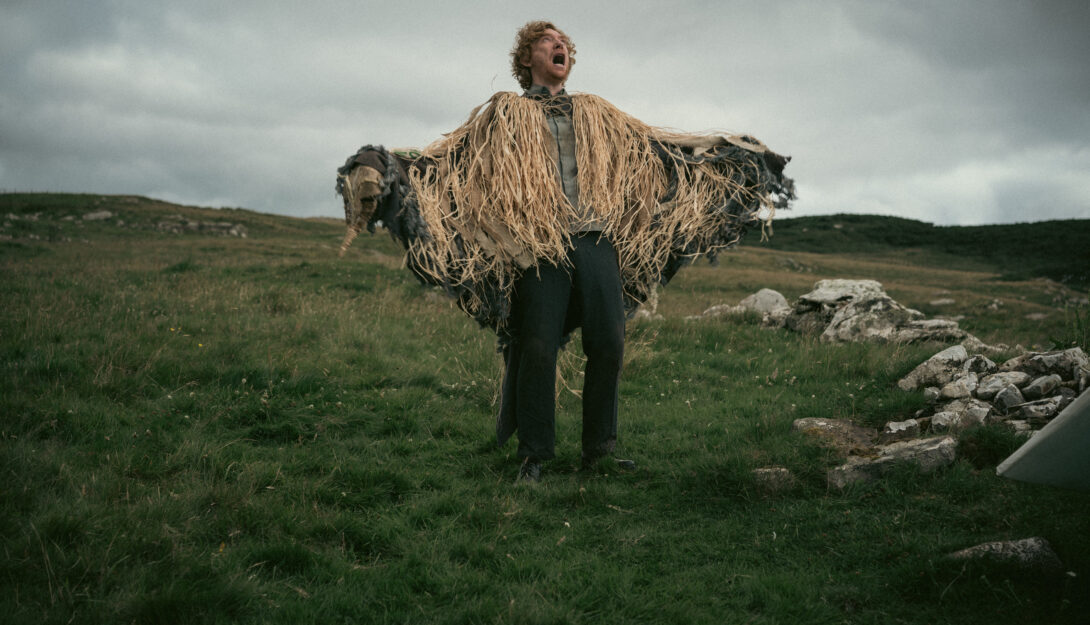
Only The Incomer stood out in all the right ways. On a windswept Scottish island, adult siblings Isla and Sandy had lived alone since their father abandoned them years earlier. They belonged to the sea and wind, childlike and wary of outsiders, until an awkward council worker arrived to remove them to the mainland. The film was funny and peculiar, with touches of cosmic horror and people of the sea whispering from the waves. Most importantly, I liked these characters. I cared what happened to them. I wanted to remain on the island with them.
By then, I could no longer reliably separate one forest, fog bank, or miserable house from another. The Incomer remained clear in my mind. It had made me laugh and then moved me, its strangeness tempered by warmth.
Kong grinned beside me, laughing until tears gathered in his eyes.
We had found our winner.
We Will Rise for You
But my strongest festival experience came late in the marathon of horror. It did not come from one of the films assigned for our viewing pleasure and exhaustion, but from an optional screening I chose to brave in what remained of my own time, aching knees and all.
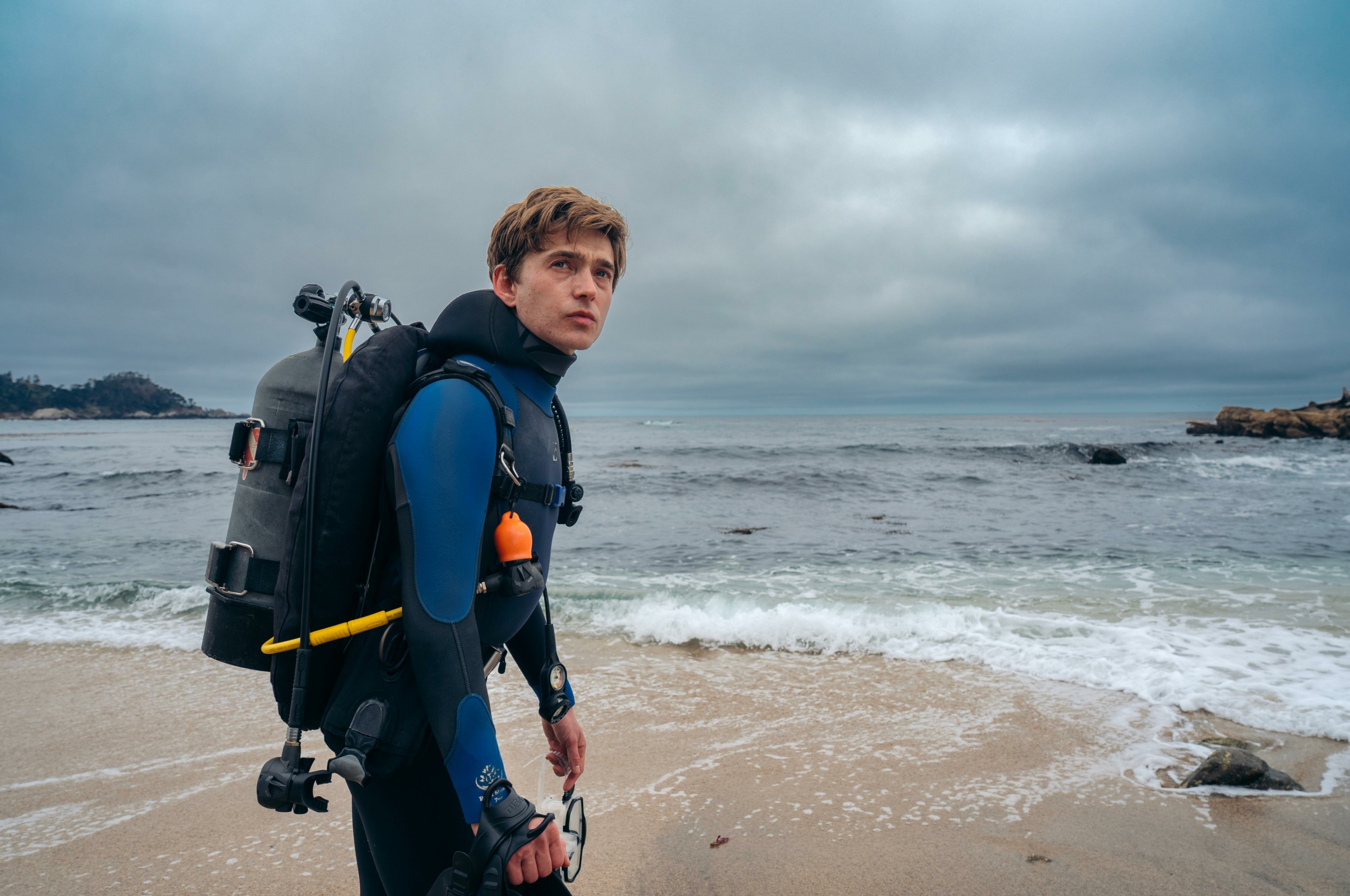
It was Whalefall, by Brian Duffield. I had nearly decided to save it until I returned home, or perhaps until it eventually appeared on the Golden Globes screening platform sometime in November.
I am glad I did not.
Because Whalefall is one of the most beautiful films I have seen in years, and it hit me hard.
A story about a young diver trapped inside a sperm whale might conjure images of horror and slime for some, and religious allegory for others. There is plenty of both, though rather more slime. But it was the story of fathers and sons that reached me.
Because I am both. Father to a troubled son. Son to an aging father.
Families crack. Grievances survive long after anyone remembers what started them, and pride can turn forgiveness into defeat. That makes the bonds that survive matter even more to me. There is the responsibility of a father to his son, but also the responsibility a son may eventually understand he carries toward his father.
These themes lie at the heart of Daniel Kraus’s source novel, and Duffield brought them beautifully to the screen.
From its premise, Whalefall sounds like a gory survival horror film. What I found inside it was something I had not expected. I brought my own history into the cinema: my experiences and failures as both father and son, along with my memories of diving and the almost spiritual connection to nature it once gave me. I also brought my fear of the ocean, which I once entered willingly and now dread.
I went into the screening hoping for the first film at Sitges that might genuinely frighten me. Nothing else had. But Whalefall did not scare me.
It hurt me in ways I had not prepared for.
For the rest of the festival, even a stray thought of Jay, trapped in the darkness and finally beginning to understand the dead father who returned through dreams and hallucinations, could bring the tears back. I hid them behind sunglasses and resumed my performance as the cool, eccentric festival juror.
For me, Whalefall was the hinge on which the festival turned. I had gone to Sitges searching for the wonder of cinema I had somehow lost during my decade as a film journalist and critic. I found it in a story about a teenage boy trapped inside the stomach of a whale, struggling to survive with the lessons left to him by his estranged father.
Beside me, Kong said nothing. He looked at me with quiet understanding, and slowly, with what might have been relief, his enormous shoulders relaxed.
Return to the Airport of Madness
The festival was over. Ten days of horror films, social events, and celebrity encounters had come to an end. The closing gala had dragged me through one final night of small talk, mingling, and masks. At least the film had made it worthwhile.
Wicker, with Alexander Skarsgård as a magically created man in a medieval village who marries Olivia Coleman’s cynical fisherwoman, was hilarious. Amid the humour and strangeness were genuine moral questions, and Peter Dinklage was brilliant as the magical Basketmaker.
But another horror had begun: the journey home.
The next day, after checking out, I spent most of my remaining hours in the hotel lobby waiting for my transport to Barcelona Airport.
Yes. That airport.
I had a good lunch and tried to make the hours pass. With my jury duty complete, I considered watching one last film. The only title remaining on my watchlist that interested me was Hope, a Korean science fiction-horror film running some two hours and 40 minutes. My transport would not arrive for several hours, so there was time. Would I get my science fiction double feature after all?
I decided against it. My knees, already aching and swollen, needed rest. I would watch Hope when I returned home. Perhaps it would appear on that screener platform.
One could hope.
Besides, Kong was sprawled across one of the lobby couches, snoring loudly. We would not want to wake him now, would we?
Later that evening, the horror began.
The car to Barcelona Airport, which I shared with two British producers loudly discussing their industry plans in the back seat, dropped me off at one of the terminals. It was the correct terminal, but not the correct part of it.
Confusion set in at once. This time, however, I had planned for it. I had brought medication for the madness, stress, and exhaustion that a place like this inflicted on my strange nervous system.
It all had to be timed.
After some wandering and general bewilderment, I dragged my luggage to the correct section of the terminal. This was Barcelona Airport, after all: an overgrown jungle of outdated buildings, old and broken information screens, and signs offering very few useful translations.
There were no dinosaurs to be seen, but compared with Oslo Airport, the place felt practically Jurassic.
Kong grinned, rolled up a pair of entirely imaginary sleeves, and smacked his enormous fists together.
He, at least, was having fun.
Several hours later, I finally checked my luggage through the entirely manual and fully staffed baggage check-in system and passed through security. Dirty and broken-down infrastructure was everywhere. Lines of passengers emerged from seemingly random kiosks and doorways, crossing one another until no one appeared certain which line belonged where.
The airport had been built and expanded in stages, with very little evidence of a plan. It was some monstrosity born at the dawn of air travel that had never stopped growing, bulging outward whenever the planners, such as they were, tried to patch the latest hole in its logistics, unaware that each repair had ruptured something elsewhere.
Boarding was an adventure in itself. At sane airports, gates often have their own waiting areas, preventing every line from converging and tangling in the same central space. Not here. I had to giggle when I noticed a young couple waiting ahead of me. She announced that she was hungry. Without hesitation, he broke from the queue and hurried toward the duty-free shops just as boarding was about to begin. Civilization fell away. The ancient hunter-gatherer order had reasserted itself.
And then it was time to say goodbye, for now, to my furry psychopomp. His mission was complete. Kong had led me back to the wonder in cinema I thought I had lost, and I would carry it home. I would grade that short film and finish this article. Then I would dream and write again. I had done enough cold analysis. I wanted stories of wonder, horror, and heartbreak. And this time, the twists would be real and earned.
Kong smiled. A tear gathered in one eye. He wiped it away, grinned, and held out one enormous hand. We shook hands. We would meet again. I knew it.
The boarding line lurched forward. I turned with it, and when I looked back, he was gone. He had not boarded, of course. Why would he? Kong did not take planes. There were neither direct nor indirect flights to Skull Island, after all.
A Dream Within a Dream
I had done a lot. God knows I had tried. For years, I pursued the truth of films as though it might surrender beneath sufficient scrutiny, dissecting every frame, testing every intention, and holding each imperfection beneath the cold light of examination. I had even lied, chiefly to myself, pretending that the mechanism still moved me. Eventually, confronted with one immaculate monument to machinery too many, I could no longer pretend. The critic remained dutifully at his post, but somewhere deep inside, something was bleeding.
Watching films had never exhausted me. Performing the man who watched them had. He attended the ceremonies, entered the parties, and summoned the professionally interested expression expected of him. In that world of celebrities and professional proximity, the superheroes came to feast. Everyone knew their role: who was to be watched, who was permitted to watch, and who would later describe the watching as news. I learned my lines, hit my marks, and wondered whether anything unperformed, anything still living, remained beneath the costume. Authenticity had left the building long before any of us arrived. The performance continued, and still the beast was feeding.
Sitges would go on. Year after year, the dead would crawl across this little corner of the planet’s face beneath the Mediterranean sun. Autograph hunters would cling to the barricades, clutching their photographs and waiting for the next famous face. Packed auditoriums would cheer, jeer, and howl; shadows would cross enormous screens; red carpets would empty and fill again. One spectacle would end and another begin, the crowds carried onward by the same unending ritual—lost in time, lost in space, and perhaps in meaning.
Eirik Bull
Edited by José Teodoro
© FIPRESCI 2026