
A Girl Unknown: The Fragile Weight of Identity
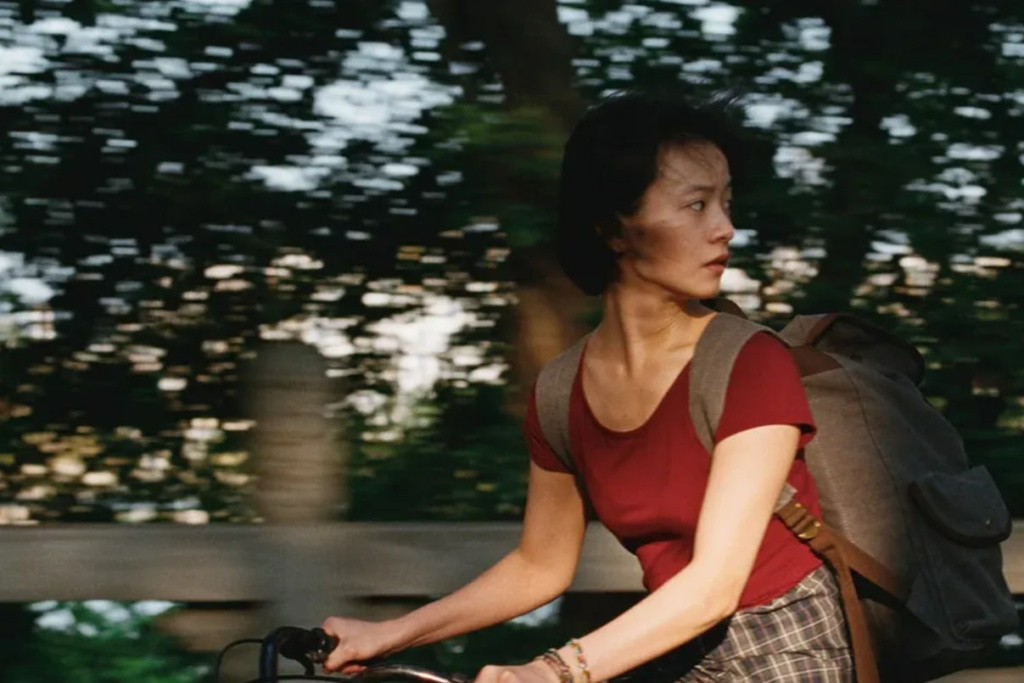
The FIPRESCI Prize in the Cannes 2026 Critics’ Week section went to A Girl Unknown from China. Algerian critic Mohamed Allal focuses on this first feature and finds unexpected layers in its story of an adopted girl, which is also a story of Chinese society.
During the 79th edition of the Cannes Film Festival, in the Critics’ Week section, young Chinese filmmaker Zou Jing presented her first feature film, A Girl Unknown — a delicate and deeply affecting work that explores questions of identity, discrimination against women, and family disintegration in late twentieth-century China. At first glance, the film may appear to be a simple social drama about an adopted girl searching for her roots, yet beneath its surface lie far more complex and painful layers than the viewer might initially expect.
Perhaps the most intelligent aspect Zou Jing concealed before the screening was the film’s true nature. Everything circulating about it suggested a quiet human drama centered on a young girl moving from one family to another in search of stability.
After several short-film experiences, Jing returns to Cannes with a work that ventures into darker and more painful territory, where childhood itself becomes a fragile space, vulnerable to erasure and substitution, and where identity turns into a burden that can be altered whenever the home, the father, or the social circumstances change.
The story begins with a little girl named Lin Juan, who experiences rare moments of happiness with her adoptive father in a calm rural environment seemingly untouched by time. Zou Jing captures this phase with remarkable tenderness and simplicity, especially in the scenes where the child and her father make pink kites together. This small detail gradually becomes a haunting visual memory that lingers throughout the entire film. Yet this serenity does not last long. After the father’s death, the child is thrust into a harsh succession of transfers between different families, slowly transforming from “Lin Juan” into “Wang Juan,” as though each name change were another attempt to erase her past.
With every transition, the filmmaker reveals another facet of Chinese society. The film is not merely about an abandoned child, but about a society that perceives women as a social and economic burden, especially when they are not biological daughters. The protagonist’s existence becomes perpetually fragile and temporary, while she is constantly subjected to various forms of marginalization, exclusion, and silent violence.
Zou Jing is a Chinese writer and director who began her career in television documentaries and commercial advertising before pursuing her dream of writing and directing narrative cinema. She previously participated in the 60th Cannes Film Festival with her short film Lili Alone in Critics’ Week, a work that went on to receive more than eighty awards. Her cinematic journey reflects a deep interest in human and family stories emerging from the heart of China — something clearly embodied in A Girl Unknown. The screenplay, crafted with exceptional precision, continually places the audience within complex human and social contradictions. The families that receive the child are not entirely cruel, yet neither are they capable of offering genuine safety. Zou Jing never falls into direct moral judgment; instead, she constantly pushes the viewer toward hesitation and reconsideration. Even the harshest characters sometimes appear as victims of a social structure larger than themselves.
Jing’s camera moves with calm assurance, relying heavily on wide shots that give the characters a constant sense of loneliness and isolation. The director favors slow rhythm and silence over explicit dialogue. Many crucial events are never shown directly but are instead left at the margins or outside the frame, as though Zou Jing prefers pain to seep gradually into the viewer rather than confront them with it abruptly.
The film’s production design is equally essential to the storytelling. The Chinese cities, neighborhoods, and spaces become visual reflections of the heroine’s psychological condition. Silence occupies a central place in the narrative as we contemplate the girl’s emotions while growing up in a cold environment. The houses seem like temporary shelters rather than true homes, while the streets feel crowded with untold stories. Thus, the protagonist remains suspended between places, struggling to survive while searching for an identity that has yet to fully exist.
The performances are marked by restraint, allowing emotions to move freely across the screen. Young actress Cao Ruofan delivers a performance filled with innocence and vulnerability in the film’s early stages, while Li Gengxi carries the second half of the film through a quiet and deeply painful internal performance, successfully expressing fear, anger, and the desire for belonging without slipping into melodramatic excess.
Zou Jing takes a daring risk through the film’s many dramatic transformations, occasionally bringing it close to traditional melodrama. Yet this challenge — far from easy for a director making her first feature — ultimately transforms the work into something profoundly human rather than merely a conventional search for ordinary details. It is a deeply moving film about humanity itself, about the right to exist, built upon an intelligently written screenplay that rises against a world that ignores the suffering of those who live without a name or a memory.
At times, the film feels painful and merciless, placing the viewer inside a whirlwind of unsettling questions. In doing so, Zou Jing confirms herself as a promising voice in Chinese cinema, one worthy of encouragement, as she brings stories from the depths of society — and sometimes from the pages of her own memories — to tell the world a shared human sorrow.
Mohamed Allal
Edited by Robert Horton
©FIPRESCI 2026