
Toxic Families, Where Is Home? Four East Asian Films from the 79th Cannes Film Festival
From Cannes 2026, Chinese critic Tilda Sixue Li examines a quartet of films that explore different angles on family structure, and finds various degrees of success in the outcomes.
Family remains one of the most enduring motifs in East Asian cinema. Yet contemporary filmmakers rarely approach it through the lens of tenderness or unconditional love. Instead, the family often appears as a suffocating structure: patriarchal, emotionally manipulative, and obsessively controlling beneath the intimacy of a shared roof. To achieve freedom or selfhood, individuals in these films frequently seek affection and belonging outside the biological family, constructing alternative forms of kinship through friendship, desire, or chosen communities.
Four East Asian films presented at the 79th Cannes Film Festival—Hirokazu Kore-eda’s Sheep in the Box (箱の中の羊), Jing Zou’s A Girl Unknown (无名女孩), July Jung’s Dora (도라), and Kadowaki Kohei’s We Are Aliens (我々は宇宙人)—interrogate this crisis of belonging from different perspectives. Together, they ask whether human beings can truly escape the wounds inflicted by the original family through substitute forms of intimacy, or whether the longing for home itself is destined to remain unresolved.
Sheep in the Box
 In Kore-eda’s Competition entry Sheep in the Box, traumatic family loss appears temporarily repairable through AI technology. Otone (Haruka Ayase, reuniting with Kore-eda after Our Little Sister) and Kensuke (Daigo Yamamoto) have lived in emotional ruin since their young son disappeared three years earlier. Their grief takes a strange turn when they are offered a humanoid robot modelled after the missing child, complete with his appearance and memories. While Otone immediately embraces the artificial Kakeru (Rimu Kuwaki) as a continuation of motherhood, Kensuke remains distant and quietly resentful.
The film attempts to enter the long cinematic and literary lineage of humanoid-child narratives established by works such as A.I. Artificial Intelligence (2001) and, more recently, Klara and the Sun (2021). Yet unlike its predecessors, Sheep in the Box never fully commits to the philosophical implications of artificial intimacy. Kakeru functions primarily as a vessel for parental guilt and atonement rather than as a genuinely autonomous being capable of destabilising the moral order of the family itself.
This hesitation feels particularly striking given Japan’s social context, where ageing demographics and declining birth rates have increasingly turned technological companionship into a real social concern. The film gestures toward these anxieties but ultimately retreats into more familiar Kore-eda territory: the fragile possibility of constructing a family beyond blood ties.
In this sense, Sheep in the Box extends thematic concerns already explored in Like Father, Like Son (2013) and Shoplifters (2018). The film’s latter half introduces a group of runaway humanoid children who plan to live together in the forest, imagining a utopian existence beyond the boundaries of human society. This Peter Pan-like fantasy recalls Kore-eda’s earlier fascination with abandoned childhood in Nobody Knows (2004) and Monster (2023). Yet even here, the possibility of escape remains more poetic than politically transformative. The film ultimately foregrounds its reflections on familial bonds over its science-fiction premise; however, this imbalance leaves both dimensions only partially realised.
A Girl Unknown
 The motif of the substitute child reappears in A Girl Unknown, the debut feature by Chinese filmmaker Jing Zou, presented in Critics’ Week. Set between the 1980s and 1990s, the film follows Juan (played first by Cao Ruofan and later by Li Gengxi) as she moves through three different households across her childhood and adolescence.
The French title, La Deuxième Fille (The Second Daughter), quietly reveals the film’s historical tragedy. Born during the era of China’s One-Child Policy, Juan becomes an “extra” daughter—an unwanted child whose existence threatens both state policy and patriarchal family expectations. Girls were frequently abandoned, sold, or given away so families could preserve the possibility of having a son.
The cycle repeats cruelly throughout Juan’s life. After being raised by a foster mother in the countryside, she is displaced again when the woman becomes pregnant with her own child. Later, Juan is adopted by an urban couple unable to conceive. Each transition occurs abruptly, without emotional explanation or farewell. Her surname changes three times over the course of the film, structuring the narrative into distinct chapters while symbolising the instability of female identity itself.
Zou reportedly based the story partly on her grandmother’s experiences, transforming private memory into a broader historical excavation. Beneath the official narrative of economic reform and national modernisation lies another, hidden history: the emotional violence inflicted upon unwanted daughters.
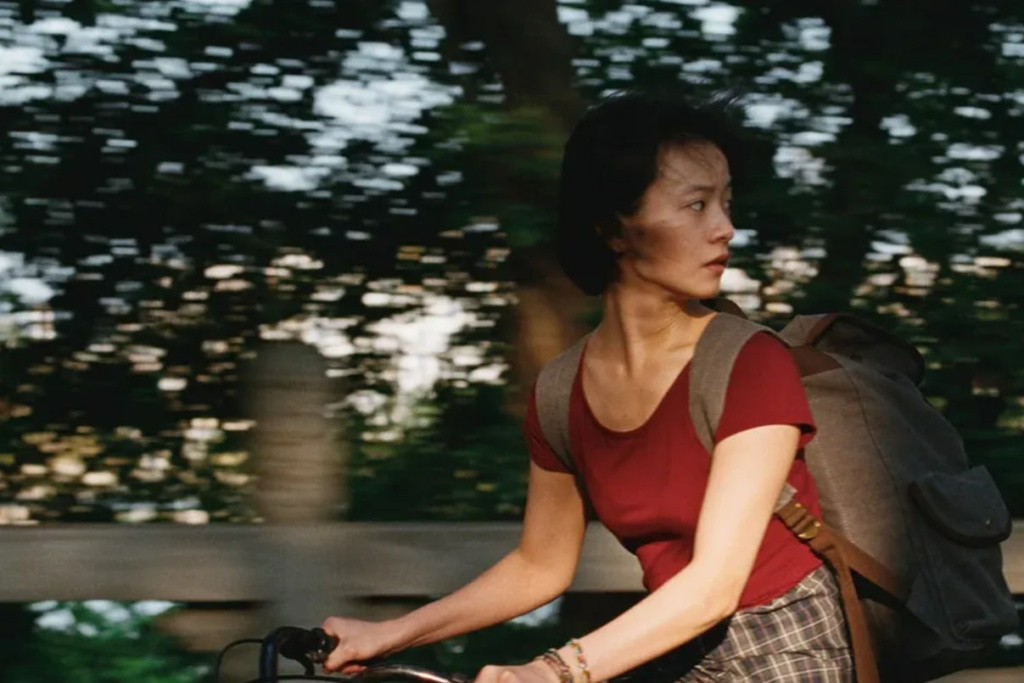
What distinguishes A Girl Unknown is its refusal to collapse entirely into victimhood. Through Liang Zhongqiang’s lyrical cinematography, the film captures Juan’s drifting existence through fleeting visual motifs: a red shirt fluttering on a bicycle, powder-pink dancing fans, a body dissolving beneath water. Juan becomes less a fixed identity than a floating presence carried by historical currents beyond her control.
Yet the film’s emotional power ultimately lies in Juan’s gradual abandonment of the fantasy of “returning to her roots.” Rather than recovering an original home, she learns to survive through adaptation itself. It is this emotional delicacy—alongside the excavation of an often-unspoken social history—that led the FIPRESCI jury of the parallel sections to honour the film at Cannes.
Dora
 Questions of fractured belonging continue in Dora, presented in Directors’ Fortnight. Dora (Kim Do-yeon), a teenage girl suffering from a mysterious stress-induced skin condition, relocates with her emotionally distant family from Seoul to a remote seaside town. There she becomes fascinated by Nami (Sakura Ando), the wife of a local painter.
As in Jung’s earlier films A Girl at My Door (2014) and Next Sohee (2022), the emotional centre lies in relationships between younger women and older female protectors. But Dora pushes this dynamic further into explicitly erotic territory. Dora’s attachment to Nami oscillates between maternal longing and sexual awakening. Yet the relationship is poisoned from the beginning by adult hypocrisy: Nami is secretly involved with Dora’s father. Desire becomes inseparable from betrayal.
The film loosely appropriates the famous “Dora case” from Sigmund Freud, translating his theories of female hysteria into a contemporary Korean context. Nami’s identity as a Japanese woman married into Korea further complicates the narrative through historical and cultural tensions. Dora is first drawn to Nami partly because of her mastectomy scar—the incomplete body becoming an object of fascination, tenderness, and projection.
Jung visualises repression through bodily decay. Dora’s skin erupts into increasingly violent lesions, externalising desires that remain emotionally unfulfilled. In a sense reminiscent of Susan Sontag’s writings on illness and metaphor, the disease functions as a manifestation of suffocated female longing.
The film concludes ambiguously when Dora kidnaps Nami and takes her to an isolated island. Whether this escape represents liberation, madness, or pure fantasy remains unresolved. Like Dora herself, the audience is left suspended in uncertainty.
We Are Aliens
 If biological family fails us, can friendship offer an alternative form of belonging?
This question fuels We Are Aliens, the animated debut feature by Japanese director Kadowaki Kohei, also selected for Critics’ Week. The film traces the lifelong friendship between Goto (voiced by Ryota Bando) and Gyotaro (voiced by Amane Okayama), beginning in carefree childhood before gradually collapsing under the pressures of jealousy, social conformity, and emotional miscommunication.
Kadowaki’s animation style frequently employs low-angle framing and subjective visual distortions, immersing the audience in the unstable emotional logic of childhood. Goto becomes convinced that Gyotaro may literally be an alien—someone psychologically detached from ordinary reality. The metaphor captures the film’s central sadness: the inability of children to articulate loneliness before adulthood hardens it into isolation.
The film does not romanticise childhood innocence. When Goto seeks acceptance from classmates, he distances himself from Gyotaro and passively tolerates the bullying directed at him. Meanwhile, the adults remain largely absent—consumed by labour, financial survival, and domestic exhaustion.
Structured symmetrically, the narrative retells events from both boys’ perspectives. Their social differences become increasingly pronounced: Goto is an only child burdened by middle-class academic expectations, while Gyotaro grows up in a chaotic working-class household of seven. Their friendship is undermined not by a singular betrayal but by the social structures that have shaped them since childhood. Even when they believe they have escaped their original families, they ultimately find themselves trapped within the larger framework of society.
When the two eventually reunite as adults, reconciliation seems possible only through forgetting and moving forward. The film offers no triumphant restoration of intimacy—merely a fragile recognition of shared loneliness.
Taken together, these four films reveal a profound anxiety surrounding the collapse of the traditional family in contemporary East Asian societies. Whether through AI children, foster families, queer desire, or chosen friendship, each film searches for substitute forms of care capable of repairing emotional abandonment.
Yet none of them offers a fully convincing solution.
The biological family remains both inescapable and fundamentally unstable: a structure that wounds even as individuals continue longing for its protection. If these films collectively suggest anything, it is perhaps that “home” is no longer a fixed place or inherited identity, but an unfinished emotional negotiation—one that contemporary East Asian cinema continues to revisit with increasing urgency.
Tilda Sixue Li
Edited by Robert Horton
© FIPRESCI 2026