
Under Scrutiny: Women Seen, Judged, and Rewritten at Cannes 79
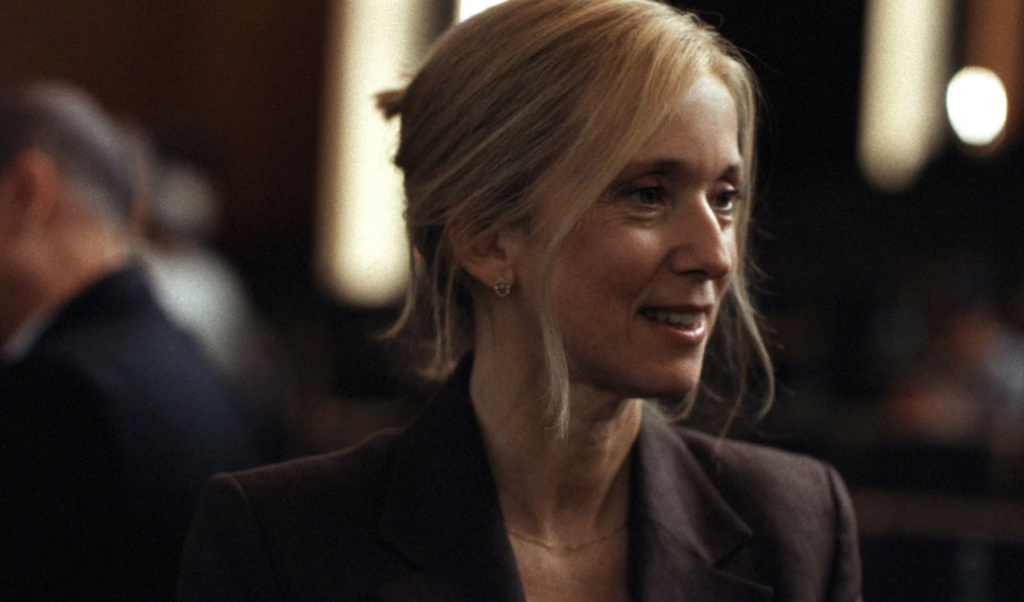
Within the Cannes Competition slate, Italian critic Elvira Del Guercio finds a trend emerging in contemporary auteur cinema, away from the innocence of coming-of-age narratives and toward complex portraits of women in middle age.
When, in A Woman’s Life (La Vie d’une femme) by Charline Bourgeois-Tacquet, the writer Frida (Mélanie Thierry) confesses, “without Gabrielle there is no book,” Léa Drucker turns toward the camera with a gaze that holds together two opposing states: the precision of a fifty-year-old maxillofacial surgeon accustomed to social recognition, and the sudden vertigo of a woman who, being observed by another woman, sees herself for the first time. The scene crystallizes one of the most recurring tensions in the Competition at Cannes 79: the presence, across works distant in geography and poetics, of adult female characters confronted by an external gaze—whether that of writing, the state, or the past—that compels them toward a new form of self-exposure.
In Bourgeois-Tacquet’s film, this interrogation takes the delicate form of amorous surveillance. Frida takes notes, asks questions, and writes a novel that functions simultaneously as portrait and seduction device. In Fjord, by Cristian Mungiu, the gaze that falls upon the protagonist is far harsher: that of the state apparatus. Lisbet (Renate Reinsve), a Norwegian nurse married to a Romanian engineer, lives with her five children on the shores of a fjord. Their family, evangelical and austere, alternating biblical verses with disciplinary slaps, attracts the attention of social services; the children are removed from the home. Mungiu transforms a real-life case into a mechanism for dismantling motherhood itself. Lisbet’s body, reduced to an object of medical and legal scrutiny, becomes the terrain on which two conflicting definitions of the “good mother” collide. It is no longer God who judges the mother, but the progressive community.
In El ser querido, by Rodrigo Sorogoyen, the gaze is both paternal and cinematic. Emilia (Victoria Luengo), an actress whose career has stalled, accepts an invitation from her estranged father Esteban, a celebrated film director notorious for a past marked by violence and excess, to join the cast of his latest production. What initially appears to be an offer of reconciliation gradually reveals itself as another form of appropriation. On set, Emilia is observed not only as a daughter but as raw material for her father’s narrative, trapped within a structure in which affection, authority, and artistic creation become indistinguishable.
Sorogoyen stages this dynamic through the mechanisms of filmmaking itself: rehearsals, takes, and intimate conversations become sites of negotiation where Emilia struggles to reclaim ownership of her own story. If Gabrielle is rewritten through literature and Lisbet through institutional discourse, Emilia is rewritten through cinema. Yet the film’s most radical gesture lies in her refusal to remain a character in someone else’s script. What emerges is not a story of forgiveness but one of authorship: a woman learning to resist the seductive power of a gaze that has defined her since childhood and to confront the emotional inheritance that continues to shape her identity.
Perhaps this also signals a broader moment in contemporary auteur cinema, one that is gradually moving away from girls, coming-of-age narratives, and their formative wounds, and toward mature women, worn masks, and unresolved contradictions. Middle age becomes the moment when carefully constructed identities begin to fray, revealing the tensions they were built to conceal. The women at the center of these stories are no longer searching for who they might become; they are confronting the distance between who they have become and who they were expected to be.
Rather than presenting identity as a destination finally reached, these films portray it as a fragile construction, continuously exposed to revision by others and by time itself. What is at stake is not the innocence of youth but the instability of experience—the unsettling realization that even the most carefully assembled self can suddenly appear strange when reflected through another person’s gaze.
In this sense, the protagonists of A Woman’s Life, Fjord, and El ser querido embody a contemporary cinematic fascination with women who have already lived enough to know that certainty is often a fiction, yet who continue to struggle for agency within narratives that seek to define them.
Elvira Del Guercio
Edited by Robert Horton
© FIPRESCI 2026