
Beyond the Boundaries of Language: Cinema in Its Purest Form
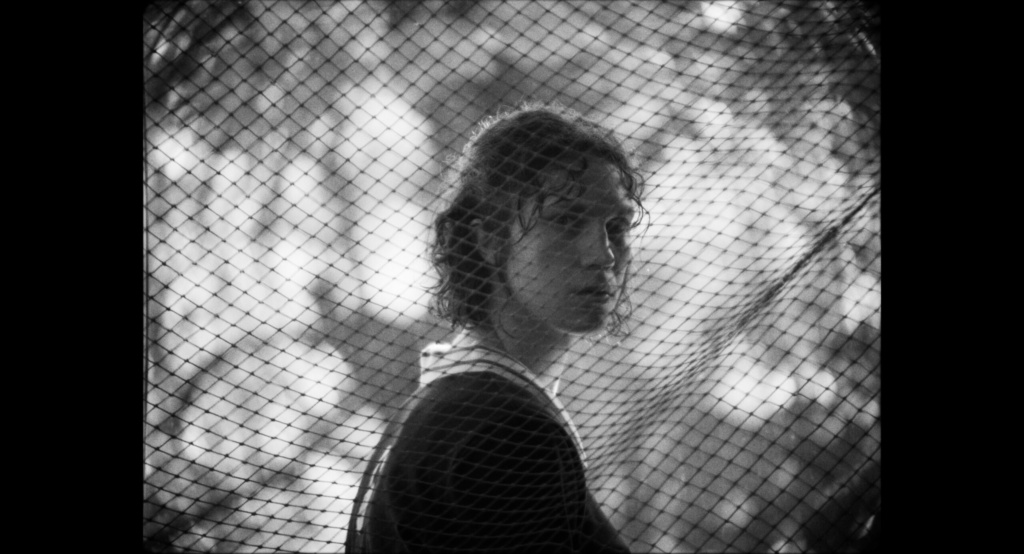
From Cannes, Iranian film critic Pouya Aghelizadeh takes a close look at Ulya (Uļa), director Viesturs Kairišs’ account of the formative years of legendary basketball player Uljana Semjonova, and finds a work that demonstrates the expressive power of cinema beyond words.
A black-and-white film, framed in an almost square aspect ratio and illuminated by strikingly elegant cinematography, appears on the screen of the Debussy Theatre: Ulya (Uļa).
The film opens with the movement of a tree. With this very first image, the filmmaker introduces viewers to a world of wonder—a world that immediately poses a simple question: can a tree move? Through precise and delicate direction, the answer arrives moments later. It is not a tree at all, but a young girl carrying it, almost hidden behind its branches. Kairišs develops this visual joke in the following scene. A group of children gathers for a photograph, a familiar image that initially suggests a conventional school drama. Yet once again, the director subverts expectations. An exceptionally tall girl enters the frame, and no matter how far the photographer steps back, he cannot fit everyone into the picture. In a witty cut, the entire group is moved outdoors so that she can finally be included.
These opening moments establish not only the film’s tone but also its central idea: Ulya is a girl who requires a world larger than established frames and conventions in order to be seen.
The story follows a child whose extraordinary height initially places her on the margins. Gradually, however, what appears to be a burden becomes a source of strength and the defining element of her future. What distinguishes Kairišs’s approach is his profound understanding of cinema as a medium for telling the story of a human life. There is a long tradition in Eastern European cinema of transforming seemingly ordinary situations into deeply empathetic experiences. That sensibility, shaped by the region’s turbulent history, remains very much alive in Ulya.
What ultimately validates both the film and its aesthetic choices is its mastery of cinematic language. Many films presented in the 2026 Un Certain Regard selection relied heavily on exposition, introducing characters through explanatory dialogue and conventional scenes around tables. Too often, promising ideas were undermined by unimaginative direction. Ulya, by contrast, reveals its protagonist through action, image, and observation. Nearly every scene uncovers a new dimension of her physical or emotional identity. This approach allows the audience to discover the character gradually while simultaneously generating dramatic momentum. The film recalls a tradition associated with filmmakers such as Ingmar Bergman, where characterization itself becomes the engine of narrative development.
At its core, Ulya is a coming-of-age story about the natural process of becoming. It examines how a characteristic initially perceived as a limitation can eventually become a source of empowerment. Through trust in her own instincts and a determination to pursue her aspirations, Ulya transforms the very feature that isolates her into an advantage. In its simplicity, the film delivers a powerful message: to desire something deeply is the first step toward becoming it.
Language and borders emerge as recurring themes throughout the narrative. They arise organically from the situations Ulya encounters. At one point, her inability to speak Russian threatens to limit her opportunities. Yet in pursuit of her ambitions, she gradually transcends linguistic and cultural barriers alike. What the film ultimately celebrates is conviction. Although Ulya initially appears to belong to the tradition of the passive modern antihero, the narrative repeatedly demonstrates the strength of her determination. Time and again, she overcomes obstacles that seem immovable and advances with remarkable resilience.
The combination of a thoughtful screenplay, confident direction, and a compelling central performance results in a film filled with hope. Within the monochrome world Kairišs creates—and despite the many restrictions imposed upon its heroine—the possibility of transformation steadily emerges. Step by step, dramatic obstacles are dismantled, and unlike so many stories shaped by historical hardship, this one culminates not in defeat but in self-realization.
Contemporary cinema often gravitates toward despair, cynicism, and disillusionment. Ulya reminds us of another possibility. It offers a story in which growth emerges from adversity, where limitations become opportunities, and where the future remains open. Through elegant storytelling and emotional clarity, the film traces a rich and inspiring journey, resulting in one of the most accomplished biographical dramas of recent years.
Pouya Aghelizadeh
Edited by Robert Horton
© FIPRESCI 2026