
Burmese Cinema: The Best Gift for a Special Year
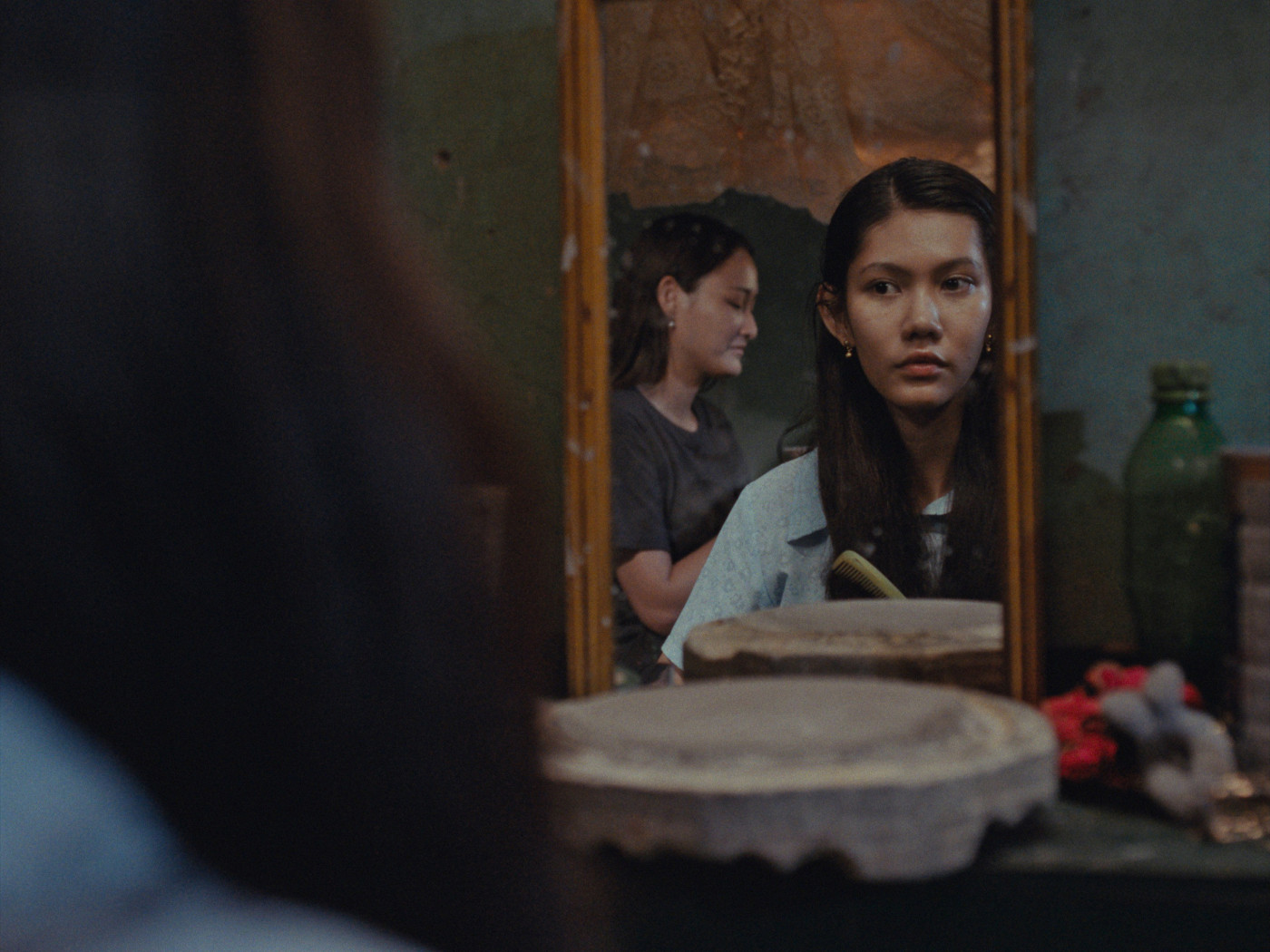
The Italian critic Giuseppe Sedia explores Fruit Gathering, the film that took the Karlovy Vary festival’s top prize, the Crystal Globe. This look at the intense relationship between two women is also the first film from Myanmar ever to be in competition at the festival.
“When I am parted from you, thrown out from your household, I am free to see your face.”
— Rabindranath Tagore, Fruit-Gathering (poem X)
The Czech connection has struck again at Karlovy Vary. Beyond established filmmakers such as Emir Kusturica and Agnieszka Holland, who continue to produce films in the homeland of Milan Kundera, another, less familiar foreign alumnus of Prague’s FAMU film school has emerged: the Burmese cinematographer Thaddi, who completed the institution’s one-year Academy program.
Thaddi served as director of photography on Fruit Gathering (Thit-thee Khu), directed by fellow Myanmar national Aung Phyoe, who benefited from the Czech Film Fund to develop the film, which went on to win the Crystal Globe, the festival’s top prize. Beyond the award itself, this was the first time that Myanmar’s flag appeared on the façade of the Hotel Thermal alongside those of the other countries represented in competition at Karlovy Vary.
Admittedly, the films of Burmese-born, Taiwan-based filmmaker Midi Z have already screened at Cannes, Venice, and Berlin. Yet prior to the 60th edition of the festival, no Burmese fiction feature had ever been selected for the main competition in Karlovy Vary.
It was also the first appearance of the Swiss flag among the competing nations at the Hotel Thermal, the Brutalist complex originally conceived as a congress hotel and the main hub of the Karlovy Vary International Film Festival. That occasion was made possible by Jan-Eric Mack‘s Swiss social drama about a professionally precarious single mother willing to go so far as to change her identity, A Happy Family. Lead actress and co-screenwriter Anna Schinz received the Crystal Globe for Best Actress.
But back to Fruit Gathering.
The film’s title refers both to Fruit-Gathering, a poetry collection by the Bengali poet Rabindranath Tagore, and to the mango harvest in Myanmar’s “upcountry”—a physical and symbolic place for the many Burmese people forced to leave conflict-ridden rural areas and move towards Yangon, the country’s largest city.
One could argue that Yangon is the center and everything else is “upcountry” in a nation devastated by war and fragmented by countless armed groups. Yet Aung Phyoe’s film is a slow burner that avoids direct references to Myanmar’s political situation, choosing instead to explore the gradual emergence of queer desire and the intense friendship between two women, San Kyi (Nandar Myat Aung) and Theint (Nandar Myint Lwin).
The drama in this austere film is fuelled by the asymmetrical affection between the two protagonists. The younger San Kyi appears willing to do almost anything to remain close to Theint, feeding off her presence and constantly seeking a deeper intimacy with her.
In Aung Phyoe’s deeply realistic film, the characters’ trajectories are shaped outside the household by precarious workplaces: a garment factory, a rubber plantation, a plastics factory, and a supermarket. San Kyi and Theint orbit around the city center yet remain unable to return to the upcountry. Symbolized by a mango tree, it becomes a place that is perhaps not entirely imaginary but increasingly difficult to imagine inhabiting again.
To avoid any misunderstanding, it is not true that San Kyi and Theint have no choice. The point is rather that all the choices available to them are tragic. They can continue to be exploited by the center, return home and risk their lives in the upcountry, or emigrate to another Southeast Asian country such as Thailand or Malaysia.
Fruit Gathering presents Myanmar as it is, without ever giving the audience the impression that they are watching a documentary. This effect is made possible by the absence of overly explicit references to the country’s political circumstances, making the story of the two women universal.
At the same time, the film captures a nation in the process of existing and becoming, in all its fragility, through trains, factories, and shared meals.
The Karlovy Vary International Film Festival, founded eighty years ago, could hardly have given itself a better gift for its “special year,” its 60th edition, than discovering and honoring with its top prize a debut feature from a little-known country, directed by a first-time filmmaker whose work remains entirely resistant to exoticism.
Giuseppe Sedia
© FIPRESCI 2026