
Only Beautiful Things to Look At: Reclaiming Dignity in the Face of Reproductive Violence
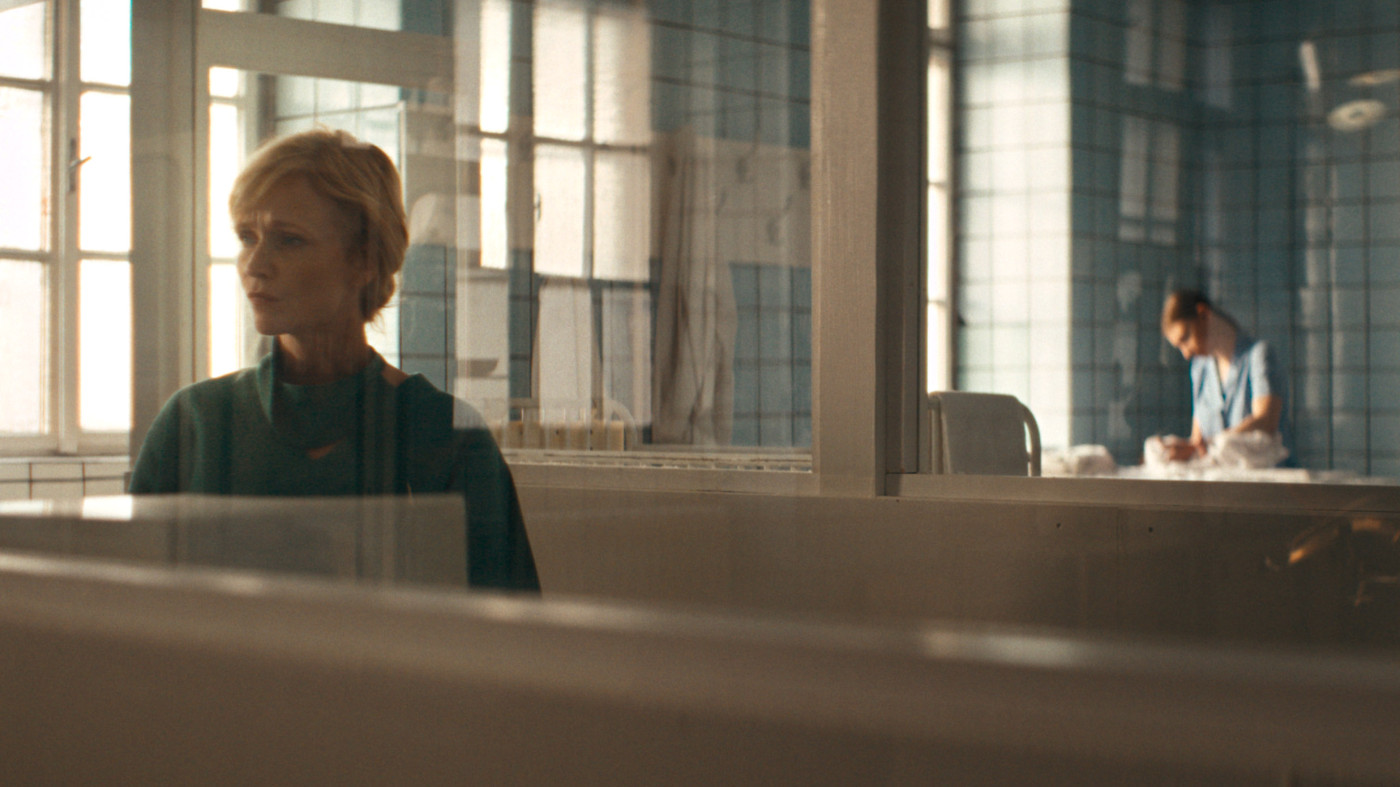
The winner of the FIPRESCI prize from the Crystal Globe competition at Karlovy Vary, Only Beautiful Things to Look At, is considered in depth by Colombian critic Laura Arias, who finds a film that extols a sensitive and compassionate way of seeing into a cruel chapter in Czechoslovakian history.
Between 1966 and 2012, the government of former the Czechoslovakia carried out an illegal sterilization campaign against thousands of Romani women. In an effort to reduce the birth rate of a population that had long been stigmatized and marginalized, women were subjected to sterilization through coercion, threats, and without their informed consent. Set in the 1980s, Ivan Ostrochovský’s Only Beautiful Things to Look At (Prameň) unfolds against this historical backdrop. Through the relationship between Ingrid and Agáta, a doctor and a nurse respectively, the film portrays the violations of reproductive rights and freedoms that characterized this cruel chapter in history.
Ingrid is a white woman who studied medicine in Prague and aspires to become the first female chief doctor in the maternity ward. Agáta, meanwhile, raised in a Romani orphanage, works as a hospital orderly. In the spare moments between shifts, she studies for her driving test, hoping to obtain a license so she can visit her boyfriend, who is serving in the military. The two women develop a close friendship marked by solidarity and complicity.
The opening sequence of the film shows close-ups of several Romani women sitting in a medical office. Shot in a documentary-like style, the women look directly into the camera, their faces conveying pain and uncertainty. Over these images, Ingrid’s voice-over explains that “sterilization allows women to improve their families’ quality of life.” Moments later, her face is superimposed over those of the women. She appears before a panel of doctors, explaining why she wishes to work at the hospital and perform these surgical procedures.
Only Beautiful Things to Look At features a predominantly female cast: nurses and Romani patients. Within the hospital—the film’s principal setting—the intersecting forces of patriarchy, racism, and social inequality operate on multiple levels. As the only female doctor, Ingrid must constantly prove herself among her male colleagues, while Romani women endure obstetric violence and discrimination at the hands of medical staff. Yet despite these tensions, the film also suggests the possibility of female solidarity. Through intimate conversations and shared trips to the river, Ingrid and Agáta’s friendship allows them to transcend the social and institutional barriers imposed by the system in which they work. In addition, they decide to help a Romani woman—someone Agáta grew up with—obtain an abortion in a safer and more dignified manner. Facing her third pregnancy and abandoned by an absent husband, the woman finds in them a support otherwise denied to her.
Ingrid’s character undergoes a transformation through her friendship with Agáta. At first, she defends sterilization not only as a response to demographic concerns but also as an option for women with several children or those who have undergone multiple abortions. However, after learning that Agáta herself may have been sterilized while living in the Romani orphanage, Ingrid begins to question the system she once accepted. Eventually, she openly resists forcing women to sign consent forms while they are sedated and in the middle of surgery.
The film exposes the different mechanisms behind the illegal sterilization campaign. On the one hand, women were sterilized without their knowledge during childbirth or cesarean sections. Also, they were pressured into signing consent forms while sedated or denied the information necessary to understand the risks and consequences of the procedure. On the other hand, beyond the procedures themselves, the film exposes the bureaucratic machinery that enabled its policy. Male officials discuss sterilization statistics with a chilling detachment, debating how to increase the numbers and what incentives might persuade more women to undergo the operation. Financial compensation emerges as the primary tool. Women living in vulnerable economic conditions are pressured into accepting sterilization in exchange for payments that would amount to roughly €800 today.
The film’s portrayal of the Roma community avoids the stereotypes and folkloric representations that often exoticize them. Instead, it offers a raw and grounded depiction of their daily realities and struggles. At one point, Ingrid and Agáta set out to find a woman who has fled the hospital after undergoing surgery. They hope to provide medical assistance before she bleeds to death. As the ambulance enters the Romani settlement, the landscape is filmed through the vehicle’s windows, partially obscured by the frame and bars of the ambulance itself. Through a narrow strip of visibility, a burning car surrounded by firefighters and police officers comes into view, while crowds gather in the background. The sequence captures the distance from which the settlement is viewed, foregrounding the prejudices and barriers that shape perceptions of Roma communities.
As the title suggests, the film is a widow to look for beautiful things. This does not mean turning away from injustice; rather, it entails a sensitive and compassionate way of seeing, one that recognizes the dignity of those whom society has dehumanized. Through its visual approach, Ostrochovský seeks to restore the dignity and autonomy denied to these women. The camera lingers on their faces and bodies with remarkable delicacy. Although the cinematography, marked by its grainy texture and warm palette, is visually striking, it never aestheticizes suffering or turns it into spectacle.
At the same time, the film resists romanticizing female solidarity. The narrative never overlooks the deep-rooted racism embedded within the institution, nor the profound violence and the consequences of the sterilization campaign. Only Beautiful Things to Look At therefore presents sorority not as an idealized solution, but as a delicate yet powerful form of resistance in an environment shaped by discrimination and inequality.
Laura Arias
© FIPRESCI 2026