
A Political Year: Documentaries at the Venice Film Festival
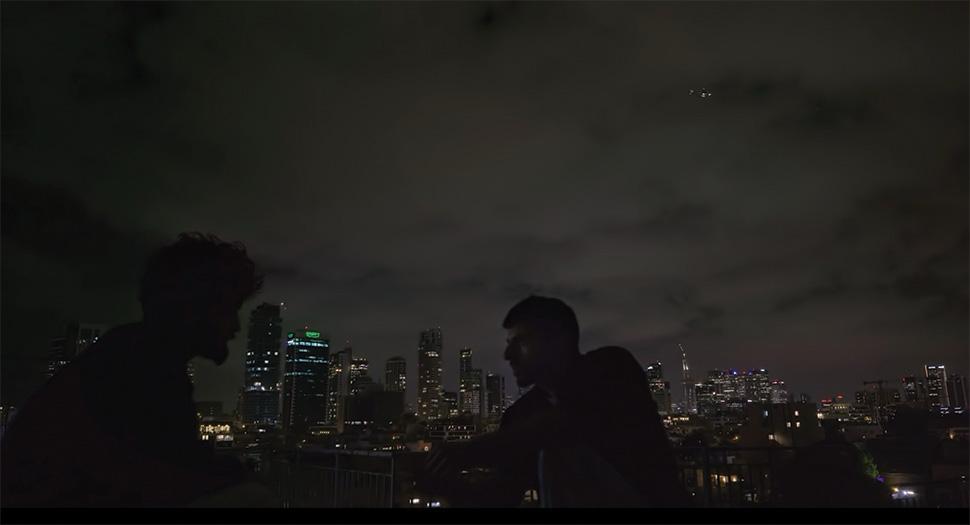
From the 83rd Venice Film Festival, critic and FIPRESCI jury member Carmen Gray notes the way a number of documentaries addressed resurgent fascism and gave voice to those at risk in the global crisis.
“Then they came for me—and there was no one left to speak for me,” is the final line of the now much-quoted poem, “First They Came,” by a German pastor who once enthusiastically supported the Nazi regime until it started attacking his own Protestant Church. The idea that everyone living under authoritarian rule is unsafe and will eventually be touched by its repression, unless people come together to resist and collectively protect the vulnerable, was a theme directly underpinning a number of documentaries in this year’s Venice Film Festival program, as the world contends with the rise of controlling rulers and resurgent fascism, and documentarians scramble to be on the right side of history and not part of the silent tide.
Authoritarian regimes often single out racial and sexual minorities first for repression, says British filmmaker Derek Jarman in the archival footage that makes up Theo Rollason’s Queer Edward II, shot in 1991 on-set of the production of the close-knit creative family of Edward II, Jarman’s radical adaptation of a sixteenth-century Marlowe play about the King of England and his lover Piers Gaveston, which incorporated real gay-rights protesters as his loyalists. Rollason focuses on Jarman’s political activism at the height of the AIDS crisis when gay rights were being rolled back, bringing his spirit of defiance to audiences as the struggle repeats today.
The brutal crackdown on independent journalists, and their ability to speak the unvarnished truth to citizens about the full-scale invasion of Ukraine and the stripping of human rights from marginalized people in Russia as prejudices are weaponized and stirred up among voters, was charted in Julia Loktev’s My Undesirable Friends: Part II – Exile, the epic-length and gripping sequel to her Oscar-nominated first installment. It follows a number of reporters after their flight from Russia, as they try to regroup and work from abroad, under ongoing threat from the Kremlin. The Kremlin’s brutal, expansionist urges are also the subject of Imperium, Ukrainian director Sergei Loznitsa’s mesmerizing archival journey through the vast expanses of the Soviet Union in the 1970s. It reveals that, however strong state demands for conformity and propaganda’s claims of a brotherly union, the peoples of these lands are irreducibly diverse, with cultures that have survived long after the state yoking them together as one collapsed.
Naza, by Yuval Abraham and Rachel Szor—the only documentary in the main competition at Venice—follows Abraham’s Oscar-winning No Other Land, and is a damning, courageous piece of investigative journalism that gathers together interviews conducted on a rooftop by Abraham with testimony from a number of people (their identities disguised for their safety) who have been active in the IDF. They describe their role in the mass, intentional killing of Palestinian civilians in ongoing military offensives in Gaza, and their dehumanization through language (NAZA is the euphemistic military term for the number of projected civilian deaths in any strike).
In Barbara Kopple’s Union Town, the third documentary in her trilogy on labor rights in the United States, the acclaimed documentarian charts the struggle for better conditions and effort to unionize by New York City delivery workers for UPS, Amazon, and food apps DoorDash and Grubhub, who have few workplace protections and are vulnerable to discrimination and harassment. At the other end of the scale of influence and privilege is the world’s richest man, Elon Musk, who is at the center of Musk, director Alex Gibney’s attempt to answer how the technocrat, who has increasingly bolstered far-right political movements, came to have so much power. More freewheeling, digressive, and wide-ranging, The Pervert’s Guide to Utopias, the latest collaboration between British director Sophie Fiennes and Slovenian philosopher-provocateur Slavoj Zizek, is framed as an examination, through the distilling lenses of classic movies, psychoanalysis, and Marxism, of how the world came to be in a crisis and full of apocalyptic fears. Despite its title, it is more a guide to our dystopia, though Zizek’s irrepressibly rambunctious and playful energy puts an entertaining face on the future. Every good communist is a pessimist, Zizek assures us, as he deconstructs totalitarianism’s allure.
Carmen Gray
© FIPRESCI 2026