
Critics’ Week in Venice: The Invention of Contemporariness
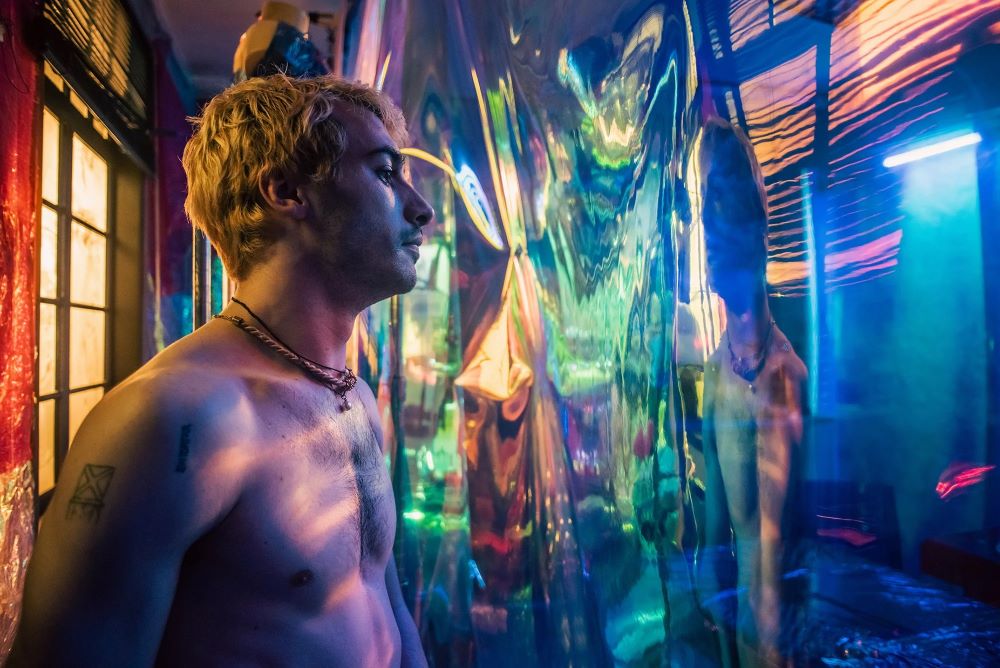
In surveying the programme of the Settimana Internazionale della Critica (the Venice International Film Critics’ Week, or SIC), Italian critic Alvise Mainardi analyzes the way the selection engages with and explores current issues, cinematic and otherwise, shaping a clear vision of them in the process.
In a manner analogous to Hobsbawm’s well-known insight—in which he recognized that tradition is a symbolic practice deriving its power, or its claim to instill certain values, from a sense of continuity with a historical past that is often stylized retrospectively, if not outright invented—what we call contemporariness is certainly not an objective reflection of reality, but rather a cultural and medial construct, the result of a complex chain of processes such as gatekeeping, newsworthiness, agenda-setting, framing, and so on. Modernity, then, is not a fact but the result of an interpretation of the “zeitgeist,” the spirit of the times in which we live.
For several years now, the selection for the Venice International Film Critics’ Week (or SIC) has appeared to be geared towards modernity; now in its 41st edition, it continues to bring to the public’s attention a selection of seven feature-film debuts by young, emerging directors, with the stated aim of preserving cinema’s civic function, rejecting what Beatrice Fiorentino, the general delegate heading the SIC selection committee, describes as “anaesthesia of the gaze.”
Right from its speculative premises, the 2026 edition is called upon to grapple with the realization that it finds itself at a singular moment in which current events accelerate to the point of already becoming History the very moment they occur. In such a context, it is therefore necessary to reclaim the ethical lesson of Italian Neorealism: since we are now immersed in a continuous flow of images that, through the persistent aestheticization of reality, manipulates it rather than reveals it, the SIC has set itself the task of identifying (and promoting) a cinema that is far removed from escapism and instead dedicated to the search for, and thus the construction of, the truth. This situation demands that political responsibility for the festival’s programme be asserted: choosing what to show and what to exclude from the official selection, as well as deciding what enters and what remains outside the frame, constitutes a political act par excellence.
Our present is being transformed by technological revolutions and ecological metamorphoses so radical that they are capable of redefining, in real time, the very nature of our experience. The seven films selected reflect a clear stance, embracing a distinctive form of cinema that focuses emphatically on the present, driven by the need to renew (or, indeed, construct) the collective imagination and capture the tensions of current events through a bold storytelling style, free from the narrative conformity that seems to permeate other sections of the Venice Film Festival, as evidenced by a competition that is becoming increasingly less diverse, both geographically and aesthetically.
If, therefore, it is clear that the SIC committee’s intention is to propose a selection of seven works that set out to examine the present, the critic’s analysis should first and foremost identify what conception of the present emerges from the selection and, secondly, the ways in which it is explored. As was made clear at the outset, contemporaneity is the result of an interpretation, not a given. And a brief comparative analysis of the works in question reveals a specific perspective, which is not without its problems as it appears essentially devoted to thematism; not that a neutral perspective can exist, of course, yet the common denominator amongst the selected films lies in prioritizing their thematic component at the expense of formal elements, or, more specifically, linguistic ones.
The seven films in competition this year are: Before the War (Prima della guerra) by Tommaso Usberti, The End of Times (En fin de los tiempos) by Bibiana Rojas Gómez and Juan David Cárdenas, The H@llow Man by Kamel Laaridhi, London by Victor Di Marco and Márcio Picoli, Meteorite (Meteorito) by Sebastián Múnera, Our Share of Sand by Shalini Adnani, and Zoom In, Zoom Out (Fa xian zhi lü) by Dong Jie.
As mentioned, the selection process takes great care to choose works that directly address certain themes considered central to the debate of our time: ranging from large-scale issues, such as the rise of artificial intelligence and the growing interpenetration between tangible reality and the virtual-digital space in a world undergoing rapid ecological transformation, to those concerning the social dimension and having repercussions in the private sphere, such as disability, gender relations, and mental health.
All the works already mentioned are in some way linked to at least one of these themes (as if they were new genres); or rather, all the works are linked to the representation of them. Another aspect shared by the seven films is an exquisitely figurative approach: none of the films, in fact, approaches its subject matter with a metaphorical or vaguely implicit stance, but rather integrates it into the narrative and makes it the subject of a thesis to be developed cinematographically.
This is particularly evident, for example, in The End of Times, which takes the form of a visual essay rather than a film and is created using the most advanced version of ChatGPT, based on material drawn from a domestic video and photo archive. An AI-animated voice named Salomé revisits the Super 8 footage of a New Year’s Eve celebration again and again, focusing on the sad gaze of a character whom she pretends is her own mother. Behind this sadness, depression is suggested, which is attributed, iteration after iteration, to various causes (past or future). Reiterating the social origins of the illness, Salomé “creates” (with the AI) various possible, albeit improbable, scenarios in which her mother is unable to escape depression. This device allows the two directors to introduce a meta-critical discussion on the very use of artificial intelligence (drawing on the categorical framework of the notion of capitalist realism) which, however, merely reaffirms its instrumental rationality, thereby trivializing the phenomenon. The issue concerning AI lies precisely in its ungovernability, the impossibility of reducing it to a mere tool. Like vast masses of data, it does not merely inform but alters human behavior (the cognitive decline of the younger generations is already a topic of discussion). In their bizarre project, Gómez and Cárdenas first disparage cinema by replacing it with artificial generativity and then demonstrate that they fail to grasp the critical issues surrounding the medium, approaching it with a simplistic and unexpectedly optimistic attitude.
Dong Jie’s perspective is also optimistic; in his Zoom In, Zoom Out, he expresses a hopeful outlook toward technological solutionism, seeing virtual reality as a means of bypassing mortality and continuing to live, and, in the growing, technology-dependent optimization of hyper-contemporary China, a new dimension of human interaction. Demonstrating far superior technical mastery, however, Dong is concerned with how to represent the multimedia nature of our new reality rather than to problematize it, falling far short of the analytical subtlety of his compatriot Jia Zhangke, for example, who could never regard surveillance found footage as a resource without questioning its political weight in the current historical moment. He is also enthusiastic in his approach to the growing gamification that shapes social relations, yet this is entirely devoid of any analytical depth regarding the philosophical nature of the game itself.

Before the War, on the other hand, is of a different calibre, far removed from the discourse on technology and social change, as it is set in a microcosm frozen in time—in rural Italy where things have remained the same for decades. The film is a tale that is no less contemporary in its exploration of toxic masculinity, yet its narrative ambitions come up against a production which is linguistically lacking in inspiration: the aim to portray a racist and misogynistic society that traps young people in a cycle of violence does not go beyond the explicit depiction of hardship, to the point of seeming like a parody of it. Lost amidst the forced contrasts between trap songs blaring at unbearable volumes and Mozartian interludes (and, more generally, placing too much faith in sound mixing to circumvent the technical limitations of the direction), Before the War never manages to establish its own identity; indeed, it never succeeds in constructing a discourse on the toxicity it portrays, merely presenting it without exploring its origins or consequences, as if that were sufficient in itself—that is, never going beyond the bare representation of the fact, thereby flattening the cinematic perspective.
Similarly, London also flattens the cinematic gaze; despite its grand theoretical ambitions (rooted in crip theory), such as that of co-director and lead actor Victor Di Marco to embed disability within the cinematic language of the future, it ultimately offers an extremely conventional portrayal of the dysfunctional body. The intention is to free disability from its confinement as a narratological device for cinema, or at least from its trivialisation as a vehicle for pre-established meanings, but the film pales into a contrived form of identitarianism, which takes its deconstructive discourse to such extremes that it neglects biological reality in order to assert the aforementioned identity through, once again, a rigid, ossified representation. Going well beyond the critical concerns of Foucauldian archaeology of the medical gaze, the two directors go so far as to reject diagnostic medicine outright, verging almost on conspiratorial hysteria because, in their view, it threatens the identity-based autonomy of the impaired body.
In attempting to compare just four of the seven SIC films that best illustrate the direction in which selection criteria have been moving in recent years, it becomes clear that the critical approach runs the risk of becoming bogged down in “contentualism”—that is, in a supposed extra-filmic value of the film—at the expense of its true political significance, which stems from the radical nature of its perspective. The selection’s ethical aspiration, although admittedly noble, runs the risk of descending into didacticism (if not pedantry) when it stubbornly pursues a certain notion of topicality shaped by the urgency to address the present rather than interpret it, while uncritically accepting the prevailing orthodoxy. After all, what could the death of cinema be if not the imposition of a categorical framework driven by a materialistic obsession with content rather than trusting in the possibilities of the medium itself, thereby renouncing any questioning of cinematic language in and of itself? As is well known, the limits of language are also the limits of the world: renouncing the grammar of narrative (through AI, for example) also means renouncing the very substance of narrative. Indeed, abdicating language entails undermining cinema’s political ambition, relegating it to a vehicle for externally determined values, and, with utter impunity, undermining the trustworthiness of the camera, which is and always will remain capable not only of representing reality but also of creating it from scratch.
Alvise Mainardi
© FIPRESCI 2026