
No Prizes, They Are Italian Films
No films from Italy were honored with prizes at the 2026 Venice Film Festival; Italian critic Marco Lombardi explores the five un-rewarded titles and asks whether the juries might have found an award for one of these films.
The awards list shaped by Maggie Gyllenhaal, President of the 83rd Venice International Film Festival, is open to serious question. On the one hand, the Grand Jury Prize went to the South Korean Possible Love, a film that, through its protagonist, exposes the hollow—indeed hypocritical—solidarity of a documentary cinema that claims, in theory, to stand with the weakest and most marginalized. On the other, the Special Jury Prize was just awarded to Naza, a film that may be bearing witness in vain—though one hopes to be proved wrong—to the atrocious, continuing genocide of the Palestinian people, unfolding before the eyes of the world. The Golden Lion given to Woman Unknown, meanwhile, feels less like an indictment of history than a prize awarded in the name of the feminine: in wartime, has the male body not also been turned into a battlefield, just as the female body placed at the center of this film?
Faced with doubts so numerous and so substantial, the question inevitably arises: Was not even one of the five Italian films in competition worthy of some recognition, however minor? Let us attempt an answer—critically, but also with a degree of self-criticism.
Let us begin with a basic consideration: five films in competition are many—indeed, too many. First, because such a presence risks diluting the international profile of a festival of this stature; secondly, because the sheer number seems almost designed to exert pressure on the juries, as if to influence the final awards list, if only statistically. And yet it should not be said that these Italian films went unrewarded because they were too “Italian”: Italian cinema has been most universal, and has enjoyed its greatest global success, precisely when it has spoken from the depth of its own particularities, at times almost from the womb: one need only think of Neorealism and the Commedia all’italiana. In any case, that objection could be levelled at no more than one Italian title—one that should perhaps have screened out of competition: The Fire Within You (Il fuoco che ti porti dentro). This latest work by the gifted Edoardo De Angelis is, in fact, too claustrophobically enclosed within local Italian regionalisms, between Campania and Lombardy, and relies on a Neapolitan dialect that can at times prove opaque even to many Italian viewers. There is also an excess of saturation, in both color and sound: a kind of cinematic trifle, difficult to sustain to the end. And yet the film is a substantial achievement in terms of direction, above all in the handling of actors. Could De Angelis have received the Silver Lion? Or, at the very least, could the Coppa Volpi have gone to its remarkable lead actress, Vanessa Scalera?
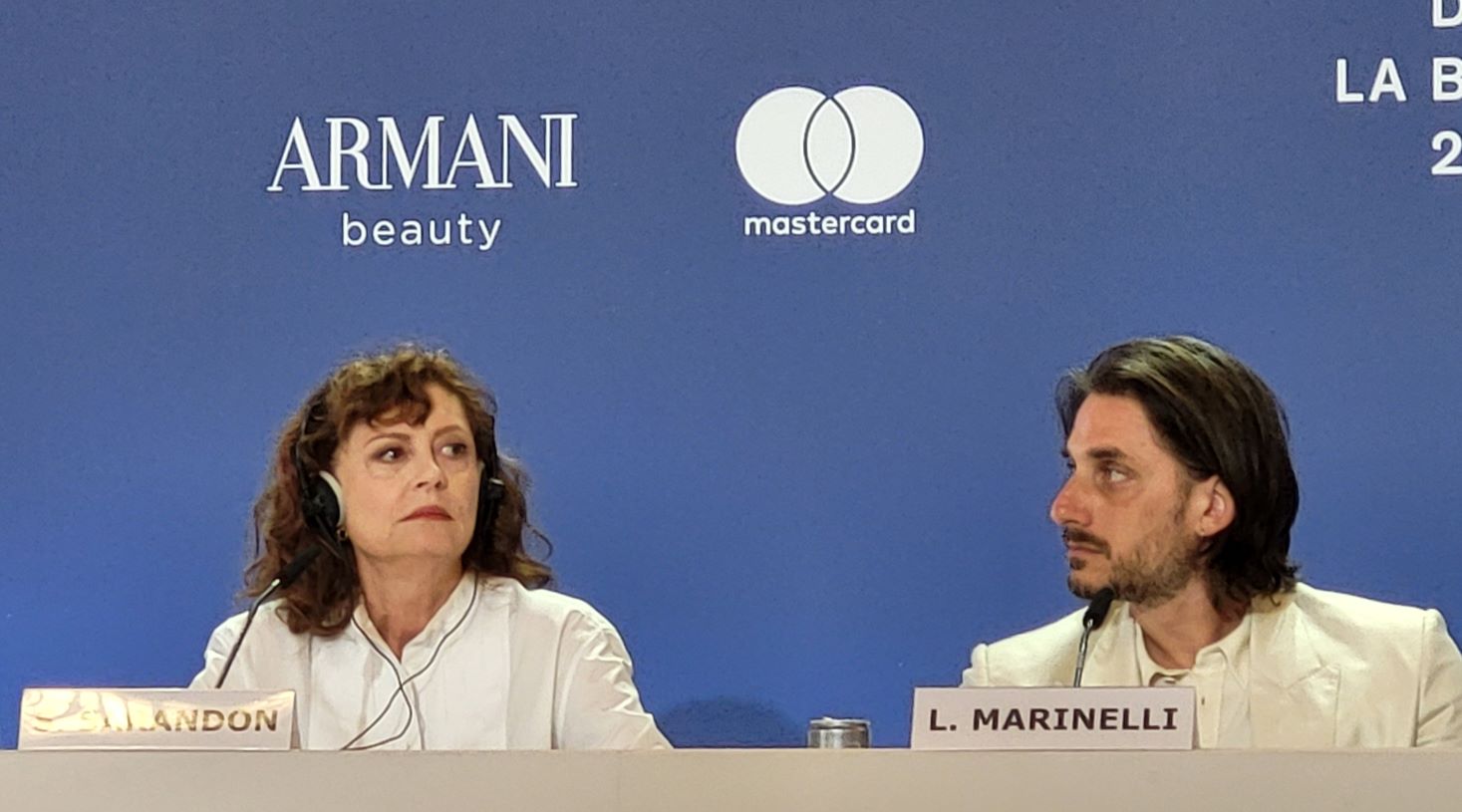
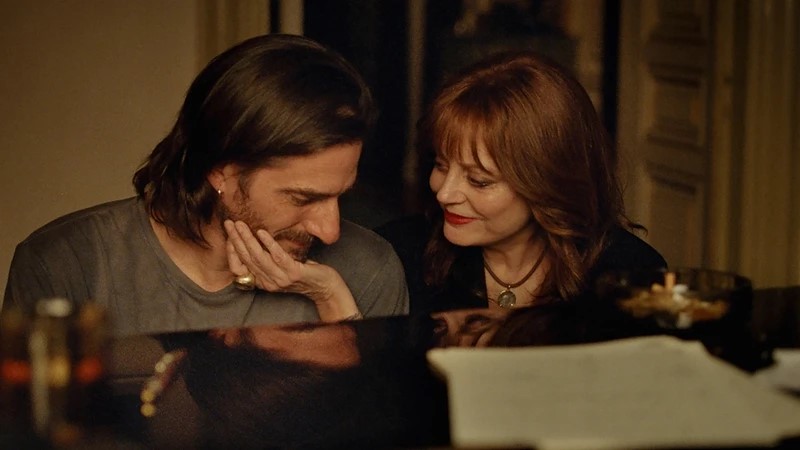
The Echo Chamber, by Andrea Pallaoro, is a missed opportunity. Until its final fifteen minutes, it is a solid, classically composed film, carried as a finely tuned duet by Luca Marinelli and a formidable Susan Sarandon. It is hardly groundbreaking, to be sure: the story follows the friendship between two “cursed” musicians, he more than she, since he is a victim of drugs before being “rescued” by the redemptive love of a kind of secular nurse. Still, the film holds together—until a wildly implausible car accident leaves one character disabled, and until a closing scene of near-sex that already strains credibility on the page before becoming visually absurd. The original screenplay was by Bernardo Bertolucci: perhaps that ending could not be touched for reasons of rights? Or perhaps no one dared commit an act of lèse-majesté. So far, then, we have one good film that did not quite belong in competition, and another undone by a poor ending. With the remaining three, however, the question “why no prizes for the Italians?” becomes entirely legitimate.

Take Nanni Moretti and his It Will Happen Tonight (Succederà questa notte). When he is too conspicuously himself, some find him unbearable; when, instead, he attempts a more traditional narrative, even one of desperate love, he is accused of betraying the Morettian poetics. One would need to forget, for a moment, who Moretti has been—to set aside the metacinema. In this case, although the film is not exactly unforgettable, it might still have deserved recognition, not least for the excellent performances by Jasmine Trinca and Louis Garrel.
The prior prejudices often brought to bear against Italian cinema become harder to sustain with the final two titles: L’estranea and Return to Buenos Aires (Ritorno a Buenos Aires).
The former—directed by Paolo Strippoli, one of the emerging talents of Italian cinema—is a bold attempt at a domestic horror film, built around the eternal struggle between good and evil which, in its striking and unpredictable ending, appears to reside within the same person: the mother, powerfully played by Jasmine Trinca and Valeria Bruni Tedeschi—yes, by both, if one follows this interpretive line. The Italian-French actress is like a spice that must be used with restraint; yet, aside from one scene in which the grotesquely ironic treatment of the character tips briefly into the ridiculous, L’estranea remains assured to the end and emerges as a genuinely compelling work.
More surprising still is that Return to Buenos Aires left the festival empty-handed. It may not have been Golden Lion material: the psychological progression of its protagonist is marked by certain abrupt turns that are not always fully persuasive on a human level. Yet Adriano Giannini is forceful in conveying the unresolved trauma of a former prisoner of the sadly notorious Garage Olimpo, one of the torture and detention sites created by Argentina’s former dictatorship. The occasion for his return is the trial of the regime’s torturers; the protagonist chooses to testify above all in order to confront his own ghosts and his own burden of guilt. Might Giannini at least have won the Coppa Volpi for Best Actor, had it not—quite rightly—gone to John Malkovich for his monumental performance in Wild Horse Nine?
Marco Lombardi
© FIPRESCI 2026