
The 100th Anniversary of Andrzej Wajda’s Birth, Celebrated in Venice
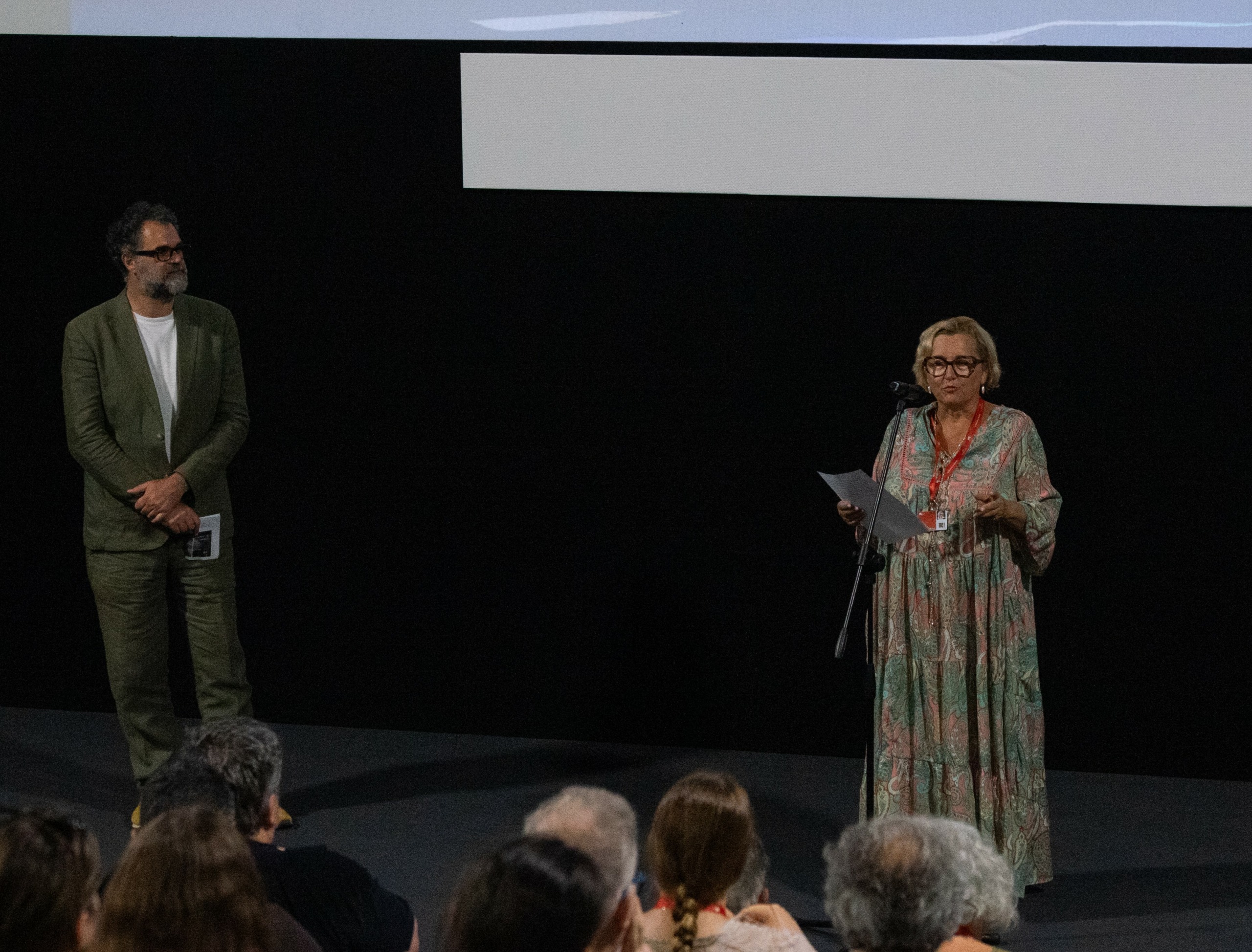
At the 2026 Venice festival, Polish critic Anna Osmólska-Mętrak introduced the public screening of a restored print of one of the landmarks of Polish cinema, in honor of the centenary of Andrzej Wajda’s birth. She files her report of the event here.
During the 20th Venice International Film Festival, Andrzej Wajda’s film Ashes and Diamonds (Popiół i diament, 1958), screened out of competition, won the prestigious FIPRESCI Prize. However, in 1959, the film was banned from the Cannes Film Festival. The Polish authorities feared that the story was too ideologically ambiguous, that the character belonging to the clandestine anti-communist opposition might come across as too positive to the public, and that this might displease the Communist bloc and even spark debates in Western countries.
After winning the award in Venice, international doors opened wider for Wajda’s film, and it went on to receive, amongst other honors, two BAFTA nominations.
Will only ashes and confusion remain,
Leading into the abyss? or will there be
In the depths of the ash a star-like diamond,
The dawning of eternal victory!
From these words by the great 19th-century Polish poet, Cyprian Kamil Norwid, the writer Jerzy Andrzejewski took the title for a novel published in 1947, Ashes and Diamonds. Eleven years later, Andrzej Wajda made his film, loosely based on the book. The symbolic title remains the key to understanding and interpreting both works.
We are in a small Polish town on 8 May 1945. But the end of the world war by no means signifies the end of all conflicts; on the contrary, it gives way to a war that in some respects is perhaps even more tragic, as it is fratricidal. The darkest years of Stalinism are about to begin, with the hunt for the so-called “enemies of the people,” accompanied by arrests, political trials, imprisonment, torture, and death sentences for those who, until recently, had been fighting for their country’s freedom.
Wajda managed to make his film when the so-called “thaw” began and artists were able to express themselves with a little more freedom, albeit still within the limits imposed by the censorship. This marked the birth of the famous Polish Film School, of which Wajda is one of the leading figures.
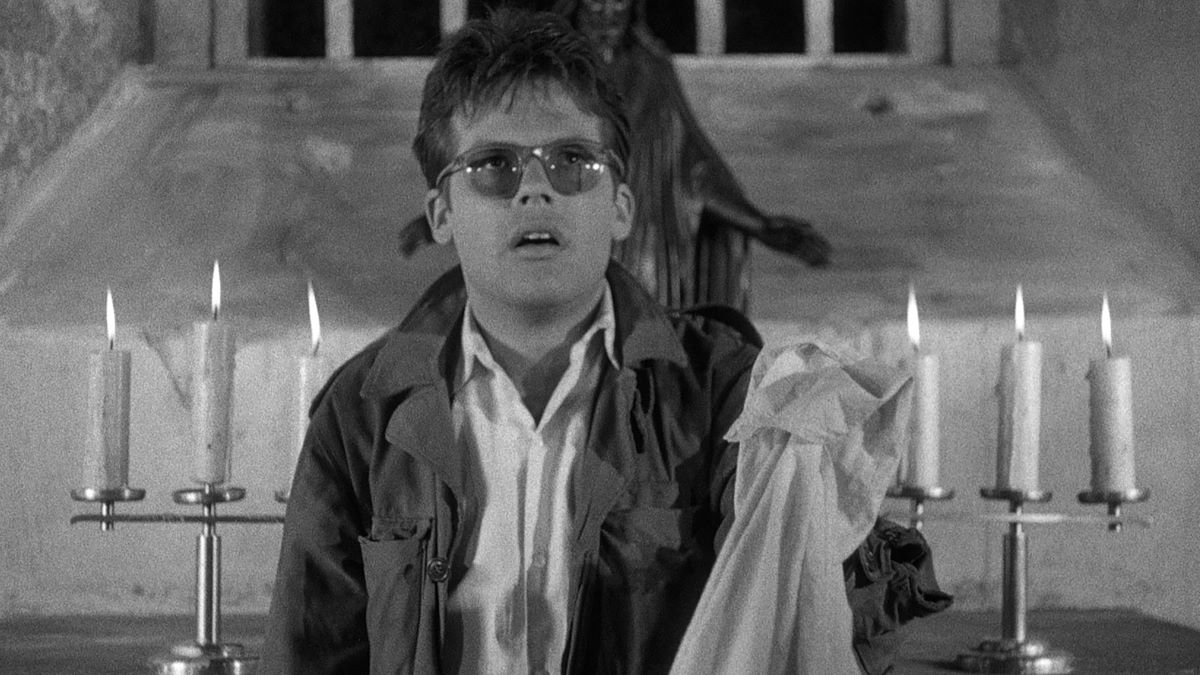
The protagonist, Maciek Chełmicki, became an iconic figure not only for the generation he represents in the film but also, and perhaps above all, for the generation that followed. This is thanks to the performance of Zbigniew Cybulski (sometimes compared to the legendary James Dean), who is still the subject of a cult following, partly due to his untimely and tragic death in 1967. His very modern style of acting, the likes of which had never been seen before, and his way of dressing, complete with his famous dark glasses, brought him much closer to the young people of the late fifties. In this regard, Wajda himself wrote in 1983: “The film Ashes and Diamonds is not merely a skilful adaptation of the book; it possesses a completely new value, first and foremost thanks to Cybulski’s performance, which is so rich that it would take Flaubert’s pen to describe it. It was he who immortalised this film, which is richer than simplistic judgements—whether right or wrong.”
It is also worth noting that in 2023, Martin Scorsese included Wajda’s film on his list of the fifteen most important films in the history of cinema.
The 83rd Venice festival invited Wajda’s film to the “Classici” section curated by Alberto Barbera and Federico Gironi. In this section a prize is given for best-restored film. Ashes and Diamonds was restored by Di Factory, represented in Venice by CEO Jędrzej Sabliński. The Polish delegation also included Agnieszka Będkowska, director of the Documentary and Feature Film Studio in Warsaw. The film was presented on behalf of FIPRESCI by the undersigned.
It was probably by chance that a reference to Wajda’s film was present in Venice this year. As part of the “Cinema & Arts” section accompanying the festival, the film Papaveri rossi, directed by Sergio Maifredi—who worked as a theatre director in Poland for several years—was screened. The film, which is an adaptation of a theatre production staged at the Teatro Pubblico Ligure in 2024, tells the story of General Władysław Anders’s army, which, alongside the Allies, liberated many Italian towns in 1944 and, most notably, captured the monastery at Monte Cassino. During the bloody fight, 923 Polish soldiers lost their lives; today, the site is home to the largest Polish military cemetery in Italy. A few hours before the monastery was captured, the song “Red Poppies on Monte Cassino” was written by Feliks Konarski and hastily composed by Alfred Schütz. It is precisely this song that features in a key, symbolic scene in Ashes and Diamonds, performed by the actress Grażyna Staniszewska. In Maifredi’s film, it is referenced by one of the commentators. The strength of film festivals lies precisely in uncovering such unexpected contexts.
Anna Osmólska-Mętrak
© FIPRESCI 2026